
A home golf simulator can cost roughly $1,000 to $3,000 for a basic practice setup, while a more complete system with an impact screen, projector, launch monitor, computer, and simulation software often falls between $4,000 and $10,000. Premium rooms can exceed $15,000 once advanced tracking equipment, custom construction, high-end projection, and professional installation are included.
When deciding how much does it cost to build a golf simulator, the biggest factors are the level of shot tracking you want, the equipment you already own, and whether the room needs preparation before installation. A golfer who mainly wants indoor practice can spend much less than someone building a dedicated room for realistic virtual rounds. Breaking the project into individual components makes it easier to set a sensible budget and avoid paying for features that do not improve the experience you actually want.
Typical Golf Simulator Build Costs
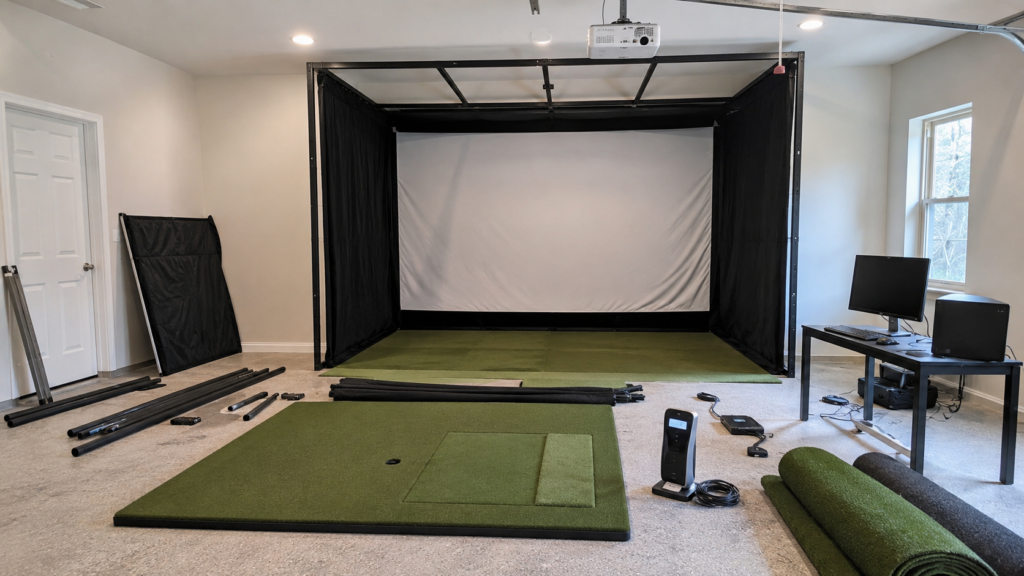
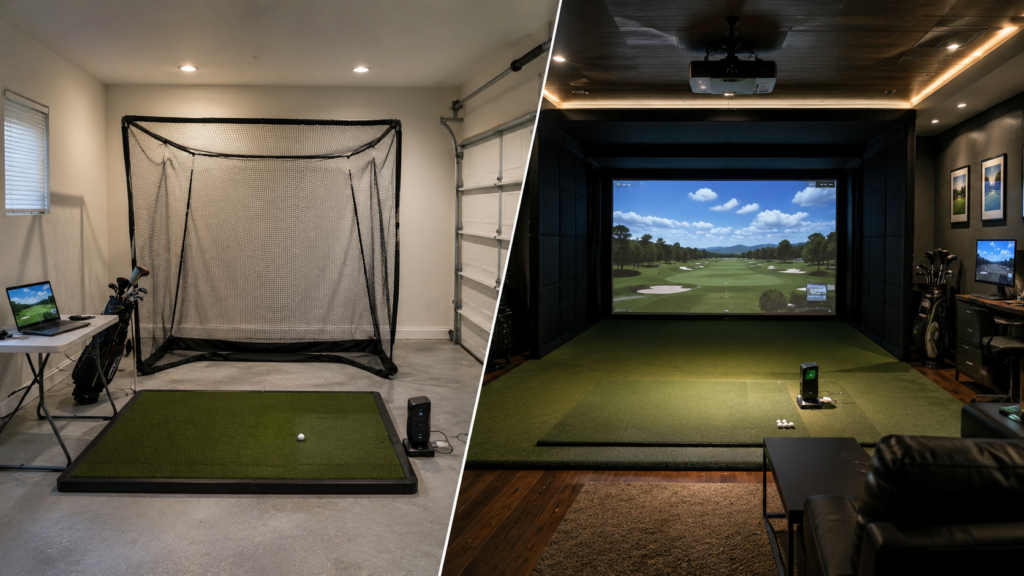
Golf simulator projects generally fall into basic, mid-range, and premium price levels. A basic build between about $1,000 and $3,000 usually focuses on practice rather than a fully projected course experience. It may include an affordable launch monitor, hitting mat, durable golf net, and an existing television, tablet, or laptop. Golfers can still review ball speed, carry distance, launch information, and shot direction without investing in a large screen or projector.
A more complete home system commonly costs around $4,000 to $10,000. This budget gives golfers more room to combine reliable shot tracking with an impact screen, protective enclosure, projector, capable computer, quality hitting mat, and simulation software. The result can feel much closer to playing an indoor round rather than simply practicing into a net.
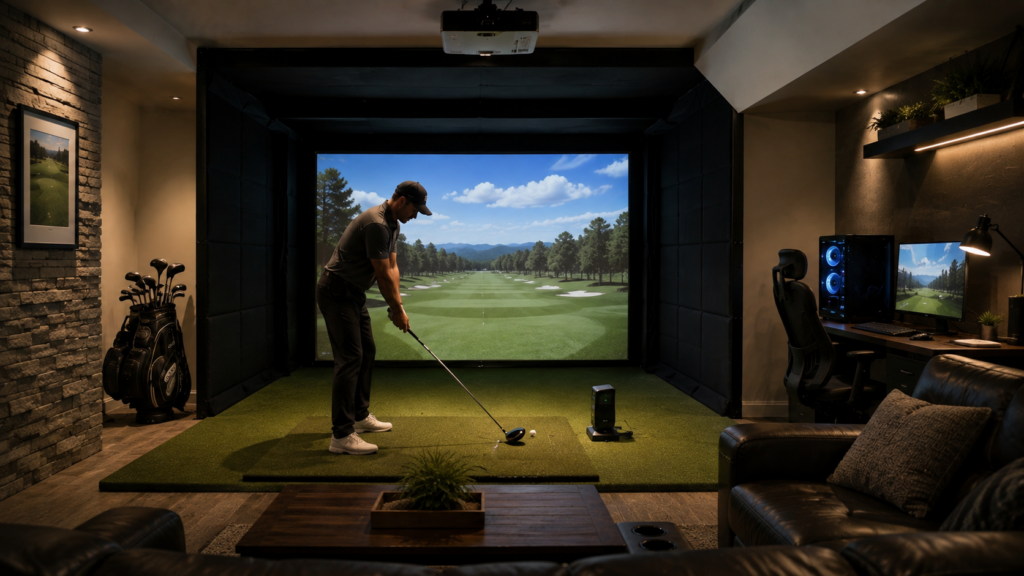
Premium rooms may begin around $10,000 and rise beyond $20,000 depending on the launch monitor and construction work. Custom turf, recessed lighting, wall padding, ceiling protection, cabinetry, improved sound, and professional installation can raise the total considerably. Therefore, how much does it cost to build a golf simulator cannot be answered by looking at one piece of equipment. The finished cost depends on how complete, permanent, and realistic you want the room to become.
The Launch Monitor Can Shape The Entire Budget
The launch monitor is usually the most important technology purchase because it measures the actual golf shot. Entry-level devices may cost several hundred dollars, while advanced camera-based or radar systems can cost several thousand. Professional-grade monitors can move well beyond that range before the impact screen, projector, mat, or computer is purchased.
The amount of data also influences price. A recreational golfer may be satisfied with ball speed, carry distance, launch angle, and shot direction. More advanced players may want spin rate, spin axis, club path, face angle, attack angle, and other club measurements. Paying extra for detailed information makes sense only when those measurements will actually be used during practice.
Tracking technology affects the room as well. Radar systems often need space behind the golfer and enough ball flight toward the screen. Camera-based monitors usually observe the ball closer to impact and may work well in shorter rooms. Overhead systems keep equipment away from the hitting area but normally require permanent mounting.
When calculating how much does it cost to build a golf simulator, choose the launch monitor before finalizing the enclosure, mat position, or screen distance. Its placement requirements affect the rest of the layout. Spending the largest part of the budget on tracking equipment can be worthwhile, but only if the selected monitor fits both the room and the way you plan to use the simulator.
Impact Screen And Enclosure Costs Matter
A golf net is usually the least expensive way to stop shots, but golfers who want a projected virtual course need an impact screen. The screen must withstand repeated full-speed golf balls while remaining smooth enough to display a clear image. It also requires enough space behind it to flex safely instead of allowing the ball to strike a hard wall.
A basic net may cost only a few hundred dollars. Impact screens and complete enclosures can range from several hundred dollars to several thousand depending on size, screen material, frame construction, ceiling coverage, side protection, and whether the system is retractable. Larger screens can create a more immersive experience, but they also require more room and may increase projector requirements.
The enclosure should protect more than the center of the screen. Mishits can travel toward side walls or the ceiling, particularly when beginners or guests use the simulator. Padding and side netting add cost, but they can prevent damage to walls, windows, electronics, and surrounding furniture.
The golf simulator overview explains how modern simulator systems combine sensors, computers, projectors, and hitting screens to recreate golf indoors. These supporting components show why how much does it cost to build a golf simulator depends on the complete system rather than the launch monitor alone. A safe enclosure is part of the functional equipment, not simply a decorative addition.
Projector And Computer Expenses Add Up
A projector is optional in a simple practice setup, but it creates the large virtual image most people associate with indoor simulator golf. Short-throw projectors are commonly used because they can fill a large impact screen without needing to sit far behind the golfer. Their location can also reduce shadows and keep hardware away from the swing path.
A practical projector can cost roughly $700 to $2,000 or more depending on brightness, resolution, throw ratio, and image quality. Premium models can push the price higher, especially when the golfer wants a very large screen or higher resolution. However, a bright and expensive projector may not be necessary in a room where lighting can be controlled.
The computer creates another significant expense. Basic launch-monitor applications may run on an existing tablet or laptop, while detailed simulation software can require a dedicated computer with stronger graphics performance. A suitable computer may add approximately $800 to $2,000 or more to the project.
This is one reason how much does it cost to build a golf simulator can change quickly when moving from a simple hitting station to a fully projected system. Golfers can lower the starting cost by using an existing television or computer and upgrading later. Building in stages allows more of the initial budget to go toward shot tracking, safety, and the hitting surface before money is spent on visual upgrades.
A Good Hitting Mat Deserves Part Of The Budget
The hitting mat may not seem as important as the launch monitor or projector, but it affects every swing taken inside the simulator. Very thin artificial turf placed directly over concrete can feel harsh when the club strikes the surface. A better mat provides cushioning while keeping the golfer stable through the swing.
Small hitting strips can cost less than $100, while larger simulator mats commonly range from a few hundred dollars to $1,000 or more. Premium surfaces are designed to provide a more realistic response when the club enters the turf. Some systems use replaceable hitting strips so the heavily used section can be changed without replacing the entire stance area.
The golfer should also stand at approximately the same height as the ball. A hitting strip that sits noticeably above or below the stance mat can affect posture and club delivery. This becomes especially important when the simulator is used regularly for meaningful practice rather than occasional entertainment.
Anyone estimating how much does it cost to build a golf simulator should avoid leaving the mat until the end of the budget. Spending almost everything on electronics and then choosing the cheapest possible hitting surface can make the finished room uncomfortable. A good mat may not provide additional graphics or data, but it directly affects how natural the swing feels and how often the simulator can be used comfortably.
Software And Long-Term Costs Should Be Included
The initial equipment purchase is not always the final expense. Simulation software may involve annual subscriptions, one-time licenses, course packages, or additional fees for advanced features. Some launch monitors provide basic range software but require a paid plan to access virtual courses or additional data. These charges should be checked before the hardware is purchased.
Long-term ownership can also include replacement hitting strips, worn impact screens, golf balls, projector maintenance, cables, computer upgrades, and accessories. A simulator used several times each week will naturally wear certain components faster than one used only during the winter. These expenses may be relatively small compared with the original equipment, but they affect the real cost over several years.
A practical approach is to calculate the first three years instead of comparing only initial prices. Add likely software subscriptions and common replacement items to the purchase total. This makes it easier to compare two systems that have different ownership structures.
The Roaming Scores mobile golf simulator setup provides an example of how launch-monitor hardware, course software, projection, and a protected hitting area work together in a complete system. The same core pieces need to be considered when budgeting for a permanent home installation.
Room Preparation Can Become A Hidden Expense
A garage, basement, bonus room, or detached building can keep construction costs low when it already provides enough ceiling height, width, depth, electrical access, and temperature control. A space that needs modifications can add hundreds or thousands of dollars before the simulator equipment is even installed.
Electrical outlets, lighting, insulation, heating, cooling, flooring, wall protection, ceiling padding, and internet access can all become part of the project. Golfers should also check garage-door tracks, beams, pipes, ceiling fans, shelves, and hanging lights. The lowest obstruction may determine whether the hitting area is actually usable.
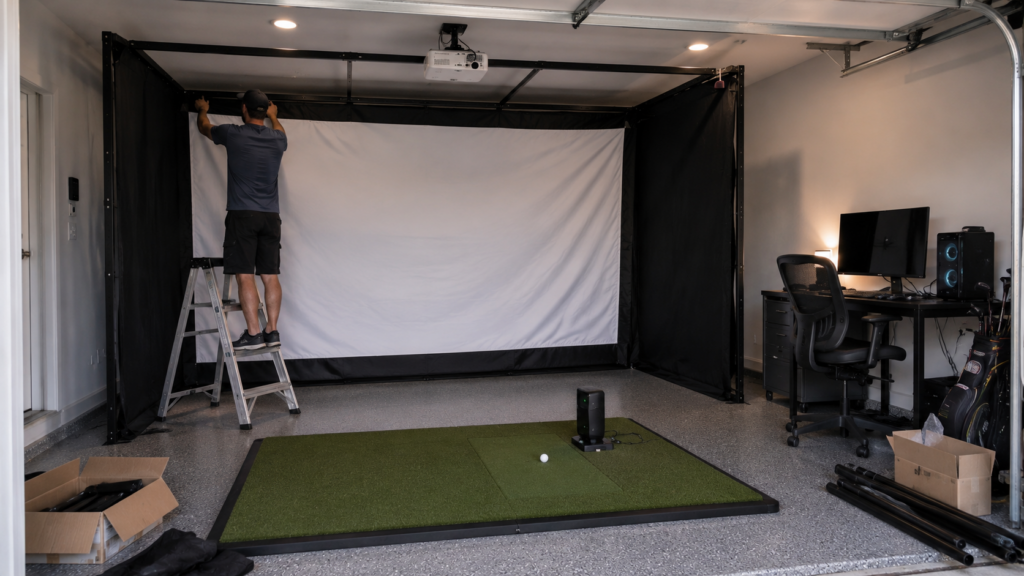
Room preparation may be as simple as clearing furniture and adding protective netting. A dedicated simulator room can involve framing, custom flooring, additional outlets, cabinetry, sound treatment, recessed projection, and decorative lighting. Those upgrades may make the space more enjoyable, but they should not be treated as essential when the goal is primarily practice.
This hidden construction work explains why how much does it cost to build a golf simulator can vary so much between two similar equipment lists. One golfer may already have a suitable garage, while another may need substantial renovations. Keeping approximately 10 to 15 percent of the planned budget available for mounts, cables, padding, adapters, and unexpected room changes can prevent small installation issues from disrupting the entire project.
Where To Spend More And Where To Save
The best way to control the project cost is to spend according to function. A reliable launch monitor deserves priority because inaccurate tracking affects every shot. A comfortable mat deserves attention because it affects every swing. The impact screen and enclosure need to be strong enough to protect the room. These areas usually provide more practical value than decorative upgrades.
The projector and computer often provide opportunities to save. Golfers who mainly want practice data can use an existing television or monitor instead of projection. A current computer may also be sufficient if it meets the software requirements. These components can be upgraded later without rebuilding the entire simulator.
DIY assembly can reduce costs when installing a freestanding enclosure, turf, or simple net system. However, permanent electrical changes, complicated ceiling mounting, or major room construction may be better handled by qualified professionals. Correcting a poor installation later can cost more than doing it properly the first time.
For many recreational golfers, a budget between roughly $4,000 and $10,000 can provide a strong balance of tracking quality, safety, comfort, and immersive course play. The answer to how much does it cost to build a golf simulator should therefore focus on the amount required to create a dependable system rather than the lowest possible price. A carefully selected mid-range setup may provide more value than an expensive room filled with features that rarely get used.
Conclusion
A basic golf simulator can cost roughly $1,000 to $3,000, while a complete projected home setup commonly falls between $4,000 and $10,000. Premium equipment and room renovations can push the total above $15,000. When answering how much does it cost to build a golf simulator, include the launch monitor, enclosure, projector, computer, mat, software, and room preparation rather than focusing on one advertised equipment price.
For parties, weddings, fundraisers, corporate gatherings, and other events, building a permanent simulator may not be necessary. Roaming Scores brings a complete mobile golf simulator experience to locations across Northeast Ohio. Hosts can book their date and enjoy virtual golf without purchasing, installing, and maintaining a dedicated system.