
Modern golf simulators can provide highly dependable information about a golf shot when they use a quality launch monitor and are configured correctly. They are particularly useful for measuring ball speed, launch angle, spin, direction, and other conditions immediately after impact. The answer to are golf simulators accurate is therefore generally yes, but accuracy depends on more than the graphics displayed on the screen. The launch monitor, hitting environment, alignment, golf ball, software settings, and quality of contact all influence the result.
Full swings are usually easier to reproduce realistically than putting and unusual short-game shots, and a simulator should be viewed as a measurement system rather than a perfect digital copy of every condition found on an outdoor golf course.
What Simulator Accuracy Actually Means
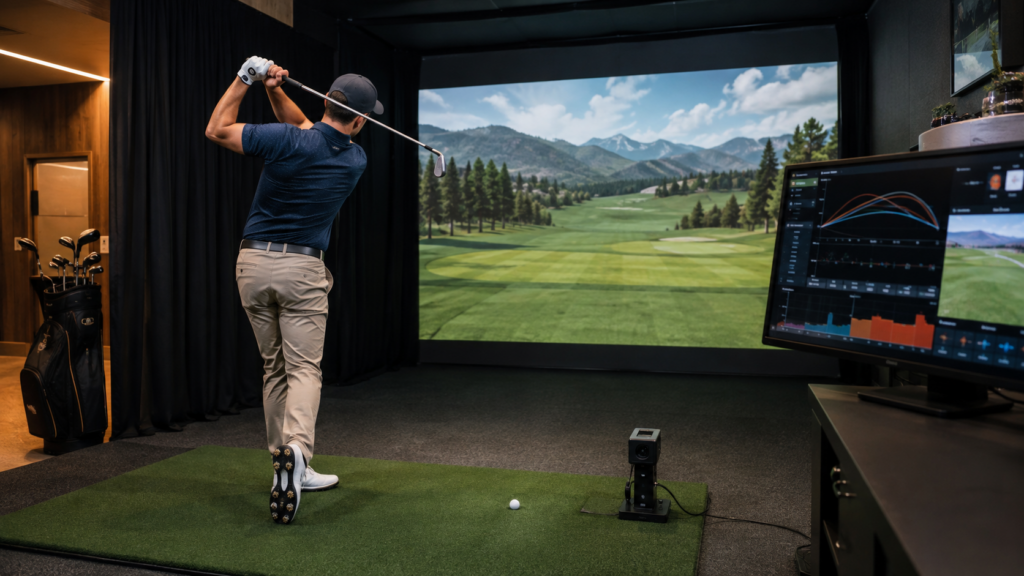
Accuracy can mean several different things in indoor golf. One golfer may want to know whether the displayed carry distance matches a shot on the course. Another may care more about ball speed, spin rate, launch angle, or whether a slice curves in the correct direction. Someone playing a virtual round may simply want the simulator to reward good shots and punish poor ones consistently.
This distinction matters when answering are golf simulators accurate because the system measures what happens immediately after impact and then uses that information to represent the remainder of the shot. A simulator does not watch a golf ball travel 250 yards through real outdoor air. Instead, the launch monitor observes the important early characteristics of the shot, while software uses those measurements to model the resulting flight.
The USGA uses a related approach in golf-ball testing. Its Research and Test Center describes measuring launch conditions including velocity, direction, and spin before using controlled indoor testing and computer modeling to calculate ball flight and distance. The USGA notes that indoor testing provides highly repeatable results without changing outdoor weather conditions.
So, are golf simulators accurate enough to replace watching the entire outdoor flight? For many practice and entertainment purposes, yes. The more useful question is whether the system consistently captures the initial conditions that determine what the ball would do after leaving the clubface.
The Launch Monitor Determines Most Of The Accuracy
A realistic screen and detailed virtual course can make a simulator impressive, but neither one actually measures the golf shot. The launch monitor performs that job. It captures information immediately after impact and provides the data that simulation software needs to reproduce the flight.
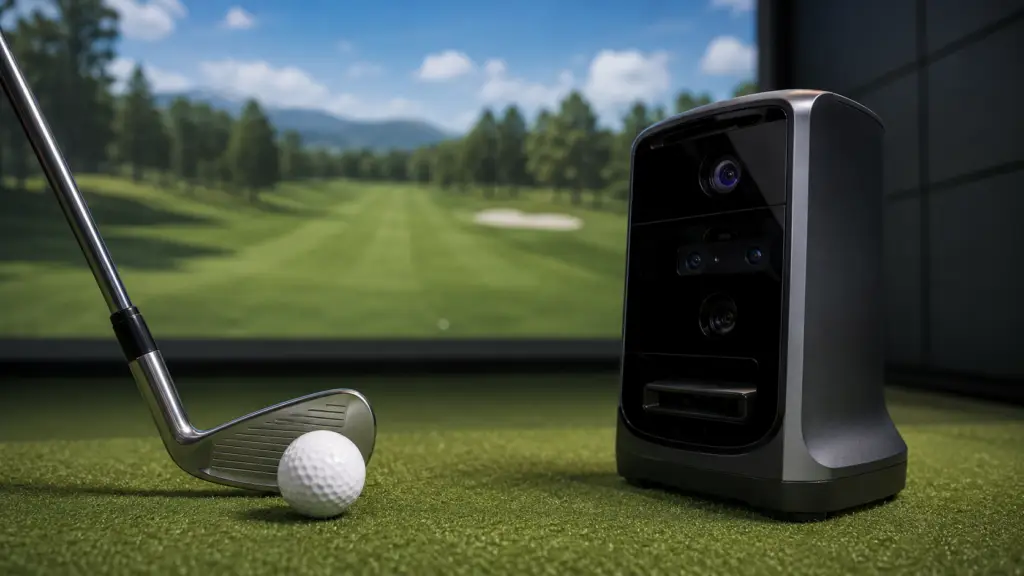
Different launch monitors use different technologies. Camera-based systems observe the ball with high-speed imaging near the hitting area. Radar systems track movement along the target line and may require additional room behind the player or between the ball and impact screen. Some systems combine multiple sensing technologies or use additional information to produce club measurements.
When golfers ask are golf simulators accurate, they should identify the launch monitor before judging the projector, enclosure, or course graphics. An expensive projector can make an inaccurate measurement look beautiful, but it cannot improve the original shot data.
The measurements available also vary. Ball speed, launch angle, horizontal launch direction, and spin are among the important inputs used to describe golf-ball flight. Some systems provide clubhead speed, club path, attack angle, face angle, and other club information as well. Not every metric is necessarily measured directly by every device, so golfers should understand what their specific system captures.
Are golf simulators accurate when using higher-quality tracking equipment? They can provide highly useful and repeatable information, especially when the player uses the system according to its setup requirements. Accuracy begins with reliable measurement rather than visual realism.
Measured Data And Calculated Ball Flight Are Different
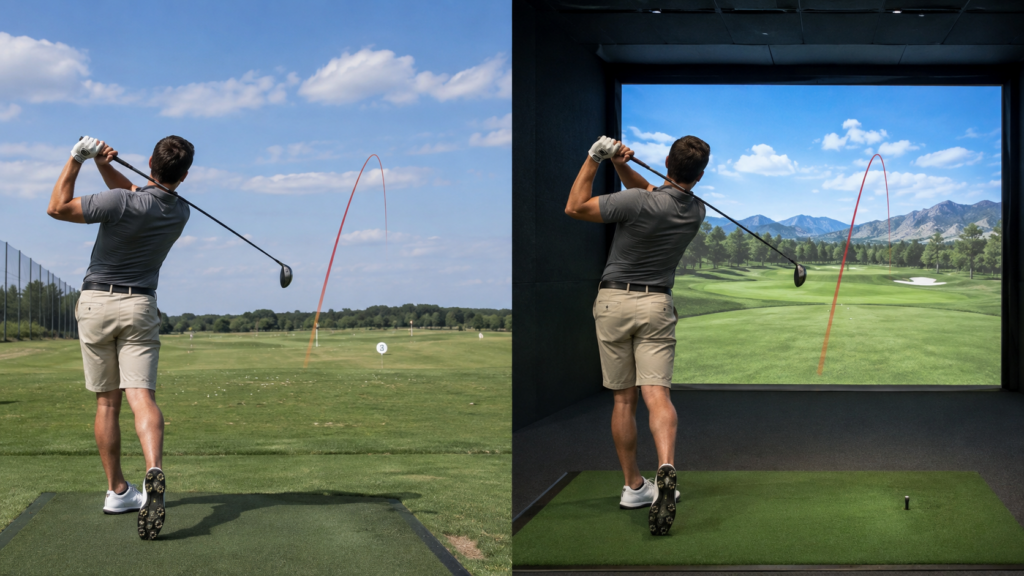
One of the most important concepts in simulator golf is the difference between measured information and calculated results. A launch monitor may directly observe characteristics such as ball speed, launch direction, launch angle, and spin. The simulator software then uses those inputs to determine how far the shot should carry, how high it should fly, how much it should curve, and where it should finish.
That distinction helps explain are golf simulators accurate when golfers notice that a simulated carry distance does not perfectly match what they expect outdoors. The launch measurement could be correct while the software is modeling the remaining flight under different environmental assumptions.
Outdoor shots are affected by temperature, wind, elevation, humidity, turf firmness, and other conditions. Simulator software can represent some of these variables, but the settings must match the comparison being made. A virtual shot modeled at a different elevation or wind setting should not be expected to finish at the same distance as an outdoor shot played under unrelated conditions.
The USGA’s indoor testing methods demonstrate why controlled measurements can be valuable. Outdoor testing introduces variables such as changing wind and temperature, while controlled environments allow launch conditions and ball behavior to be evaluated more consistently.
Therefore, are golf simulators accurate should not be judged by whether one drive lands on the exact yardage a golfer remembers from last Saturday. Look at repeated shots, measured launch conditions, and consistent patterns. Reliability across a session tells you more than one isolated distance comparison.
Setup And Calibration Can Change The Results
Even excellent equipment can produce questionable information when it is positioned incorrectly. Launch monitors are designed to observe a specific hitting area, target line, or section of ball flight. Moving the unit away from its intended position or aiming it incorrectly can affect the readings.
Room dimensions matter as well. Certain radar systems need enough space behind the golfer and enough distance between the ball and screen to observe movement properly. Camera-based systems may need less ball-flight distance but still require correct placement around the hitting zone. Lighting can matter for some optical systems, particularly when shadows, reflections, or unusual light sources interfere with visual tracking.
This is why are golf simulators accurate depends partly on installation. The manufacturer’s positioning and calibration instructions should be treated as part of the equipment rather than optional suggestions. Players should also confirm the intended target line and keep the hitting location consistent.
Software settings deserve similar attention. Elevation, wind, temperature, fairway firmness, and other virtual conditions can affect the displayed result. A golfer comparing simulator distances with outdoor numbers should make sure the simulated environment is reasonably comparable.
The Roaming Scores mobile golf simulator setup currently combines the Bushnell Launch Pro with GSPro software inside a dedicated inflatable enclosure. Roaming Scores lists ball speed, spin, carry, and angle among the measurements available during play. Are golf simulators accurate when properly installed? Correct setup removes several avoidable sources of error and gives the tracking technology the environment it needs to work consistently.
Full Swings Are Usually Easier To Reproduce Than Putting
Drivers, irons, and wedges create clear launch conditions because the ball leaves the clubface with measurable speed, direction, launch angle, and spin. Those characteristics give the tracking system useful information from which to model the rest of the flight. This makes full-swing shots one of the strongest areas of simulator golf.
Putting is more difficult to reproduce because much of real putting depends on the surface after the ball begins rolling. Outdoor greens vary in speed, slope, grain, moisture, firmness, and smoothness. A virtual green has to represent those factors digitally rather than allowing the player to physically observe and feel the entire surface.
When someone asks are golf simulators accurate for putting, the answer should therefore be more qualified than it is for a driver. The system may accurately measure the initial direction and speed of the putt, but the player’s experience of reading and controlling a virtual green is naturally different from standing on real turf.
Very short chips can create another challenge because the ball may travel only a small distance before interacting with the simulated ground. The quality of these shots depends on both tracking performance and how the software models bounce, roll, rough, sand, and green conditions.
Are golf simulators accurate enough for complete virtual rounds? Yes, they can create competitive and useful rounds, but golfers should expect the strongest realism from measured full swings. Putting and delicate short-game shots involve more simulated surface behavior and therefore require some adjustment from outdoor golf.
Golf Balls And Contact Can Influence The Reading
A launch monitor can only evaluate the shot that is actually struck. Poor contact, a damaged golf ball, unusual markings, or inconsistent ball placement can create results that appear surprising even when the tracking system is functioning correctly. Before blaming the simulator, golfers should look at the quality of the strike.
Different golf balls can also create different launch conditions. Ball construction affects speed, spin, feel, and flight, which is why changing from one ball model to another may produce different numbers. A golfer testing equipment or establishing club distances should use the same type of quality golf ball whenever possible rather than switching constantly between random range balls.
This becomes important when evaluating are golf simulators accurate through repeated testing. Ten shots hit with different balls and inconsistent contact provide a poor comparison. A better test uses one club, the same type of ball, a consistent target, and several centered strikes. Clean clubfaces also help maintain consistent contact. Grass and mud may not be common in an indoor simulator, but residue can remain in grooves after outdoor rounds. Keeping the face and ball clean removes another variable when comparing shot data.
Golfers asking are golf simulators accurate should remember that unexpected numbers do not automatically indicate equipment failure. A toe strike, heel strike, thin iron, unusually high-face driver contact, or damaged ball can genuinely produce a different flight. The simulator may simply be reporting the consequences of the impact.
How To Decide Whether Your Simulator Is Accurate
The best way to evaluate a simulator is to look for patterns rather than trying to prove accuracy with one swing. Begin with a club you know well and hit several shots using the same ball type and target. Ignore obvious mishits and look at the group of reasonably centered strikes.
Carry distances should form a believable pattern. Ball speed should change logically when contact improves or deteriorates. A shot that starts left should not repeatedly appear to start right. A noticeable slice or hook should be represented in the appropriate direction. When the same quality of strike produces wildly different information from one swing to the next, setup or equipment deserves closer inspection.
Are golf simulators accurate compared with outdoor golf? Compare averages rather than single shots. Outdoor yardages themselves change because of wind, temperature, elevation, lie, turf, and the quality of contact. Simulator data collected in a controlled environment can actually make it easier to establish repeatable baseline distances because many of those variables are removed.
The USGA has used launch monitors in golf research and describes the growing availability and accuracy of launch-monitor technology as an important tool for understanding ball striking and flight. Ultimately, are golf simulators accurate should be evaluated through consistency. A useful simulator does not need every shot to match a memory from the course. It needs to respond predictably when the golfer changes club, speed, strike, launch, spin, and direction.
Conclusion
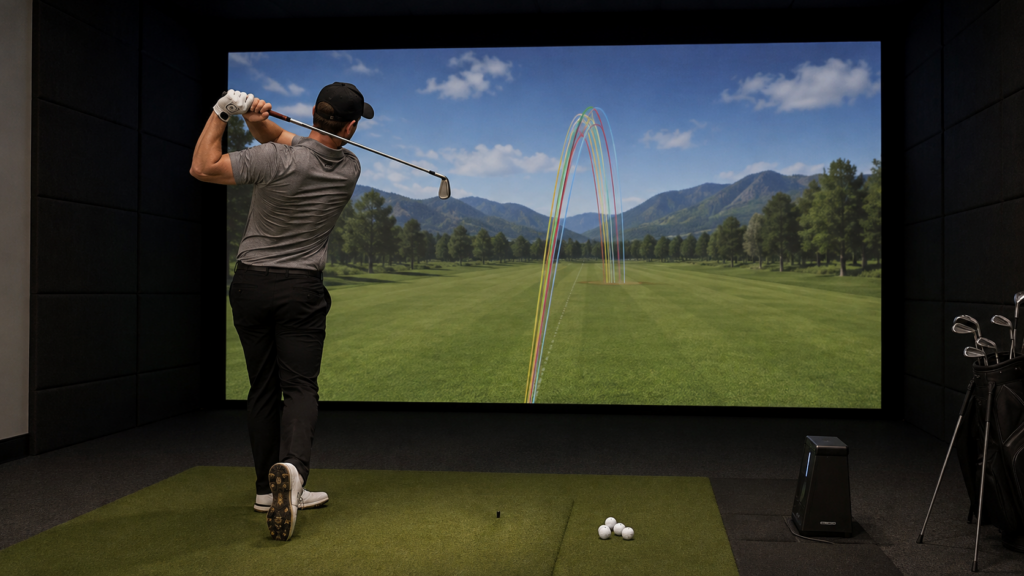
So, are golf simulators accurate? Quality systems can provide dependable full-swing measurements and realistic ball-flight results when the launch monitor is positioned correctly, the software is configured properly, and the golfer uses consistent equipment. Ball speed, launch, spin, direction, and carry can provide valuable information, while putting and delicate short-game shots involve more simulated surface behavior.
Roaming Scores uses Bushnell Launch Pro tracking with GSPro virtual course software to bring simulator golf to events across Northeast Ohio. Instead of simply watching an animated shot, players can see real data produced by their swings while competing with friends, coworkers, or guests. Event hosts can book their date for parties, weddings, corporate events, fundraisers, and other gatherings.