
Golf feels so established today that it is easy to imagine the sport appearing in one clear moment with a known inventor. The real story is much more gradual. When was golf invented? Historians generally trace the modern game to Scotland during the Middle Ages, although people in several countries had played earlier games involving sticks and balls. The strongest written evidence for recognizable Scottish golf appears during the 15th century. From there, the game developed over hundreds of years as courses, clubs, balls, competitions, and formal rules changed.
Scotland remains central to golf history because the version played there eventually developed into the sport recognized around the world today. Understanding that history also explains why golf still carries traditions that are centuries old, even while modern golfers now practice with advanced clubs, launch monitors, and simulators.
When Was Golf Invented According To Historical Records?
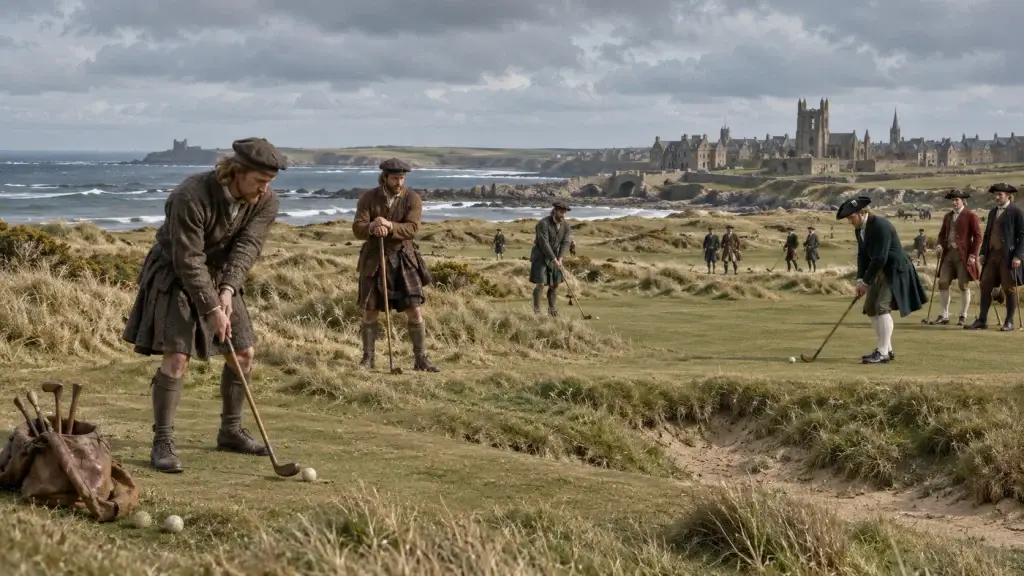
There is no single date historians can identify as golf’s birthday. However, anyone asking when was golf invented will usually encounter the year 1457. That year contains the earliest widely recognized written reference to golf in Scotland. King James II and the Scottish Parliament prohibited people from playing golf and football because the games were distracting men from practicing archery, which was considered important for national defense. The fact that lawmakers felt the need to ban golf suggests that people were already playing it often enough to attract official attention.
This makes 1457 an important date rather than necessarily the year someone created the game. Golf probably existed in some form before the law was written. Later Scottish records continued to mention the sport, providing increasingly strong evidence that golf had become part of everyday recreation. Therefore, the safest historical answer to when was golf invented is that the recognizable Scottish game emerged by at least the 15th century, rather than appearing suddenly in one particular year.
Did Scotland Really Invent Modern Golf?
Scotland receives most of the credit for creating modern golf because the Scottish version developed the characteristics that eventually defined the sport. Players struck a ball across natural coastal land toward a target while attempting to complete the route in as few strokes as possible. These areas became known as links, and their sandy soil, rolling terrain, wind, dunes, and natural hazards heavily influenced early golf course design.
Questions about when was golf invented sometimes become complicated because similar stick-and-ball games existed outside Scotland. The Netherlands had games such as kolf, while other cultures also played activities that involved striking balls with clubs or club-like equipment. Similarity, however, does not necessarily mean those games were golf in the modern sense. The USGA notes historical connections between Dutch terminology and Scottish golf while recognizing Scotland’s central role in developing the game familiar today. Golf’s modern rules, course traditions, club culture, and competitive structure grew primarily from Scottish golf rather than from one earlier stick-and-ball activity.

What Happened In Scotland During The 1400s And 1500s?
Scottish records show golf becoming increasingly established after the 1457 prohibition. Similar restrictions appeared again later in the 15th century, but the sport clearly survived them. By the early 1500s, golf had moved beyond being an activity authorities tried to discourage. King James IV himself purchased golf equipment, showing how quickly attitudes toward the game could change. Golf also became associated with prominent figures and communities along Scotland’s eastern coast.
These records help provide context when answering when was golf invented because they show development rather than a single invention. During this period, people did not have standardized manufactured clubs, professionally maintained courses, or internationally accepted regulations. They played on natural land and adapted equipment and customs over time. St Andrews later became particularly important to golf’s identity, but golf was played in several Scottish locations. By the 16th century, the game had gained enough cultural importance that written references became more common, helping historians trace its transition from an informal pastime into an organized sport.
When Were The First Rules Of Golf Written?
One of the biggest milestones came in 1744, almost three centuries after the famous Scottish ban. The Gentlemen Golfers of Leith, later known as the Honourable Company of Edinburgh Golfers, created 13 written rules for a competition at Leith Links. According to the United States Golf Association, these are the earliest known written Rules of Golf. Many fundamental ideas contained in those rules remain recognizable in the sport today.
The 1744 rules are important when discussing when was golf invented because they demonstrate that golf was already well established before anyone attempted to standardize it. Players already understood the general purpose of the game, but organized competitions required everyone to follow consistent procedures. Other Scottish golfing societies later adopted and modified rules of their own. Over time, greater consistency became necessary as golfers traveled, competed with members of other clubs, and introduced the sport to new countries. Formal rules transformed an old Scottish pastime into something that could function as an organized international sport.
How Did St Andrews Shape The Game?
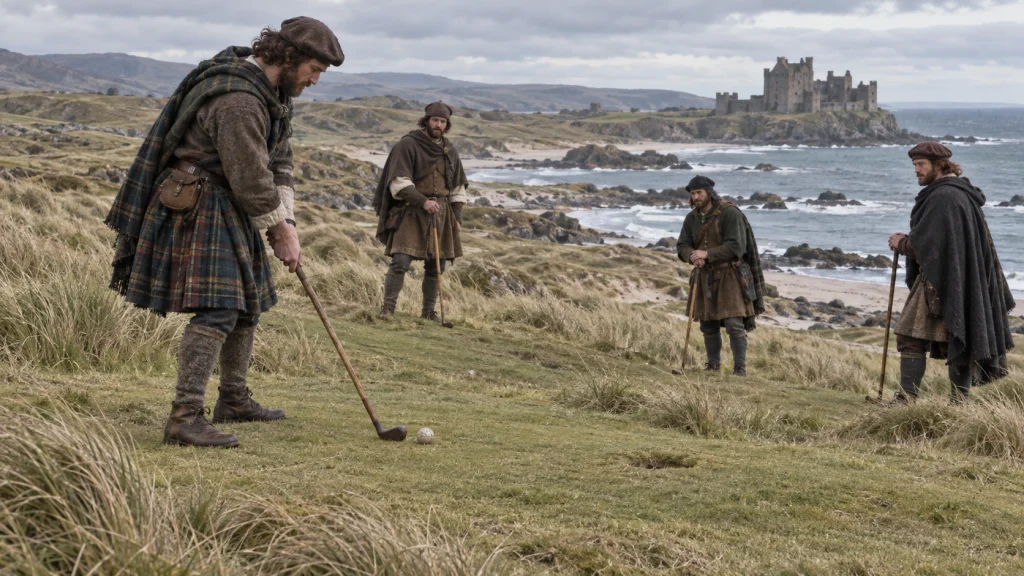
St Andrews did not invent golf by itself, but few places influenced the game’s development more strongly. Golfers played across the links at St Andrews for centuries, gradually establishing traditions that affected course design and organization elsewhere. One particularly important development was the emergence of the 18-hole round. Earlier courses did not automatically contain 18 holes, and the number could differ considerably from one location to another.
That history matters when someone asks when was golf invented because modern golf was formed through several separate milestones. The game existed long before all courses followed the familiar 18-hole structure. St Andrews helped establish standards that golfers eventually copied around the world, while The Royal and Ancient Golf Club of St Andrews became deeply influential in the administration and rules of the sport. Golf therefore developed piece by piece. The basic game appeared first, followed by clubs, written rules, standardized rounds, governing bodies, equipment standards, and major championships. Modern golf represents the combined result of all those developments rather than one person’s original design.
How Did Golf Spread From Scotland To The United States?
Golf eventually traveled far beyond Scotland through trade, migration, military activity, and growing British influence around the world. Evidence of golf equipment in North America reaches surprisingly far back. USGA historical records note golf clubs in the estate of Massachusetts governor William Burnet in 1729. Scottish golf clubs and balls were also shipped to parts of the American colonies during the 18th century. The game existed in areas including New York, Charleston, and Savannah before becoming nationally popular.
For American golfers wondering when was golf invented, it is useful to separate golf’s Scottish origins from the later development of golf in the United States. The USGA was formed in 1894, providing a national governing organization for American golf. The first U.S. Open followed in 1895. Interest grew rapidly during the early 20th century, and course construction expanded across the country. Golf eventually moved from being associated mainly with private clubs into public courses, resorts, schools, driving ranges, and recreational facilities accessible to a much wider range of players.
How Has Golf Changed Since It Was Invented?
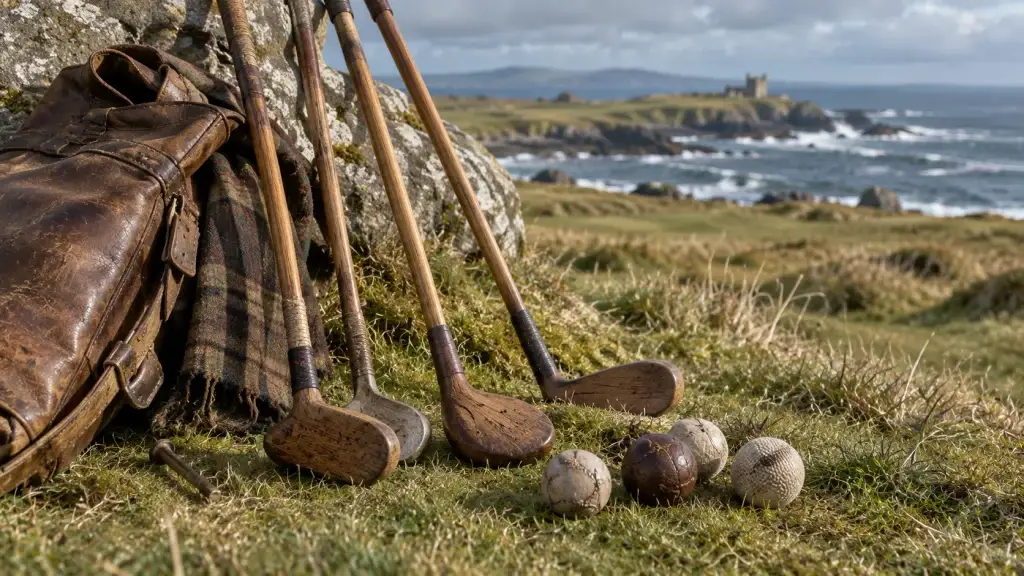
The basic challenge of golf remains remarkably familiar: move the ball from the starting point into the hole using as few strokes as possible. Almost everything surrounding that challenge has changed. Wooden clubs gradually gave way to steel shafts, advanced alloys, graphite, and highly engineered clubheads. Golf balls evolved from early handcrafted designs into precisely manufactured multilayer products. Courses became professionally maintained, while sophisticated irrigation, mowing, drainage, and turf management created playing conditions early golfers could hardly have imagined.
Technology has also changed where golfers can play. Modern launch monitors can measure details such as ball speed, spin, launch angle, and carry distance, allowing realistic golf experiences away from a traditional course. A mobile golf simulator, for example, can bring virtual courses and shot tracking directly to an event. This evolution gives another perspective on when was golf invented. The core game may have roots stretching back more than five centuries, but golf has continually adopted new equipment and technology while preserving its fundamental objective.
Conclusion
So, when was golf invented? There is no confirmed day or individual inventor. The best historical evidence shows that recognizable golf was being played in Scotland by at least 1457, while the first known written rules appeared in 1744. Over the following centuries, Scottish courses, golfing societies, standardized rules, and international expansion shaped the game played today.
Golf has changed dramatically since those early rounds on natural Scottish links, but its basic challenge has survived. Today, players can enjoy that same game on traditional courses or through modern simulator technology. Roaming Scores brings that modern version of golf directly to events across Northeast Ohio, combining centuries-old competition with launch-monitor technology and virtual course play.