
Golf simulators have become much more than entertainment systems. Modern setups can measure detailed shot information, recreate complete courses, and provide feedback that helps golfers understand what is happening at impact. So, how accurate is a golf simulator? A high-quality simulator can be remarkably accurate when it uses a reliable launch monitor and is installed correctly. The system may measure ball speed, launch angle, spin, direction, and other characteristics immediately after impact, then use those measurements to calculate the rest of the ball flight.
However, not every simulator uses the same technology or measures the same data. Some systems rely heavily on cameras, others use radar, and some combine both. Accuracy also depends on alignment, lighting, hitting surface, available room, environmental settings, and proper calibration. A well-designed simulator can closely reproduce real golf shots, but poor setup or lower-quality hardware can create noticeable differences in distance, direction, or spin.
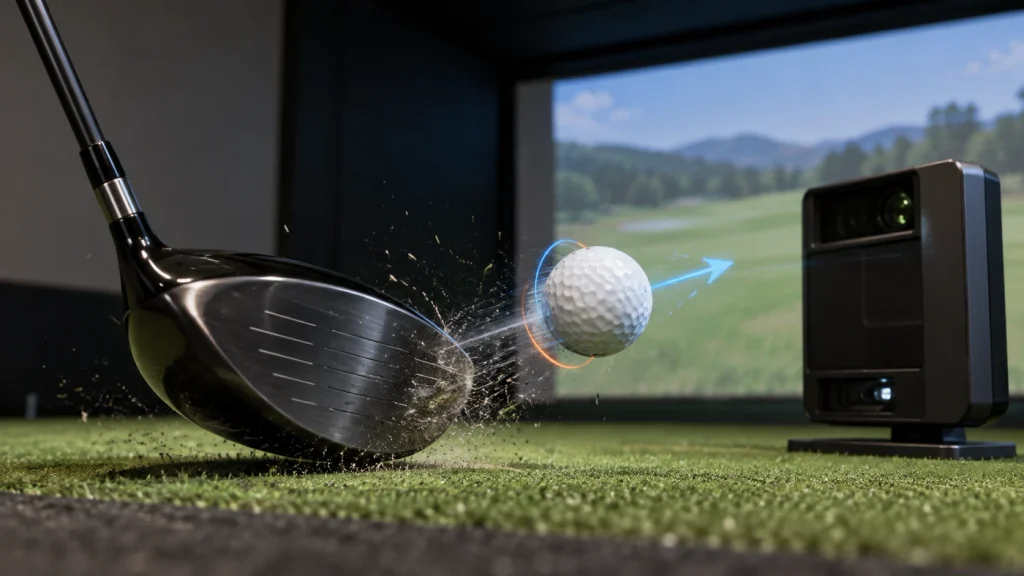
How Accurate Is A Golf Simulator?
There is no single percentage that answers how accurate is a golf simulator because different systems operate at very different levels. Professional-grade launch monitors are designed to measure several important characteristics of the golf ball immediately after impact. Those measurements may include ball speed, launch angle, horizontal direction, total spin, and spin axis. Once the system knows those launch conditions, software can model how the ball should travel through the air.
Premium systems can provide results that are close enough to real-world golf for professional practice, club fitting, coaching, and competitive simulator play. TrackMan says its simulator technology combines radar and cameras and uses ball-flight models developed from billions of measured shots. SKYTRAK says its launch data has been tested against leading commercial launch monitors and through robot testing. That does not mean every simulator will produce identical numbers, but it shows how sophisticated modern measurement has become.
What Does A Golf Simulator Actually Measure?
The launch monitor is the part of the simulator responsible for observing the golf shot. Depending on the model, it may directly measure ball speed, launch angle, horizontal launch direction, spin, clubhead speed, club path, angle of attack, and other parameters. The software then uses that information to create the virtual ball flight displayed on the screen. Systems that capture more reliable measurements generally have more information available when calculating the shot.
Foresight Sports explains that launch monitors can measure important ball-flight characteristics such as ball speed, launch angle, azimuth, total spin, and spin axis. These measurements help the simulator calculate a realistic trajectory rather than simply displaying a generic animation. You can review the measurement categories directly on the Foresight Sports measurement guide. Understanding these measurements helps answer how accurate is a golf simulator because the quality of the final virtual shot depends heavily on the quality of the launch data captured at impact.
How Do Camera And Radar Systems Compare?
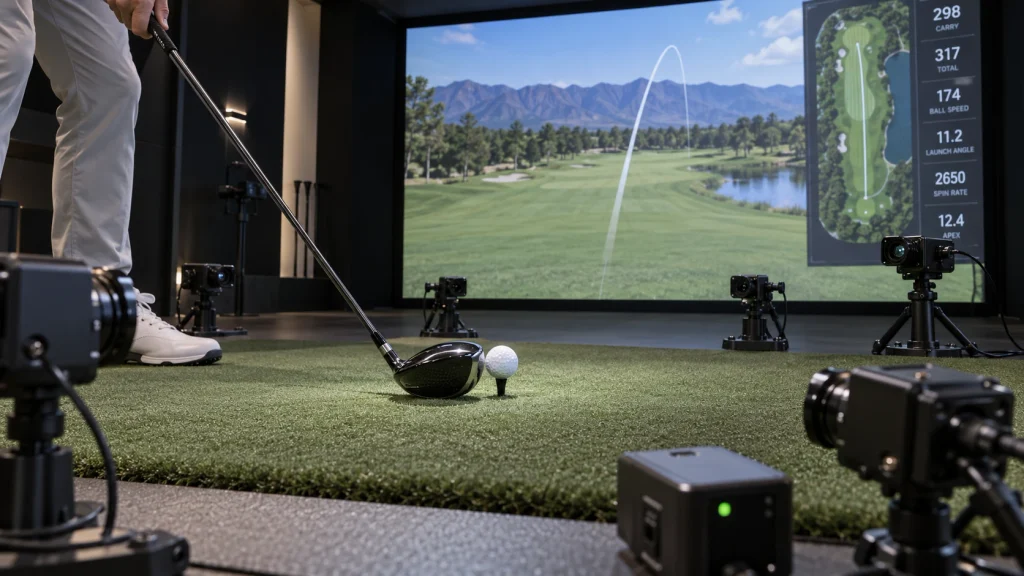
Camera-based launch monitors observe the ball and sometimes the club using high-speed imaging around the hitting area. Because the cameras capture the ball immediately after impact, these systems can work particularly well indoors where the ball has only a short distance to travel before reaching the screen. Foresight Sports uses this type of photometric technology across several of its launch monitors and describes measuring launch information through images captured directly around impact.
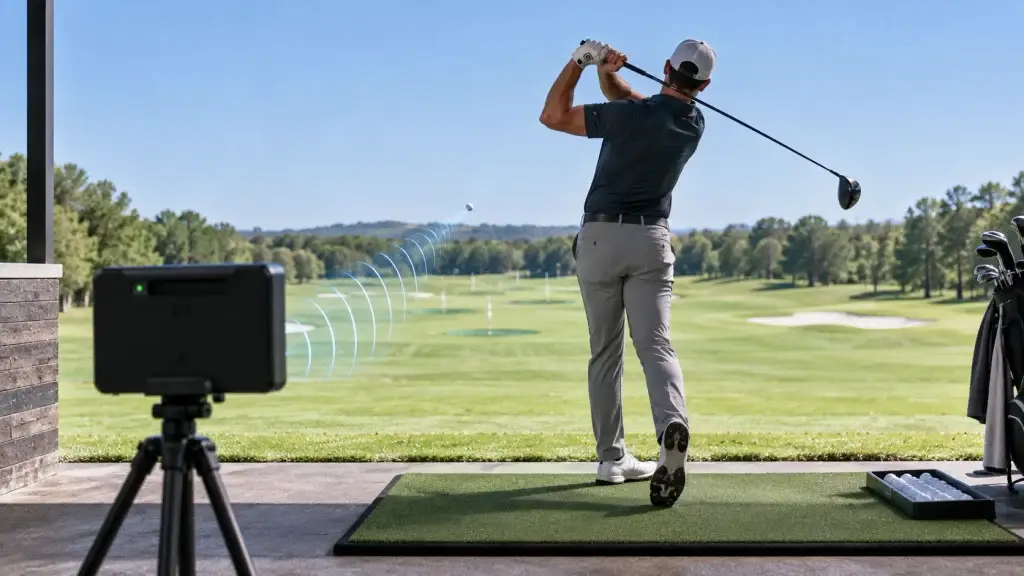
Radar-based systems track movement differently by observing the ball as it travels away from the golfer. Some modern systems also combine radar with cameras. TrackMan’s current indoor simulator technology uses both approaches, which allows the system to use different forms of measurement together. When considering how accurate is a golf simulator, neither technology should automatically be considered accurate or inaccurate simply because of the measurement method. Hardware quality, software, available tracking distance, calibration, and installation all affect the final result.
How Accurate Are Carry Distance And Ball Flight?
Carry distance is one of the measurements golfers notice most quickly. If you normally hit a 7-iron 150 yards outdoors but the simulator regularly reports 125 yards, something may be wrong with the setup, settings, or strike conditions. Accurate carry calculations rely heavily on correct ball speed, launch angle, and spin information. When those inputs are measured properly, good simulator software can produce realistic distance estimates.
SKYTRAK says its ball-flight model has been evaluated using robot and human testing and produced results comparable with leading commercial launch monitors for carry distance, total distance, and offline measurements. However, indoor results can still feel different because golfers may swing differently inside a confined room. This is sometimes called indoor swing syndrome. When evaluating how accurate is a golf simulator, make sure the golfer is making a normal swing before assuming a distance difference is caused entirely by the technology.
What Can Make A Golf Simulator Less Accurate?
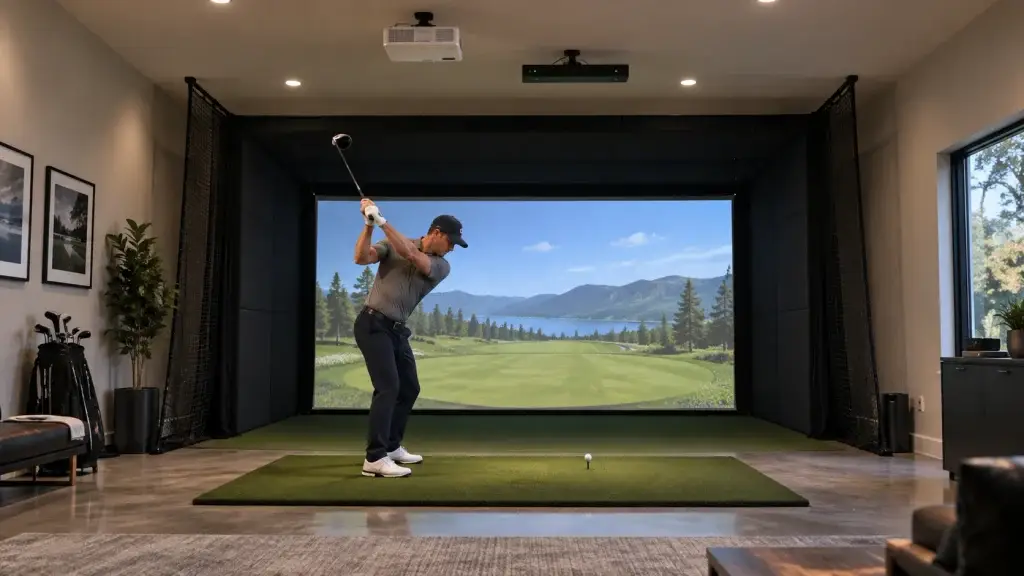
Installation problems can cause even an otherwise capable launch monitor to produce disappointing results. Misalignment is one of the most common issues. If the device is not positioned correctly relative to the target line or hitting surface, shot direction can appear incorrect. Lighting can also affect some camera-based systems, while reflective objects or inadequate tracking conditions may interfere with certain radar installations.
SKYTRAK recommends checking alignment, ensuring the launch monitor is level with the hitting mat, providing suitable lighting, and confirming software settings when reported yardages seem inaccurate. The hitting surface can also influence how the golfer strikes the ball. A mat that is too soft, too hard, or uneven may change impact compared with natural turf. Therefore, how accurate is a golf simulator depends partly on the equipment and partly on how carefully the entire environment has been prepared.
Can A Simulator Accurately Measure Spin?
Spin is one of the most important and challenging parts of ball-flight measurement. Backspin influences lift and carry distance, while spin axis helps determine how much the ball curves left or right. A shot with the correct ball speed but incorrect spin data can produce a virtual trajectory that looks very different from the real shot. That is why premium launch monitors place considerable emphasis on measuring spin accurately.
Foresight Sports states that its camera-based launch monitors capture ball movement to determine measurements including total spin and spin axis. SKYTRAK also lists backspin, side spin, total spin, and spin axis among the data provided by its launch-monitor systems. When asking how accurate is a golf simulator for serious practice, spin performance deserves particular attention. A simulator used mainly for entertainment may not require the same level of precision as a system intended for club fitting or detailed swing analysis.
Are Golf Simulators Accurate Enough For Practice?
A properly configured simulator can be highly useful for practice because it provides immediate feedback after every shot. Instead of judging only whether the shot looked good, golfers can compare carry distance, direction, launch, spin, and consistency across multiple swings. That makes it easier to identify patterns such as a repeated left miss, excessive spin, inconsistent distance, or poor contact.
A golf simulator experience also makes it possible to practice different clubs and virtual course situations without relying on outdoor weather. Still, golfers should interpret simulator numbers in context. The goal is not to obsess over tiny differences between devices. The most useful information is often the repeated pattern across multiple shots. When considering how accurate is a golf simulator for improvement, consistency and reliable feedback can matter just as much as whether every single number exactly matches another launch monitor.
Conclusion
So, how accurate is a golf simulator? With a high-quality launch monitor, correct calibration, suitable lighting, proper alignment, and enough room for a natural swing, modern systems can provide highly realistic ball-flight and distance information. Premium camera, radar, and hybrid systems directly measure important launch conditions and use those measurements to recreate the shot on screen.
Accuracy can still vary between devices and installations, which makes setup just as important as the equipment itself. For entertainment and competitive event play, a well-designed simulator can create a convincing and engaging golf experience. Roaming Scores uses modern mobile simulator technology to bring measured golf shots, virtual courses, and competitive play directly to events across Northeast Ohio.