
Est. 2026
Northeast Ohio
Mobile Golf Sim Co.
How Golf Simulators Work: Measurement, Math, Picture.
High-speed cameras photograph your impact, software computes the true flight, and a laser-scanned course renders the result — all inside an enclosure we build in your driveway in under an hour.
Measurement. Math. Picture.
Here’s how golf simulators work, stripped of jargon: a launch monitor watches the instant of impact and measures what actually happened. Software turns those measurements into a computed ball flight. A projector paints that flight onto the screen you just hit a real ball into.
Everything else — the courses, the contests, the spin-rate arguments — sits on top of those three steps.
- Camera-based measurement: thousands of frames per second at impact.
- Real balls, real clubs, full swings into a purpose-built impact screen.
- Four numbers per shot: ball speed, spin, carry, launch angle.
- 350+ real courses rendered by GSPro, scanned to the bunker lips.
What Happens in the Half-Second After You Swing
The Cameras Catch Impact
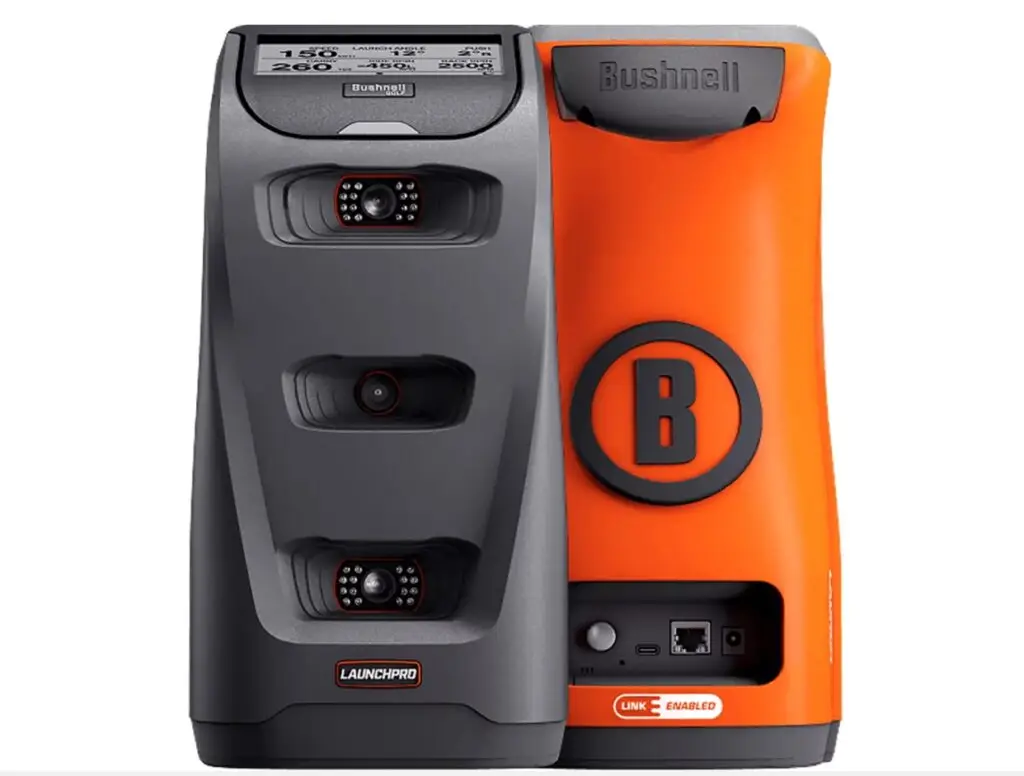
The Bushnell Launch Pro photographs ball and clubface thousands of times per second — measuring reality, not inferring it. Same unit PGA fitters use.
The Math Runs
Ball speed, spin rate, and launch angle feed a flight model. Your fade is a fade because you actually hit one, not because software rolled dice.
The Course Responds
GSPro renders the shot on a laser-scanned real course — carry, bounce, roll, and the bunker you absolutely found. Data appears; arguments begin.
Four Parts, One Driving Range
Launch Monitor
Bushnell Launch Pro — photometric, tour-grade, verifiable in one search. It doesn’t estimate your shot; it measures it.
Software
GSPro with 350+ real-world courses, community-built and laser-scanned. Contest modes, leaderboards, and full rounds on demand.
Enclosure & Screen
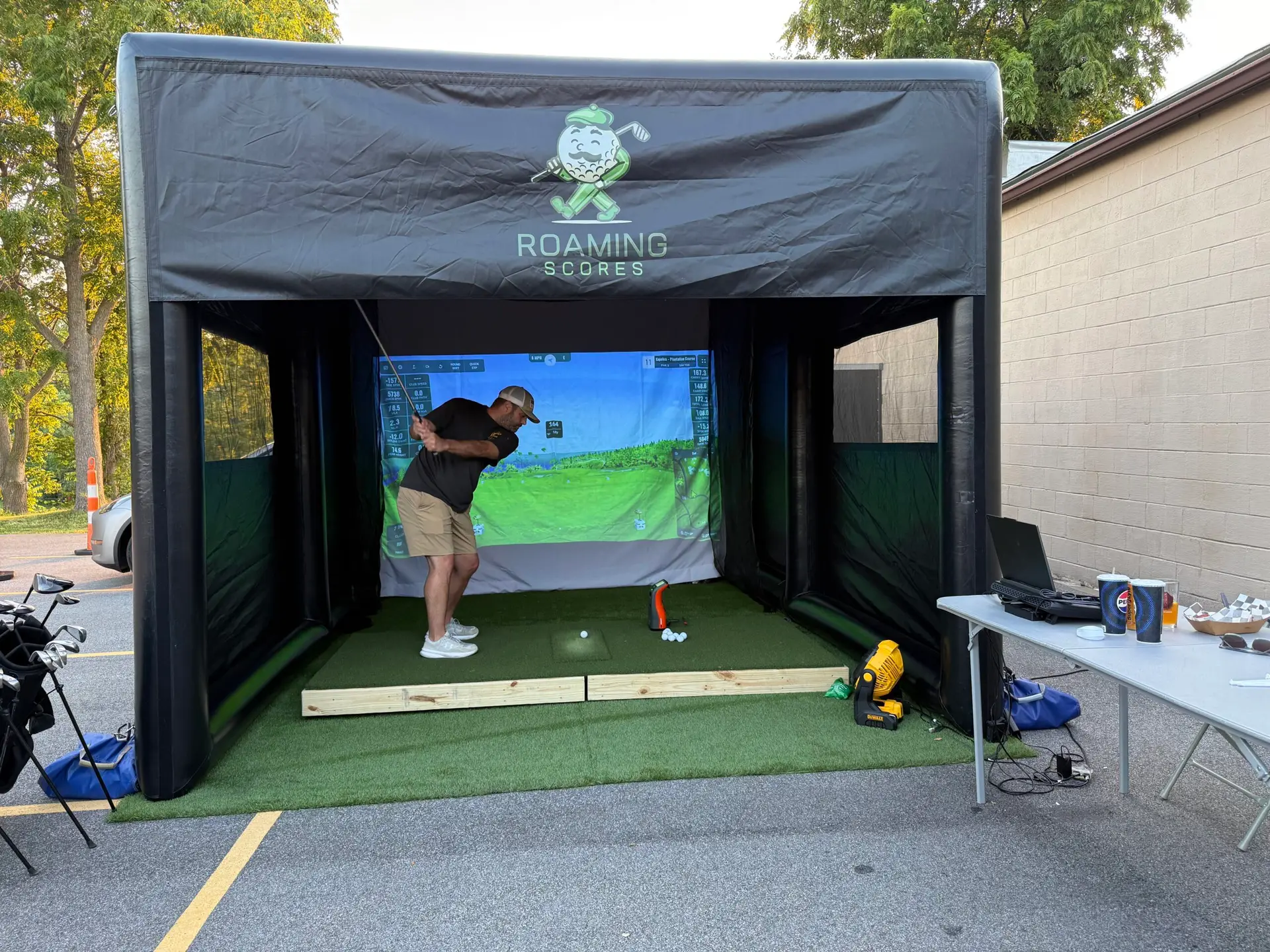
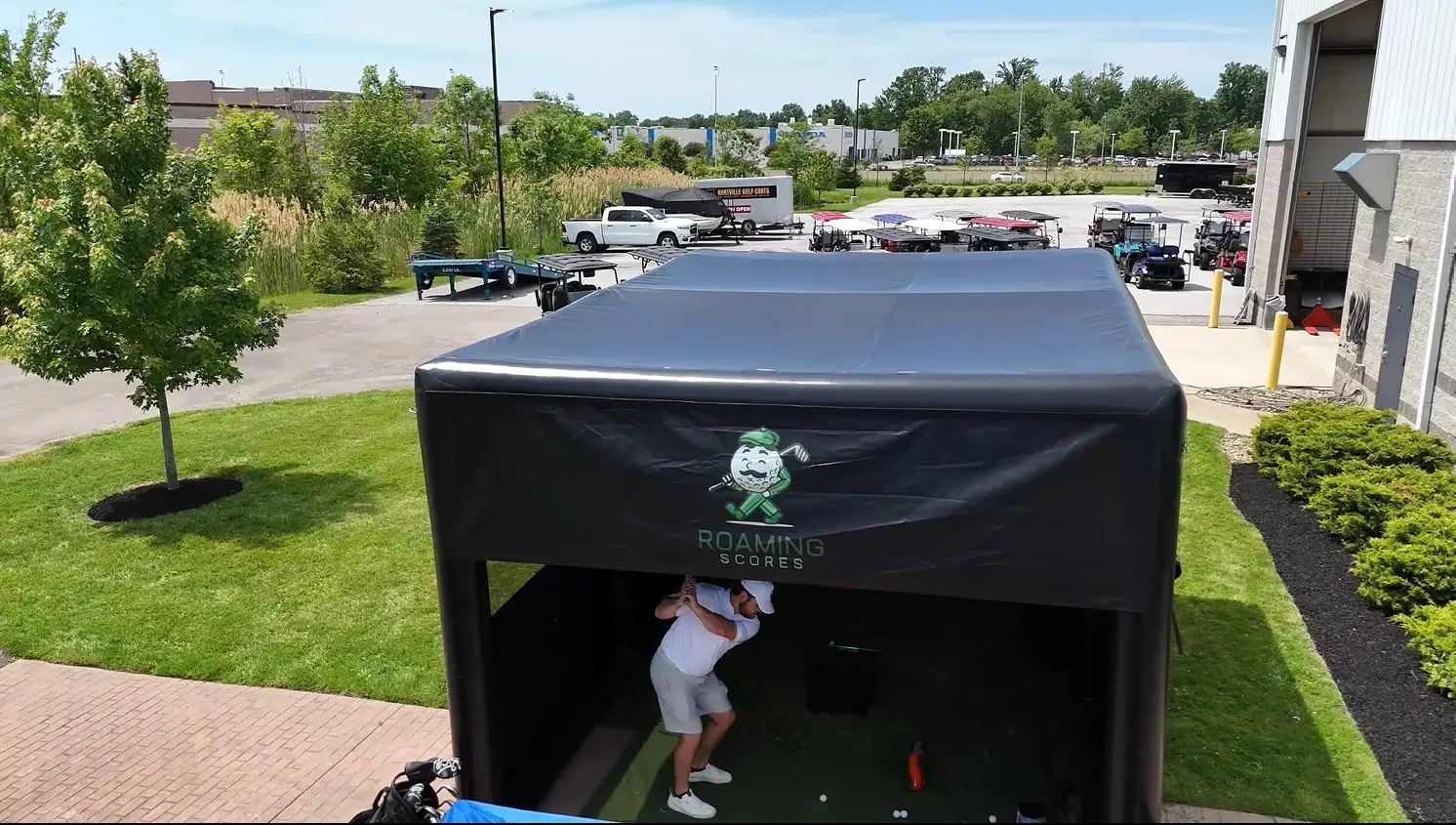
20 × 15 × 12 ft inflatable enclosure with an impact screen built to eat full swings. Every ball stays inside — that’s the whole safety story.
Mat & Projection
A proper hitting mat and a projector painting the flight life-size. Assembled on-site in 45–60 minutes, torn down faster.
What Transfers From the Course
The measurement is tour-grade; the conditions are merciful. Indoors there’s no wind, no slope, no water-hazard adrenaline — your numbers are honest, your environment is forgiving. Course golf and simulator golf are the same swing wearing different weather.
The Tech Is Half the Story
- Instant feedback makes first-timers the most entertained people in the room.
- Real data makes the golfers take the leaderboard personally.
- The contained enclosure makes any space a course — backyard, ballroom, bar corner.
- The flat eight-hour day is the business model that makes it an event, not a demo. See the services.
The Machine, In the Field.
How It Works, Asked & Answered
The rig is built to showcase the full swing — drives, approaches, and the contests that come with them. Putting is the least dramatic part of simulator golf anywhere, and event formats lean into what a crowd loves watching: ball flight, carry numbers, and long-drive leaderboards. Gimmes are generous at parties, exactly as nature intended — the leaderboard remembers your drive, not your three-putt.
Eating full-speed golf shots is the screen’s entire job description — it’s a purpose-built impact surface, not a bedsheet with a projector pointed at it. Combined with the enclosure walls, it’s why the honest answer to every safety question is boring: the ball has nowhere to go but back toward the mat.
Three things: the 20-by-15-foot footprint with 12 feet of clearance, one standard power outlet, and a way to get the gear from the trailer to the spot. That’s the entire infrastructure ask — no special wiring, no internet requirement for play, no venue tech crew. It’s deliberately self-sufficient, because driveways don’t usually come with an IT department attached.
A launch monitor watches the moment of impact — in our case, high-speed cameras photographing the ball and clubface thousands of times per second — and measures what actually happened: ball speed, spin, launch angle. Software (GSPro, for us) takes those measurements and computes the full flight on a rendered real course, projected onto an impact screen you just hit a real ball into. Measurement, math, picture. That’s the whole machine.
Camera-based photometric units like the Bushnell Launch Pro measure the ball itself at impact, which is why club fitters and tour players trust them — the data comes from photography of reality, not inference. Other technologies estimate portions of the flight. For an event, the practical difference is credibility: when the low-handicapper’s fade shows up as a fade, the whole room believes the screen.
Real balls, real clubs, full swings. The impact screen absorbs the shot and the projector paints the flight onto it — that’s why the enclosure needs its full dimensions and why ‘is it safe indoors’ has a boring answer: yes, that’s the entire design brief of the screen.
Ball speed, spin rate, carry distance, and launch angle on every swing — the same numbers a club fitting runs on. First-timers mostly watch the flight; golfers argue with the spin number; everyone checks the carry. The data is half the entertainment and all of the credibility.
The measurement is tour-grade — the Launch Pro is literally the unit used by PGA club fitters. What changes indoors is everything that isn’t the ball: no wind, no slope under your feet, no water hazard adrenaline. Your numbers are honest; the conditions are merciful. Course golf and simulator golf are the same swing wearing different weather.
GSPro’s library runs 350-plus real-world courses, laser-scanned and community-built down to the bunker lips — Pebble Beach, St. Andrews, Augusta-style tracks, and hundreds you’ve never heard of but will argue about after. For events we load a rotation suited to the crowd and the contests.
Yes — the Launch Pro reads both orientations, and switching between lefty and righty players is routine at events. No equipment shuffle, no asterisks, no lefty waiting for a ‘compatible’ turn.
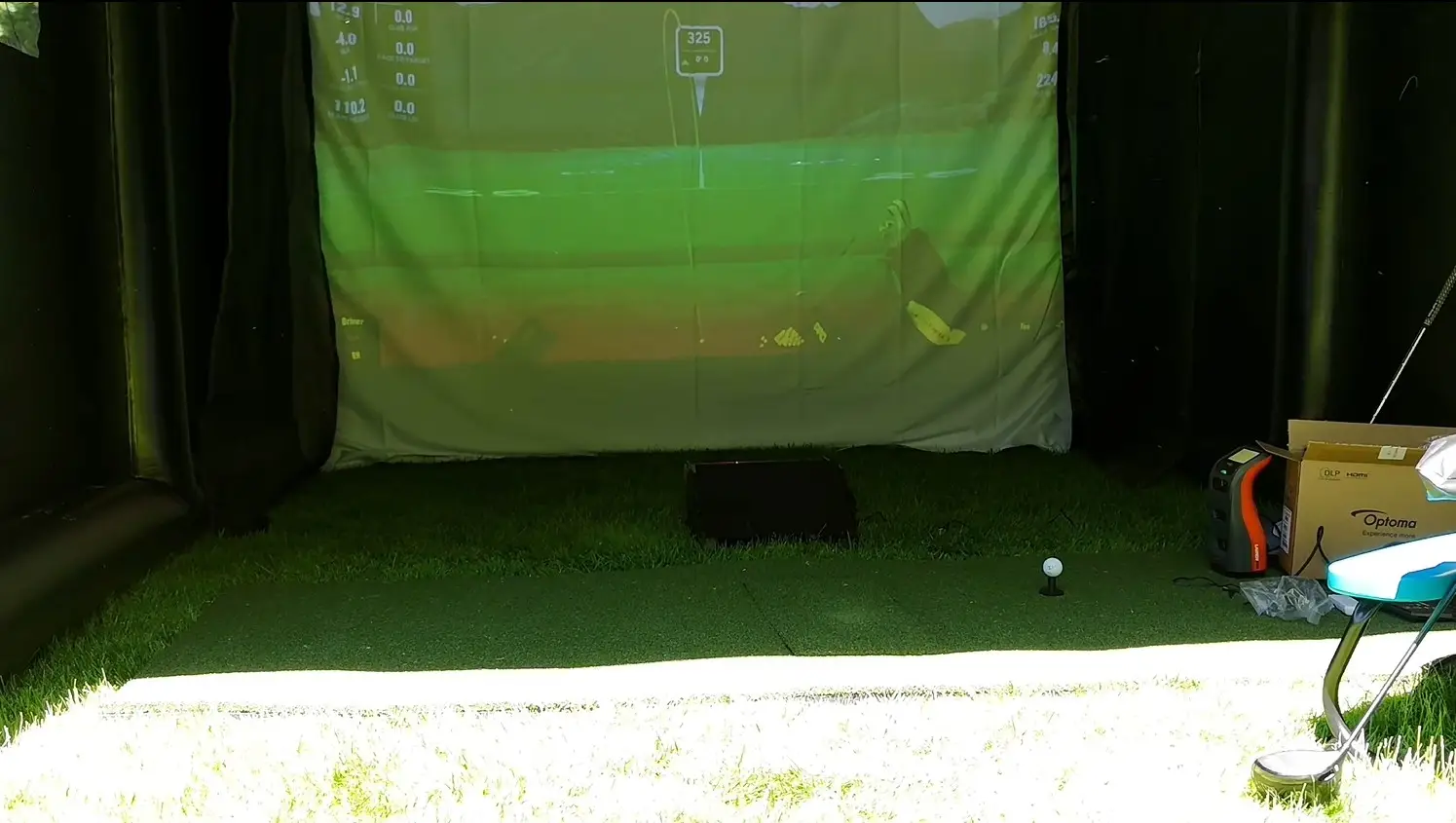
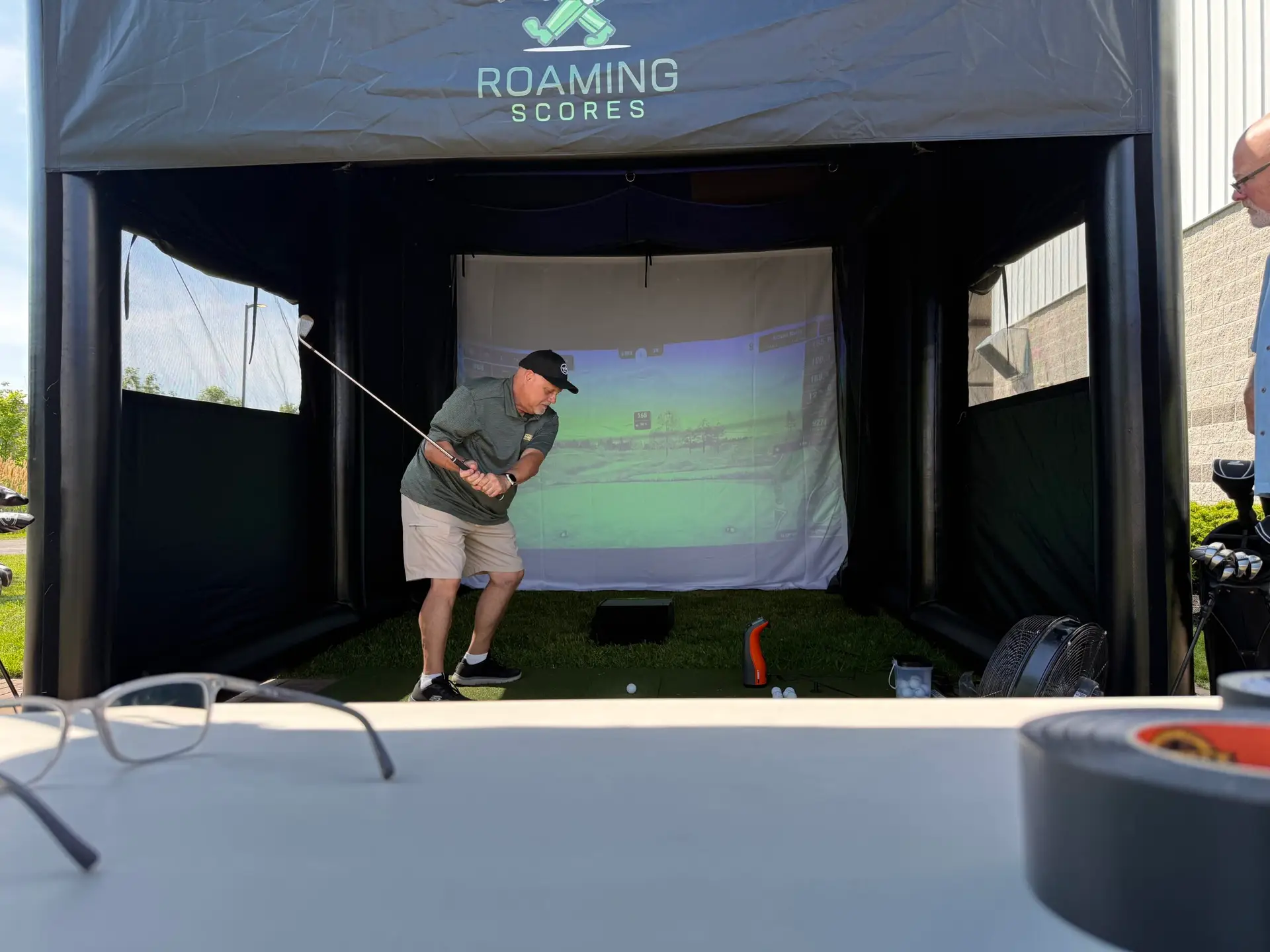
A 20-by-15-foot inflatable enclosure standing 12 feet tall, an impact screen, a projector, a proper hitting mat, and the Launch Pro positioned to watch impact. It assembles in 45–60 minutes on-site and contains every shot — which is what makes backyards, ballrooms, and bar corners all viable golf courses.
Beginners are the machine’s best audience. The simulator shows a first-timer their actual ball flight with actual numbers — instant, judgment-free feedback no driving range provides. Half our event guests have never swung a club, and they’re reliably the most entertained people in the room.
You book the date and location; we arrive 60–90 minutes early and build the rig; your guests play real courses with contests and leaderboards all day; we tear down and disappear. The technology explains the how — the eight-hour flat day explains why it works as an event.
The enclosure is self-contained and weather-independent; indoor and covered outdoor spaces are perfect, and open-air setups get a weather plan confirmed at booking. The physics inside the enclosure don’t care about the forecast — the setup logistics occasionally do.
The gallery page and our social channels are the closest thing to a standing demo — real events, real swings, real crowd reactions. If you’re planning a corporate or venue booking and want to see the rig in person, ask; when the calendar allows a walk-through, we’ll make it happen.
Seen the Physics. Now Book the Fun.
Quotes within 24 hours · hello@roamingscores.com · (440) 901-5991