
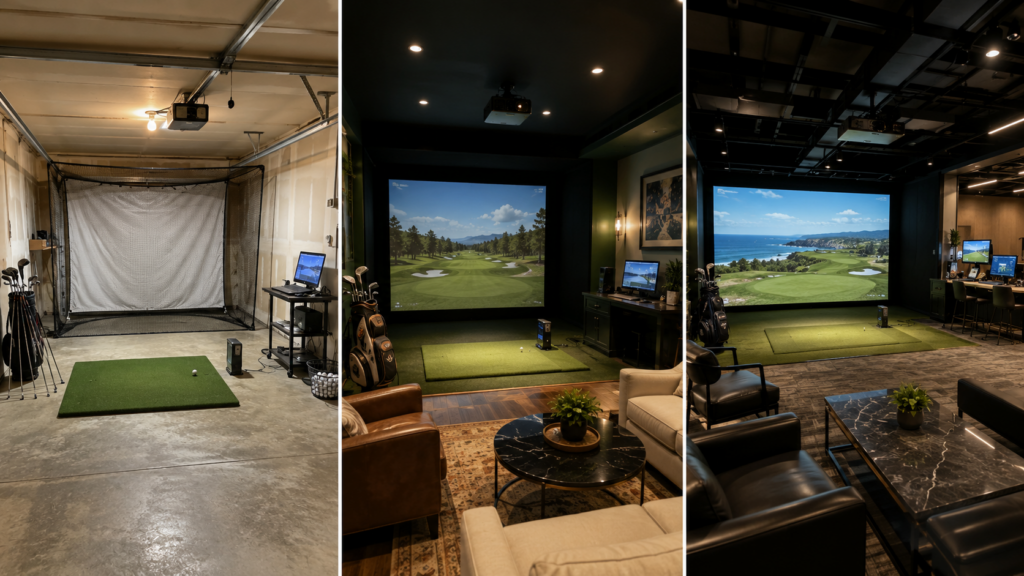
A useful answer to how much is a golf simulator depends on the experience you want. A basic practice setup can cost about $500 to $2,000, while a complete home simulator often falls between $3,000 and $10,000. Premium rooms may cost $15,000 to $50,000 or more. The total includes more than a launch monitor because a safe system may also need a mat, screen or net, projector, computer, software, and enough room to swing. The smartest budget is the amount that provides the accuracy, comfort, and features you will actually use.
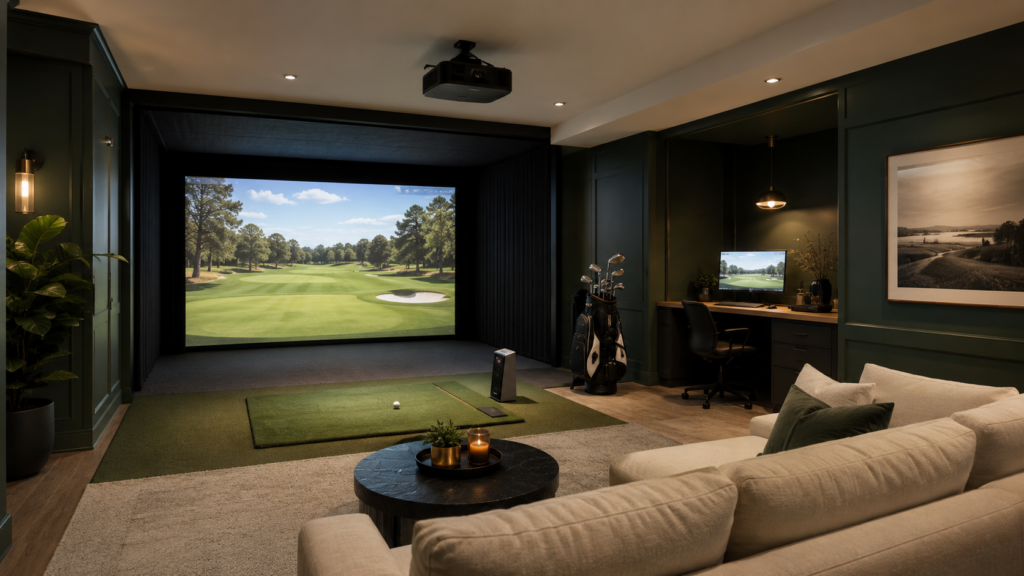
Golf Simulator Prices At A Glance
The easiest way to estimate how much is a golf simulator is to divide the market into three levels. A basic setup usually costs $500 to $2,000. It may include an affordable launch monitor, hitting mat, and net, with results shown on a phone, tablet, or television. This level suits golfers who mainly want carry distance, ball speed, launch angle, and more structured practice. A recreational simulator generally costs around $3,000 to $10,000. Buyers can often add an impact screen, enclosure, projector, better mat, simulation software, and a suitable computer. The experience feels more like playing indoor golf than hitting balls into a net while checking numbers on a small display.
Premium installations often start at around $15,000 and may exceed $50,000. They can include advanced tracking, large screens, brighter projectors, custom flooring, wall protection, and professional installation. Commercial systems can cost more because they must handle frequent use. The United States Golf Association reported that simulator participation in the United States reached 8.1 million users in 2024. That growth shows how indoor golf now supports regular practice, social recreation, competitive play, and event entertainment.
What You Get At Each Price Level
A lower-cost system provides the essential feedback needed to make practice more measurable. Golfers can compare club distances, monitor ball speed, and see whether a swing change improves the result. However, affordable systems may calculate some figures rather than measuring every detail directly. They can also require careful alignment, sufficient lighting, or more room behind the ball. Mid-range equipment usually improves accuracy and presentation together.
A golfer may receive more reliable spin information, smoother software, better virtual courses, and a projected image large enough to make play more engaging. This level suits recreational players, families, and golfers who want regular indoor practice without building a professional fitting studio. High-end simulators focus on deeper data, fast shot detection, stronger graphics, and a polished room. They may support coaching and club fitting by measuring more information about the ball and club. Still, expensive technology does not provide equal value for every player.
A casual golfer may rarely use measurements such as club path, face angle, or dynamic loft. A coach, competitive golfer, or club fitter may consider those figures essential. Therefore, buyers should choose a price level according to their purpose rather than assuming the most expensive setup will always provide the best value.
The Launch Monitor Often Sets The Budget
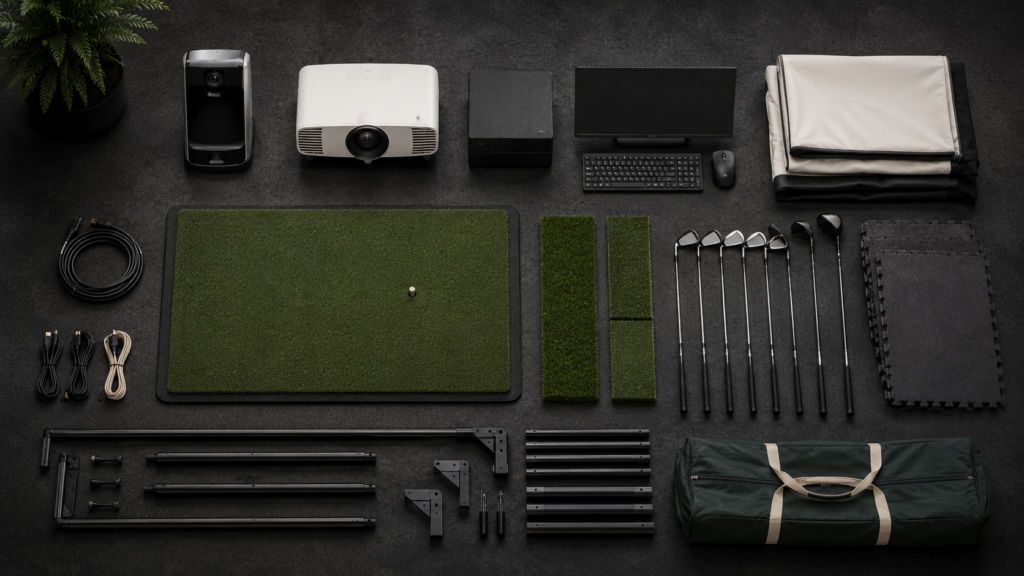
The launch monitor watches the shot and sends information to the simulator software. Because it controls the depth and reliability of that feedback, it often represents the largest single expense. Entry-level monitors can cost several hundred dollars, advanced home units can cost several thousand, and professional systems may reach five figures before the screen, mat, projector, or computer is added.
Technology also affects price and room requirements. Radar-based monitors usually sit behind the golfer and track the ball as it moves forward. They can work indoors and outdoors, although some need more distance between the device, ball, and screen. Camera-based units often sit beside or above the hitting area and observe the ball around impact. They may suit shorter rooms because they do not always need the same amount of visible ball flight. Overhead systems can keep equipment away from the hitting area, although they usually require permanent installation.
When deciding how much is a golf simulator, check which measurements are recorded and which are estimated. Ball speed, launch direction, and carry distance may be enough for entertainment. Spin axis and club data matter more for lessons or detailed practice. The right monitor balances accuracy, room size, software support, portability, and the feedback you will actually study. Spending more only makes sense when the additional measurements serve a clear purpose.
Screens, Mats, Projectors, And Computers
The launch monitor receives most of the attention, but supporting equipment strongly affects the final experience. A dependable hitting mat can cost a few hundred dollars, while larger premium mats may reach $1,000 or more. The surface should provide stable footing and enough cushioning for repeated iron shots. Very thin mats cost less, but they may feel harsh when the club strikes down through the ball.
A net is usually the least expensive way to stop shots. An impact screen costs more because it must absorb full-speed golf balls while displaying a clear image. Enclosures add side and ceiling protection, which becomes especially important when beginners or several guests will play. Screen size, material quality, frame strength, and padding can move this part of the budget from a few hundred dollars to several thousand. A durable enclosure can also reduce noise, control ball rebound, and protect nearby walls.
A television can work beside a simple practice net, but a complete simulator usually needs a projector that matches the room’s throw distance and screen shape. A computer or compatible device must also run the software smoothly. These supporting pieces can cost as much as the tracking hardware. A balanced package with a safe enclosure, comfortable mat, suitable display, and capable computer often provides better value than spending nearly everything on the launch monitor.
Room Preparation And Installation Costs
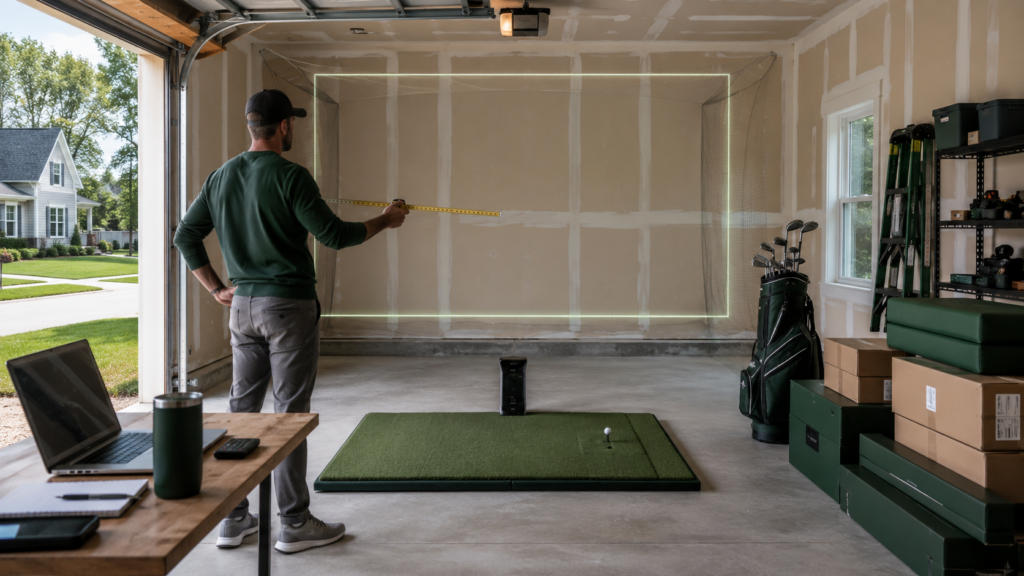
Room preparation is one of the most overlooked parts of how much is a golf simulator. Buyers may calculate the equipment accurately but forget what the space needs for safe, comfortable play. A garage might need additional outlets, improved lighting, heating, cooling, or storage changes. A basement may require ceiling protection, moisture control, or furniture removal.
Ceiling height is especially important because the golfer must swing a driver naturally. A room can meet a listed minimum and still feel uncomfortable for a tall player or someone with a steep swing. Width matters when right-handed and left-handed golfers will share the system. Room depth affects radar placement, screen distance, projector position, and the space behind the player. A setup that feels crowded can cause golfers to shorten their swings or worry about hitting a wall. That reduces both enjoyment and the quality of practice.
DIY installation reduces labor costs, but it requires careful planning. Poor projector placement may create shadows or an image that fails to fill the screen. Windows, lights, walls, and ceilings may also need protection from mishits. Professional installation costs more, yet it may be worthwhile for permanent rooms or expensive equipment. Even when the space looks ready, keep a contingency of roughly 10 to 15 percent for adjustments, missing accessories, or unexpected construction work.
Software And Long-Term Ownership Expenses
The purchase price does not represent the complete cost of ownership. Many simulators use subscriptions for virtual courses, advanced practice features, cloud storage, updates, or third-party software support. Some packages include basic software but charge more for larger course libraries. Others require separate plans for the launch monitor and simulation platform.
These fees can add hundreds of dollars over several years. Buyers should check whether the hardware remains useful without a subscription and whether important measurements require a higher membership level. Computer requirements can also change the budget. Basic range software may run on a tablet or ordinary laptop, while detailed course graphics may need a gaming computer with a stronger graphics card. Projector lamps, cables, hitting strips, nets, and impact screens also wear over time, especially when the system receives frequent use.
Electricity is usually a smaller expense, but heating or cooling a garage can make year-round practice more costly. Owners should also consider internet access, replacement balls, cleaning, and occasional calibration. A realistic answer to how much is a golf simulator should cover the first three years, not only the initial checkout price. Add the hardware, room preparation, subscriptions, accessories, and likely replacements. A cheaper package with several required subscriptions may eventually cost more than a higher-priced option with stronger included software.
Buying A Simulator Versus Renting One
Buying usually makes sense when a golfer expects frequent use over several years. Someone who practices several times each week can benefit from immediate access, saved settings, and the freedom to play at any time. Families may also use the simulator for entertainment, while competitive golfers can continue training during poor weather.
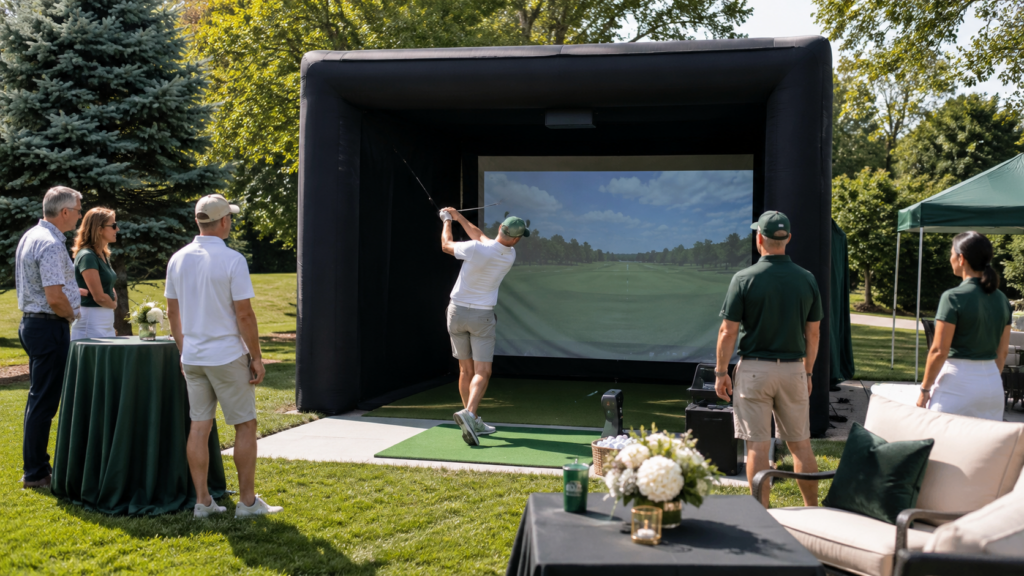
Ownership, however, requires suitable space, maintenance, software management, storage, and a significant initial investment. The room may also lose flexibility once a permanent screen, projector, and enclosure are installed. Renting is often more practical for a birthday, wedding, fundraiser, corporate event, or occasional golf night. The host receives the simulator experience for a defined period without buying equipment or creating a permanent room. A staffed rental may also include delivery, setup, clubs, contests, operation, and breakdown.
Cost should be compared according to expected use. A $7,000 home simulator used hundreds of times can provide strong value. The same purchase for one annual gathering would be difficult to justify. Anyone comparing ownership with a single event can review current mobile golf simulator pricing before deciding. Frequency, space, purpose, and convenience should determine which option makes more financial sense.
Conclusion
The answer to how much is a golf simulator depends on the level of accuracy, equipment, space, and experience you want. Basic setups may start around $500, while complete home systems often cost several thousand dollars. Premium installations can rise much higher once advanced launch monitors, projectors, screens, software, and room preparation are included. Buyers should also account for subscriptions, maintenance, and future replacements before setting a final budget.
For occasional events, renting may offer better value than building a permanent simulator room. Roaming Scores brings a mobile golf simulator experience to parties, corporate gatherings, weddings, fundraisers, and other events across Northeast Ohio. Guests can enjoy realistic course play and interactive golf challenges without the cost of ownership. Once your event details are ready, you can book your date and plan the experience around your location and group.