
A golf simulator is an indoor or portable system that lets players hit real golf balls while sensors measure each shot and software recreates the result on a digital course or practice range. The answer to what is a golf simulator goes beyond calling it a golf video game because the player still uses normal clubs, makes a real swing, and produces genuine ball data. Depending on the setup, the experience can support practice, lessons, full virtual rounds, party games, and competitive challenges. The system works by combining a launch monitor, hitting mat, impact screen or net, computer, software, and a display. Each part has a separate role, yet all of them must work together to create a believable shot.
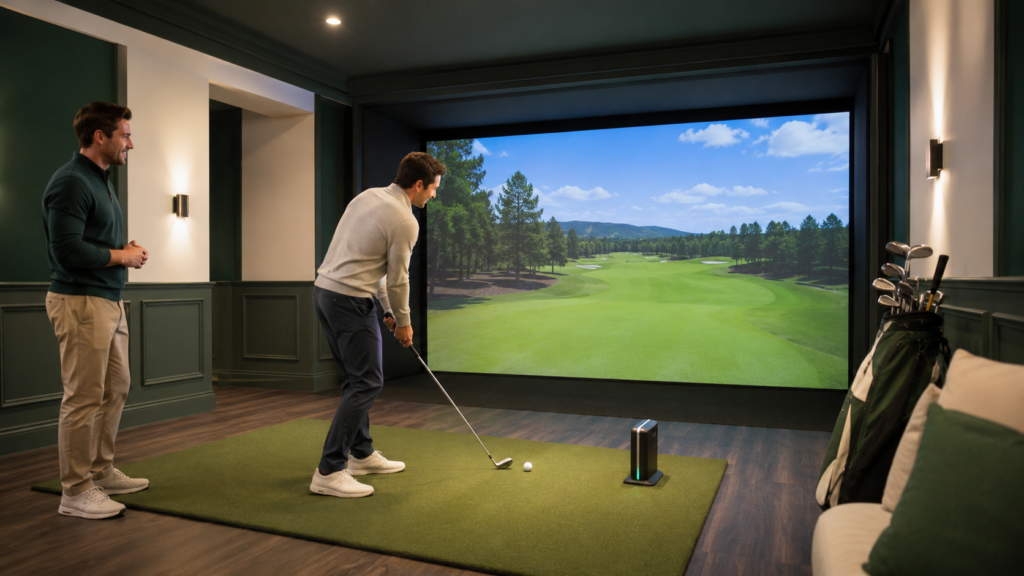
What A Golf Simulator Includes
The simplest simulator may use only a launch monitor, hitting mat, golf net, and phone or tablet. The player strikes a real ball, and the connected device displays figures such as ball speed, launch angle, carry distance, and shot direction. A more complete system adds an impact screen, projector, computer, enclosure, and virtual-course software. This setup allows the golfer to see the entire shot appear on a large screen immediately after contact.
The launch monitor is the measuring device, while the software turns those measurements into a visible ball flight. The mat creates a stable place to stand and hit. A net or impact screen stops the real ball, and side protection helps contain mishits. The computer processes the shot and runs the course graphics, while a projector or television displays the result.
This combination explains what is a golf simulator in practical terms. It is not one machine that performs every task. Instead, it is a connected group of components arranged around a safe hitting area. Equipment quality, room dimensions, software compatibility, and correct placement all influence how smooth and realistic the final experience feels.
How The Launch Monitor Captures Each Shot
The launch monitor begins working at the moment the club strikes the ball. It records the ball’s early movement and may measure ball speed, launch angle, launch direction, spin rate, and spin axis. Some units also collect club information, including clubhead speed, path, face angle, and angle of attack. These values help the system determine why a shot flew straight, curved, climbed too high, or carried a certain distance.
Different launch monitors use different tracking methods. Camera-based systems capture high-speed images around impact and compare the ball’s position and rotation across those frames. Radar-based units send signals toward the moving ball and analyze the reflections as it travels. Other systems may use infrared sensors or combine several technologies. The required hitting position and room depth can therefore vary between models.
When golfers ask what is a golf simulator, the launch monitor is the most important technical part of the answer. The screen may make the experience look impressive, but the tracking device supplies the information behind every virtual shot. Accurate alignment, suitable lighting, clean golf balls, and correct placement help the monitor collect consistent data before sending it to the software.
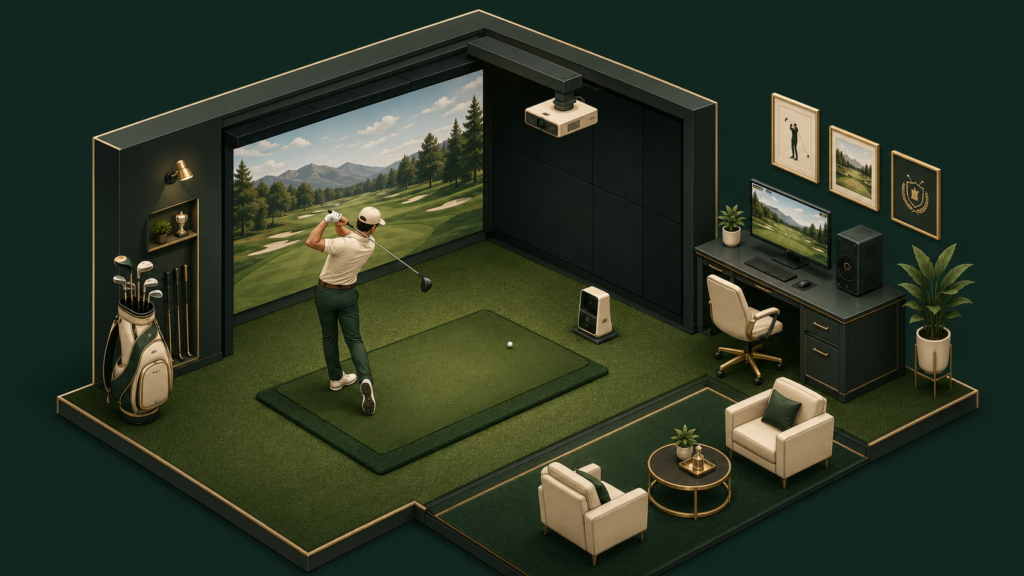
How Software Creates The Virtual Ball Flight
After receiving the launch data, simulator software calculates how the ball should move through the air. It uses the measured speed, vertical launch, horizontal direction, and spin to estimate carry distance, peak height, curve, landing angle, and rollout. Gravity pulls the ball downward, while aerodynamic lift and drag influence how long it stays in the air and how quickly it slows.
Spin has a major effect on the result. Backspin can create lift and keep the ball airborne, while the direction of the spin axis helps shape a fade, draw, slice, or hook. NASA explains that a spinning ball generates aerodynamic lift and that the movement depends on factors such as rotation and airflow. Its guide to the ideal lift of a spinning ball provides useful background on the physics that ball-flight software must represent.
The software also adds course conditions. Wind, elevation, temperature, fairway firmness, rough penalties, and green speed may change the outcome. This part of what is a golf simulator shows why two programs can display slightly different results from similar launch data. The launch monitor records the shot, while the software determines how that shot behaves inside the selected digital environment.
What The Screen, Projector, And Computer Do
A launch monitor can provide useful practice data on a small device, but the display equipment creates the immersive experience associated with full simulator golf. The computer receives information from the launch monitor, runs the software, and generates the virtual course. The projector then sends that image onto an impact screen placed in front of the golfer. A television can serve the same visual role in a simpler net-based setup.
The impact screen must stop real golf balls while remaining smooth enough to display a clear image. It needs suitable tension and enough space behind it to flex safely. Side netting, padded walls, and overhead protection reduce the risk from shots that miss the center. The projector should remain outside the swing path and match the screen size, room depth, and selected image ratio.
The computer must also meet the software’s requirements. Basic range programs may run on a tablet or regular laptop, while detailed virtual courses may need stronger graphics performance. In the broader explanation of what is a golf simulator, these components do not measure the shot. Their job is to process and present the data so the player can watch the ball travel, select the next club, and continue the hole without leaving the hitting area.

How Players Use Golf Simulators
Golf simulators can serve several purposes because the software can switch between practice tools, virtual courses, skills challenges, and competitive games. During practice, golfers may use a virtual driving range to compare club distances, review ball speed, study launch angle, or check shot patterns. The immediate feedback helps players see whether a swing adjustment produced a measurable change.
Full-course mode allows one or more players to complete virtual holes. The software places each shot on the fairway, rough, bunker, or green and calculates the next position. Players can select clubs, aim around hazards, keep score, and adjust course conditions. Putting and short shots are also simulated, although they rely more heavily on mat alignment and software settings than full swings.
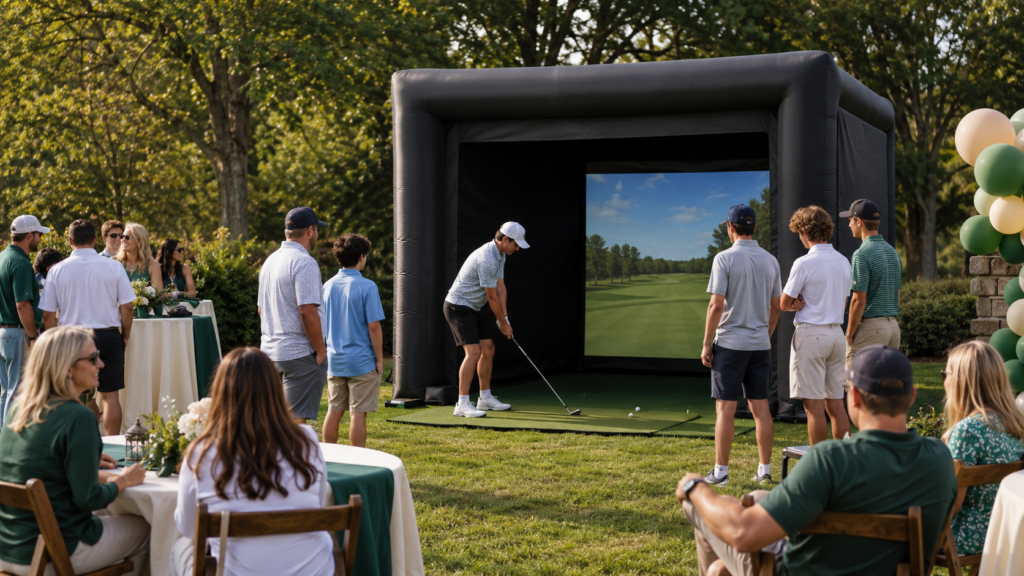
The same system can support longest-drive, closest-to-the-pin, and target competitions at social events. These formats allow beginners to participate without playing an entire round. For a practical example of a portable system, the Roaming Scores setup shows how launch-monitor hardware, course software, and an inflatable enclosure can be combined in a mobile format. This variety is an important part of what is a golf simulator because the same technology can support both serious practice and casual entertainment.
Different Types Of Golf Simulator Setups
Golf simulators range from compact practice stations to custom rooms and mobile event systems. A basic setup may use a portable launch monitor, mat, and net. It is easier to store and usually costs less, although the player may view the shot on a smaller screen. This type suits golfers who mainly want distance information and structured repetition.
A projected home simulator creates a more complete indoor course experience. It usually includes an impact screen, enclosure, projector, computer, and permanent or semi-permanent hitting area. The room must provide enough ceiling height, width, depth, and protection for full swings. Premium systems may add overhead tracking, custom flooring, lighting control, sound treatment, and detailed club data.
Commercial simulators are designed for frequent use in training centers, golf venues, and entertainment businesses. Mobile simulators use transportable equipment and an enclosure that can be installed at a suitable event location. Each type answers what is a golf simulator from a different angle. The core process remains the same, but the size, equipment, accuracy, visual quality, and purpose change. Choosing the right format depends on how often it will be used, who will play, how much space is available, and whether the setup needs to remain portable.
What Affects Realism And Accuracy
A simulator can only perform as well as its equipment and setup allow. Launch monitor quality is a major factor because all later calculations depend on the original shot data. Incorrect alignment may shift the displayed starting direction, while poor lighting can affect certain camera-based systems. Radar units may need enough space behind the player and enough visible ball flight before the screen.
Ball condition also matters. A dirty, damaged, or heavily worn ball may create inconsistent readings. The hitting mat should remain level, and the ball should be placed inside the monitor’s approved hitting zone. Software settings can also change the result. Elevation, wind, temperature, fairway firmness, and green speed may make a shot appear longer or shorter than expected.
Realism is not limited to numbers. Comfortable swing clearance, a clear image, responsive software, controlled bounce-back, and a safe enclosure all influence the player’s confidence. This final technical point helps clarify what is a golf simulator: it is a measured version of real golf adapted to a controlled physical and digital environment. It can reproduce full shots convincingly, but it cannot perfectly copy every uneven lie, weather condition, patch of rough, or natural-green surface found outdoors.
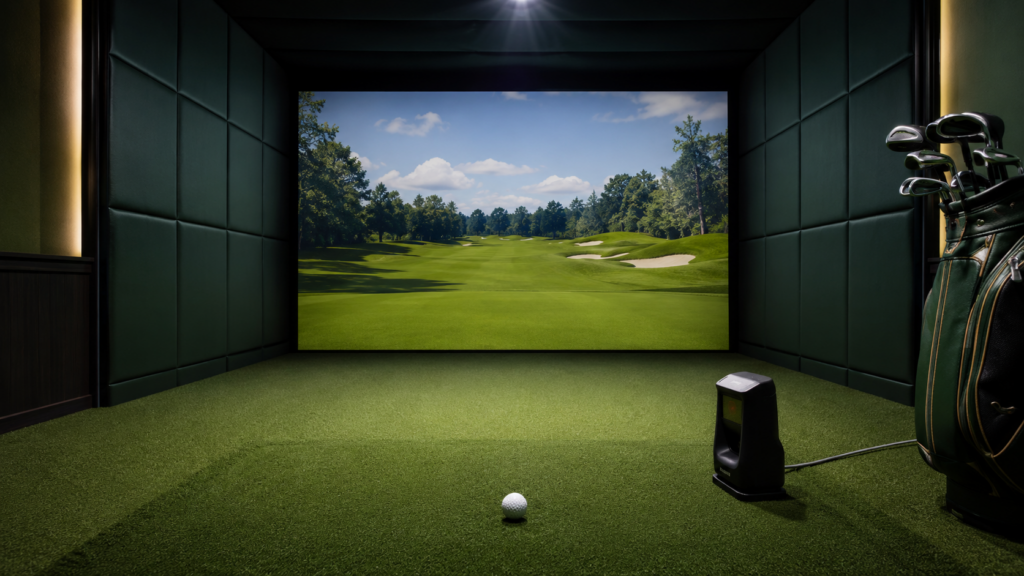
Conclusion
A golf simulator combines real swings with digital shot tracking and virtual course play. The launch monitor measures the ball, software calculates its flight, and the computer displays the result through a projector, television, or connected device. This gives a complete answer to what is a golf simulator while showing why the experience can support practice, full rounds, lessons, and event competitions.
Roaming Scores brings this technology to weddings, fundraisers, corporate gatherings, parties, and golf nights across Northeast Ohio. Its mobile system includes tour-grade tracking, GSPro course play, and a protected inflatable enclosure delivered to the event location. Hosts can book their date and share their event details so the available space and preferred format can be reviewed before setup.