
Solid contact begins with a balanced setup, a comfortable grip, and a swing that returns the clubface to the ball in the correct position. Learning how to hit a golf ball does not require forcing the club through impact or copying every movement made by a professional player. Instead, the goal is to build a repeatable motion that keeps the body stable, allows the club to travel freely, and sends the ball toward the intended target. Grip pressure, posture, ball position, alignment, weight transfer, and strike location all influence the result. Once these fundamentals work together, distance and consistency become easier to develop.
Start With A Comfortable Golf Grip
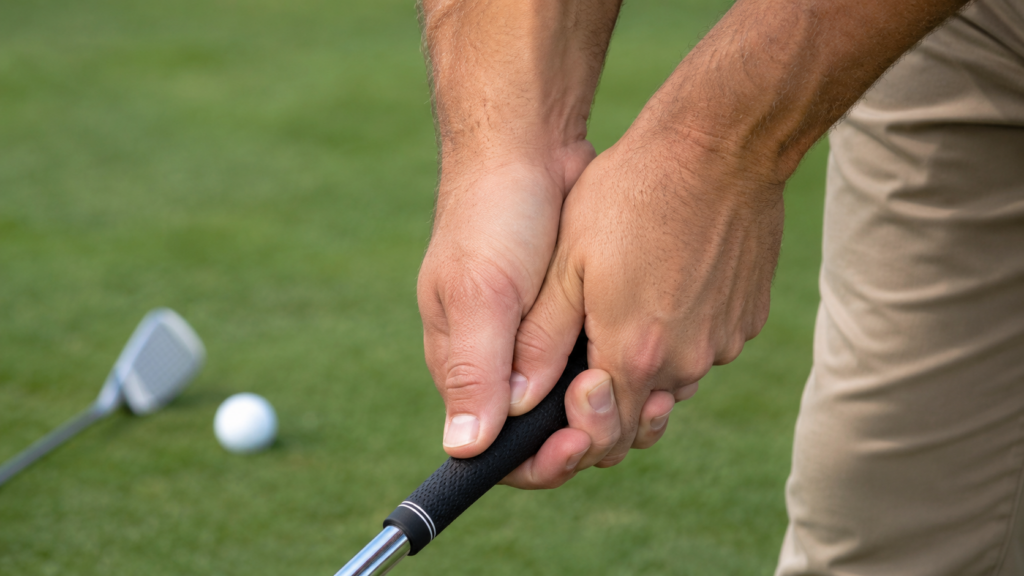
The grip connects the golfer to the club, so it affects the clubface throughout the swing. Begin by placing the handle across the fingers of the lead hand rather than deep in the palm. For a right-handed golfer, the lead hand is the left hand. The thumb should sit slightly to the right of the center of the grip, while the hand remains secure without feeling rigid. Place the trail hand below it so both hands can work together during the swing.
Golfers commonly use an overlapping, interlocking, or ten-finger grip. No single choice suits everyone. The best grip is one that keeps the hands connected and allows the wrists to move naturally. However, the club should not twist easily during the swing. Too much grip pressure creates tension in the hands, forearms, and shoulders. Too little pressure can leave the clubface unstable at impact.
When learning how to hit a golf ball, check whether the grip helps the clubface return square to the target. A grip turned too far to one side may encourage hooks or slices. Hold the club firmly enough to maintain control, but avoid squeezing it as tightly as possible. A relaxed, secure grip makes it easier to create speed while keeping the clubface under control.
Build A Balanced And Athletic Stance
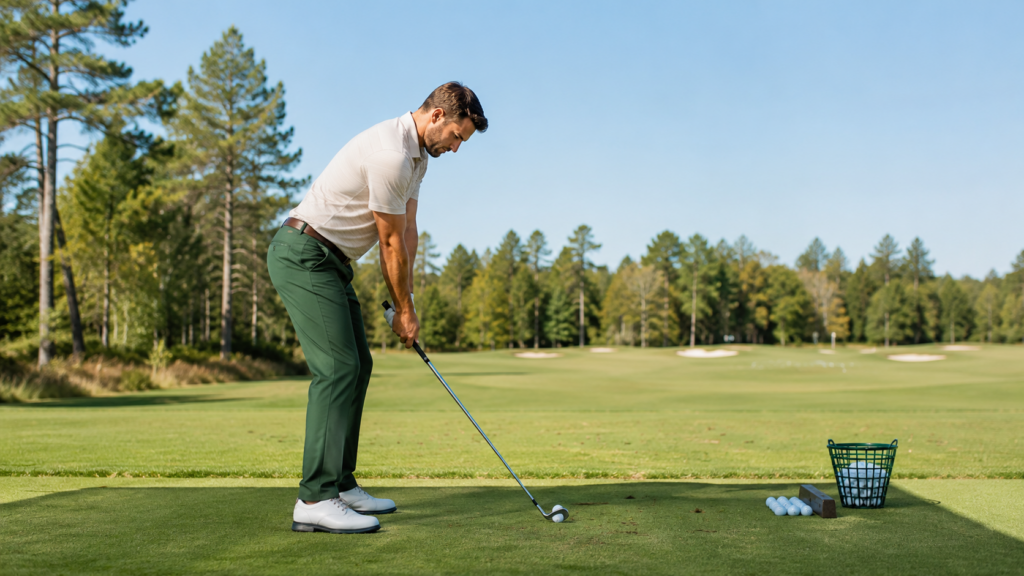
A strong stance gives the body enough stability to rotate without losing balance. Stand with the feet approximately shoulder-width apart for a middle iron. Drivers may need a slightly wider stance, while short wedges can be played from a narrower position. Bend gently from the hips and allow the knees to flex slightly. The arms should hang naturally beneath the shoulders instead of reaching excessively toward the ball.
Weight should feel balanced across both feet at address. Avoid placing too much pressure on the heels or toes. A stable position allows the golfer to rotate during the backswing and move toward the target during the downswing. The back should remain comfortably straight rather than rounded, while the chin stays high enough for the shoulders to turn freely.
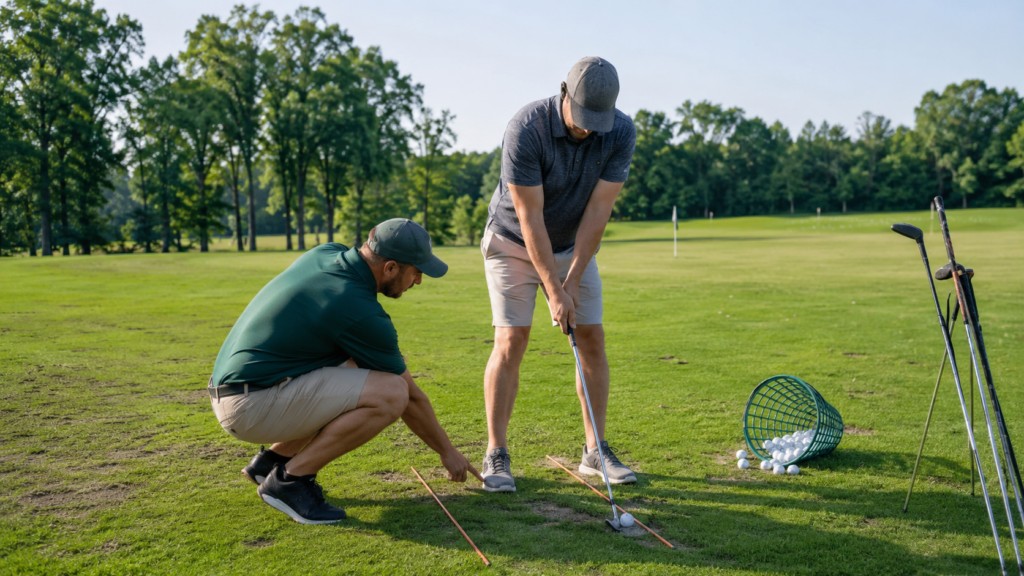
Alignment matters just as much as posture. Aim the clubface toward the target first, then position the feet, hips, and shoulders parallel to that line. Golfers often aim farther left or right than they realize, which can cause them to change the swing in an attempt to correct the direction. Anyone practicing how to hit a golf ball should check alignment with clubs or straight markers placed on the ground. A balanced stance creates the foundation for repeatable contact and makes later swing changes easier to evaluate.
Position The Ball For The Club You Are Using
Ball position affects where the club reaches the bottom of its swing. With short and middle irons, place the ball near the center of the stance or slightly forward of center. This position helps the golfer contact the ball before the club reaches its lowest point. The club can then continue downward and brush the turf after impact. Long irons, hybrids, and fairway woods generally work better when the ball moves farther toward the lead foot. These clubs have longer shafts and need more room to return through impact. A driver is normally played from inside the lead heel because the ball sits on a tee. This forward position helps the club meet the ball as it begins moving upward.
Moving the ball too far back may produce a low flight or a steep strike. Placing it too far forward can cause thin contact, topped shots, or an open clubface. The correct position may vary slightly according to swing style, but it should remain consistent during practice. Ball placement is an essential part of how to hit a golf ball because the same swing can create different results when the ball moves only a few inches. Use alignment sticks or marks on the mat to check the position until it becomes familiar for each club.
Make A Controlled Backswing
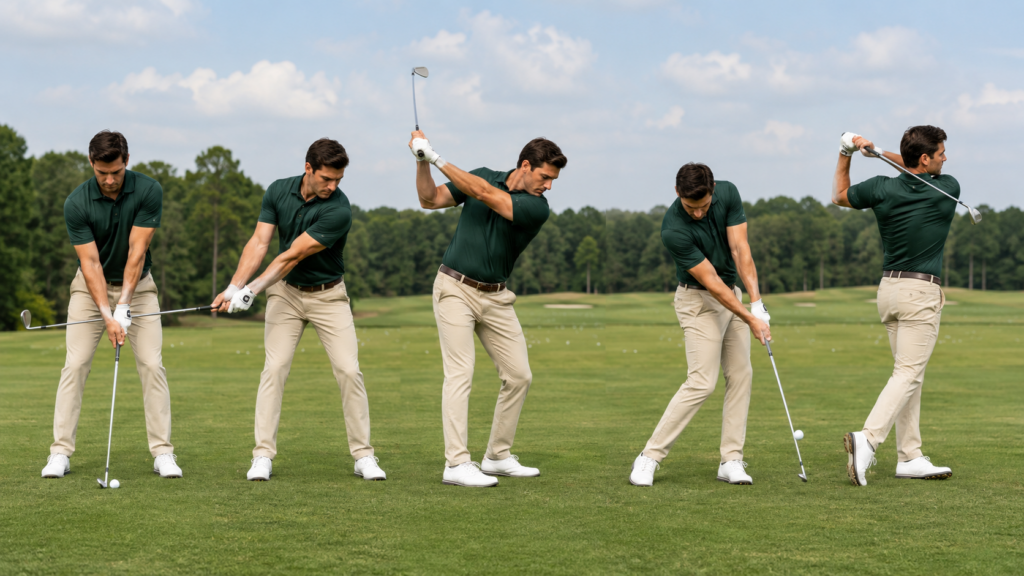
The backswing should prepare the club for impact without pulling the body out of balance. Begin by moving the club, hands, arms, and shoulders away from the ball in one connected motion. The chest should turn while the lower body remains stable. Avoid lifting the club immediately with the hands because this can create a narrow, inconsistent path. As the club moves upward, the wrists begin to hinge and the shoulders continue turning. The golfer should feel pressure moving toward the inside of the trail foot rather than swaying outside it. The head may move slightly, but the body should remain centered enough to return toward the ball.
The backswing does not need to reach a specific length. Some golfers can turn farther than others because of differences in mobility, strength, and swing style. A shorter backswing with good balance is more useful than a long motion that causes the body to sway or the arms to collapse. The Wikipedia article on the golf swing describes it as a complex movement that depends on timing, grip, stance, and coordinated body motion. It also notes that small mechanical errors can lead to poor contact. For golfers learning how to hit a golf ball, control should come before speed. A balanced backswing gives the downswing a better starting position.
Begin The Downswing With The Lower Body
The downswing should not begin with a sudden pull from the arms. Instead, pressure starts moving toward the lead foot while the hips begin turning toward the target. The chest, arms, hands, and club then follow. This sequence allows the club to gain speed naturally rather than relying only on upper-body effort. The trail elbow moves closer to the side of the body as the club approaches the ball. Meanwhile, the wrists retain some of their angle before releasing through impact. Releasing too early can cause the club to strike the ground behind the ball. Holding the angle too long may leave the clubface open or create weak contact.
Body rotation must continue throughout the downswing. Stopping the hips or chest can force the hands to control the clubface at the last moment. That timing may occasionally work, but it becomes difficult to repeat. A smooth transition usually produces better contact than trying to swing as hard as possible from the top. A key part of how to hit a golf ball is allowing speed to build gradually. The fastest part of the motion should occur near and after impact, not at the beginning of the downswing. Start calmly, shift pressure toward the target, and let the rotating body bring the club into the hitting area.
Strike The Ball Before The Ground With Irons
A clean iron shot happens when the clubface contacts the ball before brushing the turf. The lowest point of the swing should occur slightly ahead of the ball. This creates the compressed contact golfers often associate with a solid iron strike. The club’s loft then launches the ball, so the player does not need to scoop it upward. At impact, most pressure should be moving into the lead foot. The hands are usually slightly ahead of the clubhead, and the chest continues rotating toward the target. The golfer should keep swinging through the ball rather than stopping at contact. A small divot beginning after the ball often shows that the low point was positioned correctly.
Drivers require a different strike because the ball rests on a tee. The golfer generally wants the club to meet the ball level or slightly on the upswing. Therefore, the upper body may tilt gently away from the target at address, while the ball remains near the lead heel. Understanding this difference is important when practicing how to hit a golf ball. Trying to lift an iron can cause thin or heavy contact, while striking too steeply with a driver may create excess spin and reduced distance. Let the club’s design and ball position produce the required launch.

Practice Contact Before Chasing Distance
Consistent contact should be the first goal during practice. Begin with short swings using a wedge or middle iron. Focus on striking the center of the clubface and finishing in balance. Once the contact pattern improves, gradually increase the length and speed of the swing. Starting at full power can hide setup problems and make it difficult to identify why the ball was mishit. Use a clear target for every shot. Even a basic practice session becomes more useful when the golfer chooses a direction and distance. Alignment sticks can show whether the body is aimed correctly. Face spray or impact tape can reveal where the ball meets the clubface. Simulator data can also help golfers compare ball speed, launch, carry, and direction.
Practice should include different clubs and targets rather than repeating the same shot without purpose. Social formats such as golf nights can add targets and friendly competition without requiring a full outdoor round. The most effective way to learn how to hit a golf ball is to build one reliable habit at a time. Improve the setup, then the strike, and finally the speed. Distance becomes more useful once the ball starts close to the intended line.
Conclusion
Learning how to hit a golf ball begins with a secure grip, balanced posture, correct ball position, and controlled body rotation. The backswing should remain stable, while the downswing begins with pressure moving toward the lead foot. Iron shots require ball-first contact, whereas drivers are normally struck level or slightly upward. Regular practice should focus on centered contact and direction before maximum distance.
Roaming Scores gives golfers and beginners a chance to experience real swings, measured shot data, and virtual course play at parties, fundraisers, weddings, golf nights, and corporate events across Northeast Ohio. Hosts can book their date and bring an interactive golf experience directly to their chosen location.