
Golfers usually mean a links course when they use the phrase what is link course in golf. A true links course is a traditional type of golf course developed on sandy coastal land, usually between the sea and more fertile inland areas. These courses feature firm turf, natural dunes, deep bunkers, limited tree cover, and frequent wind. The ball often rolls farther after landing, so players must think about trajectory, bounce, and ground movement instead of aiming every shot directly at the target.
Links golf is closely connected to the early history of the sport in Scotland, but modern links-style courses can now be found in several countries. Knowing what defines the design helps golfers understand why these courses require a different strategy from softer parkland layouts.

What Is Link Course In Golf Really Asking?
The standard term is “links course,” even though players sometimes search for what is link course in golf. The word “links” may look plural, but it can refer to one course or one area of linksland. Therefore, golfers say “a links course” rather than “a link course.” The name describes both the type of land and the golf course built upon it. A links course traditionally sits on sandy, rolling ground near a coastline. The terrain often contains natural dunes, firm fairways, native grasses, and few large trees. Since sandy soil drains quickly, the ground normally remains firmer than the soil found on many inland courses. That firmness allows the ball to bounce and roll after landing.
Links golf is not defined only by an ocean view. A coastal course with soft turf, planted trees, artificial ponds, and heavily shaped fairways may not meet the traditional definition. Meanwhile, an inland course can imitate many links characteristics without being a true links course. The Wikipedia overview of links golf describes links as the oldest style of golf course and connects its development to sandy coastal land in Scotland. It also explains that the firm turf encourages a running style of play.
Where Links Courses First Developed
Links golf developed in Scotland, where stretches of sandy ground existed between the sea and productive farmland. This land was often unsuitable for growing crops because the soil was sandy, exposed, and shaped by coastal winds. However, it supported hardy grasses and provided an open area where early golfers could play.
The natural ground required less construction than a modern course. Early layouts followed the existing dunes, ridges, hollows, and stretches of grass. Players had to adapt to the land rather than expecting the land to be reshaped around their shots. This relationship between golf and the natural terrain remains one of the defining qualities of traditional links design.
The word “links” comes from an older term associated with ridges, rising ground, and coastal dunes. Over time, it became closely connected to the areas where Scottish golf developed. Many historic courses still carry “Links” in their names, although the word may also be used loosely by modern facilities. When someone asks what is link course in golf, the history matters because links golf was not created as a decorative coastal style. It developed from the land that was available. The dunes, sandy soil, native grass, and exposed weather shaped both the course design and the way golfers learned to play it.

Land And Turf That Define Links Golf
Firm ground is one of the clearest differences between links golf and many inland courses. Sandy soil drains water efficiently, while native grasses can create a tight playing surface. As a result, golf balls may take a strong first bounce and continue rolling across fairways or onto greens. Players must consider where the ball will land and what it will do afterward.
This running game changes club selection. A golfer may land an approach shot short of the green and allow it to release toward the hole. On a softer course, the same shot might stop before reaching the putting surface. Links players can also use low-running shots around the green rather than relying only on high pitches. The fairways are rarely perfectly flat. Natural slopes can send a well-struck ball toward a bunker or rough, while a less accurate shot may receive a favorable bounce. This unpredictability is part of the challenge rather than a flaw in the design.
Understanding the land gives a clearer answer to what is link course in golf. It is not simply a course near the sea. The sandy foundation, firm turf, rolling ground, and natural vegetation work together to create a distinct playing experience. Traditional links courses use the existing landscape instead of depending heavily on artificial shaping, trees, or manufactured water hazards.
How Wind Changes The Way You Play
Links courses are commonly exposed to coastal wind because they have few trees or buildings to block it. The wind may affect distance, direction, trajectory, and club selection on almost every hole. A calm morning can also become a difficult afternoon if conditions change during the round.
Golfers must learn to control ball flight. A high shot remains in the air longer, giving a crosswind more time to move it sideways. A lower shot can reduce that effect, although it may bounce and roll farther after landing. Players often choose extra club and swing more smoothly instead of trying to force a shorter club through the wind. The direction of the wind matters as much as its strength. A following wind can increase distance but make it difficult to stop the ball. A headwind can reduce carry while increasing the effect of spin. Crosswinds may require the golfer to aim away from the target and allow the ball to move back toward it.
This strategic adjustment is central to what is link course in golf. Players cannot rely on one standard yardage for every shot. They must read the conditions, select a suitable trajectory, and anticipate the bounce. Indoor practice and organized golf nights can help golfers experiment with different flights and conditions.
Bunkers, Dunes, And Natural Hazards
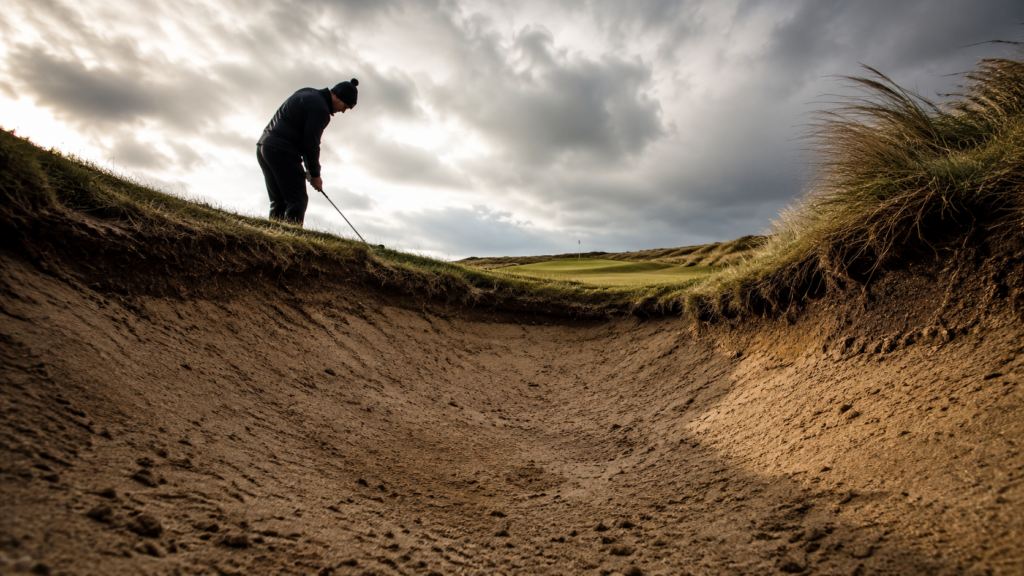
Links courses usually rely on natural terrain and strategically placed bunkers rather than large numbers of trees or artificial water hazards. Dunes can block the golfer’s view, influence the wind, and create uneven lies. Native grasses may catch offline shots, while firm slopes can direct the ball into trouble. Pot bunkers are among the most recognizable links hazards. These bunkers are often small, deep, and protected by steep faces. A ball that enters one may require a sideways or backward recovery instead of a direct shot toward the green. Their placement encourages golfers to think carefully about club selection and landing areas.
Blind shots are also common. A dune, ridge, or raised section of fairway may hide the target. The golfer must choose a line using course markers, a yardage guide, or previous knowledge. This can make the round feel less predictable than playing on a course where every landing area is visible. These features help answer what is link course in golf because they show how the challenge comes from the existing landscape. A links hole does not need a pond or a tree-lined fairway to demand careful strategy. Firm ground, natural contours, rough, dunes, and compact bunkers can punish poor decisions while rewarding golfers who control distance and plan their next shot.
Links Course Versus Parkland Course
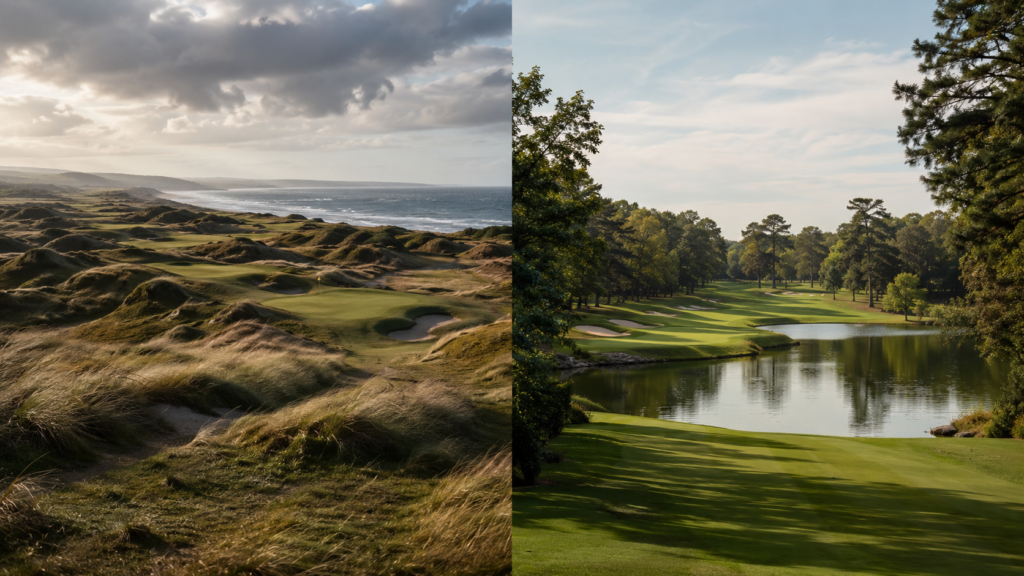
A parkland course is usually built inland and often features softer fairways, mature trees, planted landscapes, and more sheltered playing conditions. The turf may encourage players to carry the ball directly to the target because shots stop more quickly after landing. Trees commonly frame each hole and may block recovery shots after an inaccurate drive. Links courses are generally more open, exposed, and shaped by dunes rather than trees. Their firm surfaces encourage lower shots and greater use of the ground. Wind can influence every club, while the same hole may play very differently from one day to the next.
The visual experience also changes. A parkland course may feel green, enclosed, and carefully maintained. Traditional linksland can appear more rugged, with brown or golden native grasses, uneven terrain, and fewer decorative features. This natural appearance does not mean the course is poorly maintained. It reflects a different design philosophy and environment. When explaining what is link course in golf, the comparison with parkland golf makes the distinction clearer. Parkland play often rewards accurate aerial shots that land near the target. Links play asks the golfer to manage wind, slopes, bounce, and rollout. Neither style is automatically more difficult, but each requires different decisions and may favor different strengths within a golfer’s game.

How To Prepare For A Links-Style Round
Preparation for links golf should begin with realistic expectations. The ball may bounce in an unexpected direction, a strong wind may change club selection, and a good shot can finish in a difficult position. Players who accept these conditions are more likely to enjoy the strategic nature of the course. Practice low shots before the round. Move the ball slightly back in the stance, use a longer club, and make a controlled swing to reduce trajectory. However, avoid placing the ball so far back that contact becomes steep or inconsistent. Running chips and bump-and-run shots are also useful because firm ground can make high pitches harder to judge.
Course management becomes especially important. Aim for wider sections of the fairway, avoid short-sided misses near deep bunkers, and consider where the ball may roll after landing. Sometimes the safest approach is to land the ball well short of the green and use the slope to move it toward the hole. Players researching what is link course in golf should remember that links golf rewards creativity more than one perfect swing type. The conditions may require a punched iron, a putt from off the green, or a shot aimed away from the flag. Patience, trajectory control, and thoughtful targets are often more valuable than maximum height or distance.
Conclusion
The phrase what is link course in golf refers to a links course, the traditional style of course developed on firm, sandy coastal land. Links courses usually feature dunes, native grasses, limited trees, deep bunkers, strong wind, and fairways that allow the ball to bounce and roll. These conditions reward controlled trajectories, creative short shots, and careful course management.
Golf simulators can introduce players to virtual links-style layouts without requiring a trip to the coast. Roaming Scores brings realistic course play and interactive golf challenges to parties, fundraisers, weddings, and corporate events across Northeast Ohio. Hosts can book their date and bring the mobile golf experience directly to their selected location.