
How To Be Good At Golf starts with building reliable fundamentals instead of trying to hit perfect shots every time. Good golfers control the ball, manage mistakes, choose sensible targets, and practice with a clear purpose. You do not need the longest drive or the most expensive clubs to improve. Consistency matters far more than occasional great shots.
Improvement usually comes from combining better technique with smarter decisions. Work on your grip, setup, contact, short game, putting, and course management while tracking the areas that cost you the most strokes. Regular practice with these priorities can gradually turn an inconsistent golfer into a much stronger player.

Build A Consistent Golf Setup
One of the first steps in learning How To Be Good At Golf is developing a repeatable setup. Your grip, posture, ball position, alignment, and distance from the ball affect almost everything that happens during the swing. A poor setup forces your body to make compensations, which makes consistent contact much harder.
Create the same basic routine before every shot. Check your target, align the clubface, position your feet, settle into your posture, and then swing. Your setup will change slightly between a driver, iron, wedge, and putter, but the process should remain predictable. Repetition makes it easier to identify what went wrong when a shot does not go as planned.
Focus On Solid Ball Contact
Good golf begins with consistent contact. You do not need maximum swing speed if you regularly hit the ball from the center of the clubface. Centered contact helps produce predictable distance, direction, and trajectory while reducing weak shots caused by strikes from the heel, toe, top, or bottom of the clubface.
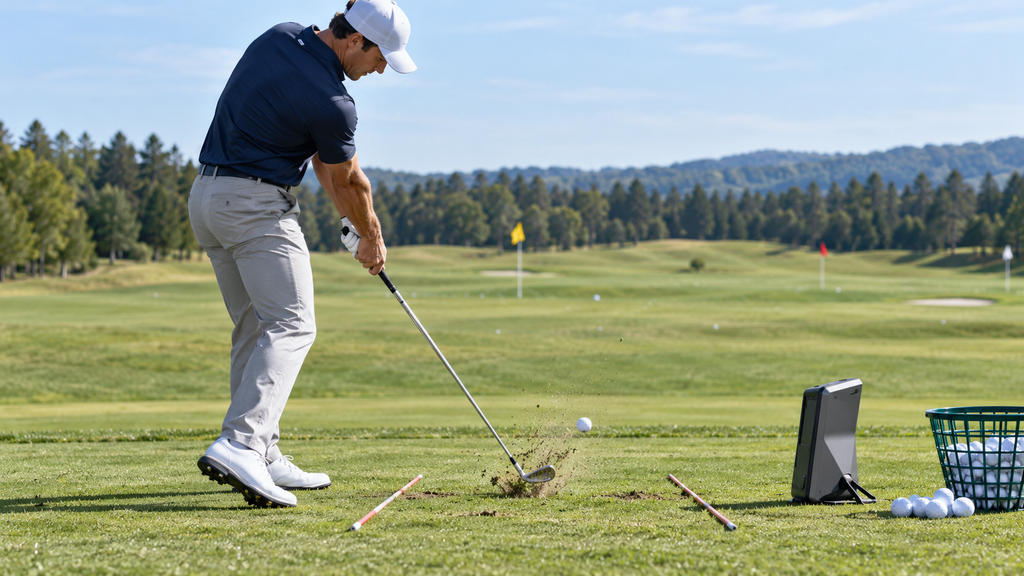
When learning How To Be Good At Golf, practice hitting controlled shots before trying to swing harder. With irons, golfers generally want the clubhead moving downward through impact so the ball is contacted before the turf. Understanding what is attack angle in golf can help explain why impact conditions differ between irons and drivers and how those differences affect ball flight.

Improve Your Short Game
The short game can lower scores even when your full swing is not perfect. Spend time practicing chips, pitches, bunker shots, and short approach shots. These shots often determine whether you save par, make bogey, or turn a small mistake into a much larger number on the scorecard.
A useful approach to How To Be Good At Golf is to practice several short-game situations instead of repeatedly hitting the same easy chip. Change the distance, lie, club, and landing area. Try lower-running chips as well as higher shots that stop more quickly. Developing several reliable options makes it easier to handle different situations around the green.
Become A Better Putter
Putting accounts for a large portion of the shots taken during most rounds, so it deserves regular attention. Start with short putts because making them consistently builds confidence. Work on starting the ball on your intended line while maintaining a stable setup and controlled stroke.
Distance control is equally important when studying How To Be Good At Golf. On longer putts, focus less on making the ball and more on leaving it close enough for an easy second putt. Practice from different distances so you develop a better feel for speed. Reducing three-putts can improve scores without making any changes to your full swing.
Practice With A Clear Purpose
Randomly hitting a bucket of balls is not always effective practice. Each session should have a goal, such as improving contact with irons, controlling wedge distances, working on driver accuracy, or developing a better putting routine. Structured practice makes it easier to measure progress and identify weaknesses.
Players trying to understand How To Be Good At Golf should also practice away from the course when possible. You can work on putting, setup, swing positions, and contact drills without playing a full round. Our guide on how to practice golf at home covers practical ways to continue improving when you cannot reach a course or driving range.

Learn Better Course Management
Good players do not attack every flag or attempt difficult recovery shots every time they get into trouble. They consider hazards, distances, their normal shot shape, and the safest area to miss. Sometimes playing toward the center of the green gives you a much better scoring opportunity than aiming directly at a difficult pin.
Course management is an important part of How To Be Good At Golf because technique alone cannot eliminate mistakes. Knowing the rules also helps you make better decisions when unusual situations occur. The official USGA Rules of Golf provide rules, explanations, and educational resources that can help golfers understand how to handle situations correctly during a round.
Track Your Weaknesses And Progress
You can improve faster when you know where your strokes are being lost. After each round, record basic information such as fairways hit, greens reached, penalties, number of putts, and mistakes around the green. You do not need complicated statistics to identify useful patterns.
For example, a golfer researching How To Be Good At Golf may assume driving is the biggest problem because bad tee shots are memorable. However, tracking several rounds might reveal that missed short putts or poor wedge shots are costing more strokes. Use your results to decide what deserves the most practice instead of spending equal time on every part of the game.
Develop Patience And Play More Often
Golf improvement is rarely a straight line. You may have an excellent practice session followed by a poor round, or you may improve one part of your game while another temporarily becomes less consistent. Avoid changing your swing after every bad shot. Give technical changes enough time to become comfortable before deciding whether they work.
Ultimately, How To Be Good At Golf comes down to consistent fundamentals, quality practice, short-game skill, smart decisions, and patience. Focus on improving the shots that affect your score most instead of chasing perfection. Regular practice and more experience on the course will gradually make your game more reliable. For more golf tips, equipment guides, rules, and practical advice, visit Roaming Scores.