
You do not need to visit a course or driving range every time you want to improve your golf game. If you want to learn how to practice golf at home, there are several effective ways to work on putting, chipping, swing mechanics, distance control, and consistency without leaving your property. A small indoor area can be enough for putting drills and slow-motion swing work, while a backyard or garage may provide space for chipping or hitting into a practice net.
Golf simulators and launch monitors can add another level of feedback by showing ball flight and shot data. The key is to practice with a clear purpose rather than simply repeating swings. Choose one or two specific skills for each session, use measurable targets, and track your results over time. Home practice works best when it complements course play and helps you develop repeatable movements that hold up when you return to real golf conditions.
How To Practice Golf At Home With A Simple Routine
The easiest way to start is by creating a short routine you can repeat several times each week. Learning how to practice golf at home does not require hours of daily work. Even 20 to 40 minutes can be useful when the session has a clear structure. You might spend ten minutes on putting, ten minutes on swing drills, and another ten minutes on chipping or target practice. Keeping sessions focused makes it easier to maintain good concentration and technique.
Home practice works best when the equipment and drills still reflect the skills used in real golf. The USGA Equipment Standards explain the rules and specifications that apply to golf clubs, balls, and other equipment used in the game. Using familiar equipment at home can make your practice more transferable when you return to the course. Keep each session focused on a specific skill, such as putting accuracy, centered contact, or swing balance, and track your results so you can see whether your practice is producing consistent improvement.
Create A Safe Practice Area Before You Swing
Safety should come before any full-swing practice. Make sure there is enough room around you for the club to move freely through the backswing and follow-through. Check ceilings, walls, furniture, lights, windows, garage-door tracks, fans, and anything else the club or ball could strike. If you are practicing indoors, begin with slow swings before progressing to full speed. Never assume that a room is safe simply because it looks large enough.
When working on how to practice golf at home with real golf balls, use a properly installed practice net or simulator enclosure designed to contain shots. Confirm that the net is securely anchored and that there is enough space behind it in case a ball reaches the material with significant speed. Foam or limited-flight balls can be useful for some drills, especially where space is restricted. A safe practice setup allows you to make natural swings rather than subconsciously slowing down because you are worried about hitting something nearby.
Practice Putting Indoors
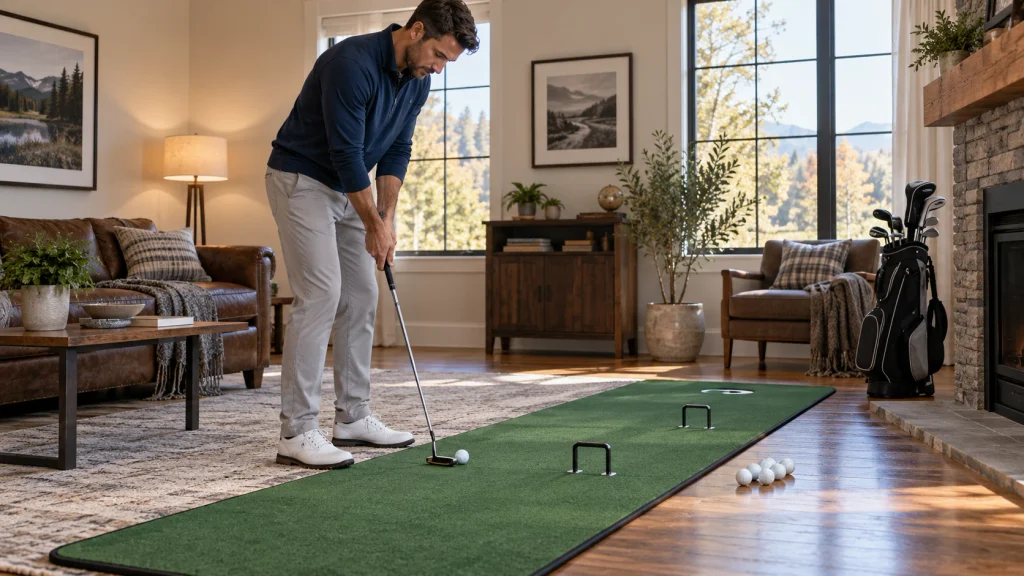
Putting is one of the easiest golf skills to practice at home because it requires very little space. A putting mat is useful, but a relatively flat carpet or smooth floor can also work for basic stroke drills. Focus on starting the ball on your intended line and controlling speed rather than simply trying to make every putt. You can use coins, cups, or other small objects to create targets at different distances.
The PGA of America recommends drills that create gates for both the putter and golf ball. These drills provide immediate feedback when the putter path or starting direction is incorrect. The organization also suggests practicing from several distances and requiring consecutive successful putts before moving farther away. This approach makes learning how to practice golf at home more measurable. Instead of hitting dozens of putts without a goal, you can track how often you start the ball through a gate or finish near a chosen target.
Work On Chipping And Short-Game Control
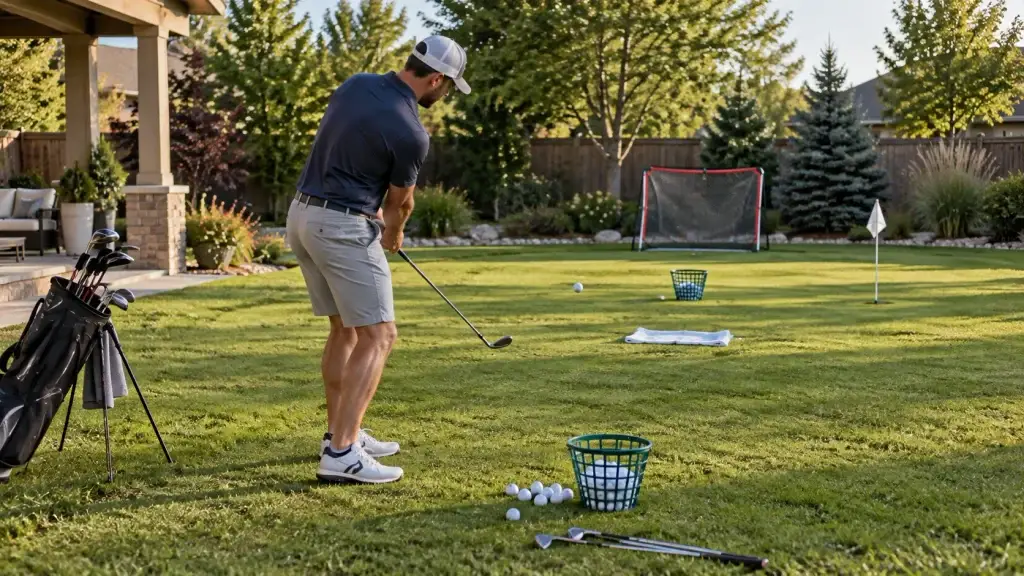
Short-game practice is another area that can work well at home with relatively little equipment. A backyard provides the most flexibility, but indoor practice is possible with foam balls or other suitable practice balls. Place a towel, bucket, basket, or small target several feet away and try to land the ball on that spot. The goal is not simply to hit the target but to understand how different clubs change launch and roll.
When learning how to practice golf at home, experiment with a pitching wedge, sand wedge, and lower-lofted iron. Notice how the ball responds when you keep the same basic motion but change clubs. You can also vary the landing point and trajectory. Start with small swings and clean contact rather than trying difficult flop shots indoors. Practicing basic chips repeatedly develops better distance control, which can become extremely valuable around the green when you return to the course.
Use A Mirror For Swing Positions
A mirror can provide useful visual feedback even when you do not have enough room to hit golf balls. Stand in your normal setup position and check posture, alignment, knee flex, shoulder position, and where your hands sit relative to your body. Then make slow-motion swings while watching key positions. This can help reveal obvious changes in posture or balance that may be difficult to feel during a normal-speed swing.
This type of work is especially useful when figuring out how to practice golf at home in a small space. You can rehearse takeaway positions, backswing rotation, impact posture, and a balanced finish without actually striking a ball. Slow swings are not meant to replace full-speed practice, but they can help you become more aware of movement patterns. Recording your swing with a phone can provide additional feedback. Compare similar camera angles from session to session so you are evaluating changes consistently rather than relying on different perspectives.
Practice Full Swings With A Net
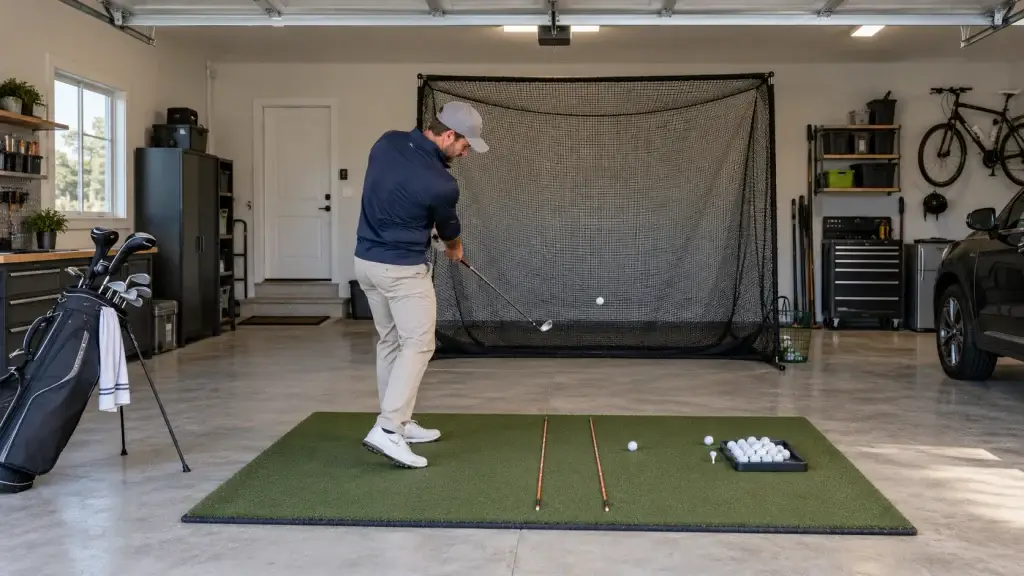
If you have enough safe space, a hitting net allows you to make full swings with real golf balls at home. This is useful for working on contact, balance, tempo, and specific swing changes. However, hitting into a net removes the ability to watch the complete ball flight, so you need another form of feedback. Impact tape, face spray, or a launch monitor can help show whether the strike was centered and what the ball was likely to do.
Anyone learning how to practice golf at home with a net should avoid hitting ball after ball without changing targets or clubs. Treat each shot as an individual attempt. Go through your setup routine, choose an imaginary target, make the swing, and evaluate the result using whatever feedback is available. Switch clubs periodically so the session resembles real golf more closely. A net creates convenience, but your practice still needs structure if you want the work to transfer to the course.
Use A Golf Simulator For More Detailed Feedback
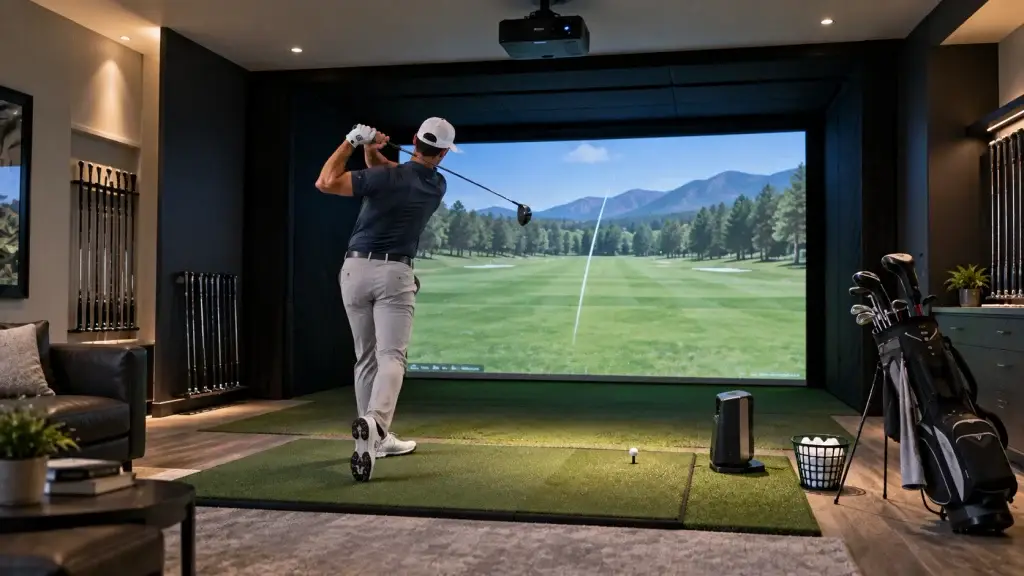
A simulator can make home practice much more informative because it combines full swings with measured shot data and visible ball flight. Depending on the launch monitor, you may be able to review carry distance, ball speed, launch angle, direction, spin, club speed, and other useful information. This can help you understand whether a swing change actually improves performance instead of judging the result only by feel.
A golf simulator can also make learning how to practice golf at home more engaging by allowing you to play virtual holes and create target challenges. For example, you can hit ten approach shots toward a virtual green and track how many finish within a chosen distance of the hole. You can also compare clubs or practice specific yardages. The important thing is to use the data as feedback rather than trying to chase perfect numbers after every swing.
Conclusion
Learning how to practice golf at home can make it much easier to improve consistently, especially when weather, travel, or limited time makes regular course visits difficult. Putting drills, chipping targets, mirror work, practice nets, and simulator sessions can all help build useful skills. The most important factor is having a structured plan and practicing with clear goals rather than repeating shots without feedback.
Home practice can also make golf more accessible and enjoyable between rounds. Modern simulator technology gives players a way to combine practice with virtual course play and friendly competition. Roaming Scores brings that same style of golf experience directly to events across Northeast Ohio, giving guests an interactive way to hit shots, compete, and enjoy golf without needing a traditional course.