
Modern golf simulators can deliver impressively reliable data when the equipment is properly installed and calibrated. They can track ball speed, launch angle, spin, carry distance, and shot direction closely enough for practice, coaching, and realistic course play. Still, results vary from one system to another because the launch monitor, room size, lighting, ball condition, software, and device placement all affect performance. When golfers ask how accurate are golf simulators, the best answer depends on both the technology and the setup. A premium system may provide highly consistent feedback, while a poorly positioned or lower-quality unit can misread spin, distance, or shot shape. Knowing which measurements are most dependable helps players use simulator data with greater confidence.
How Golf Simulator Accuracy Is Measured
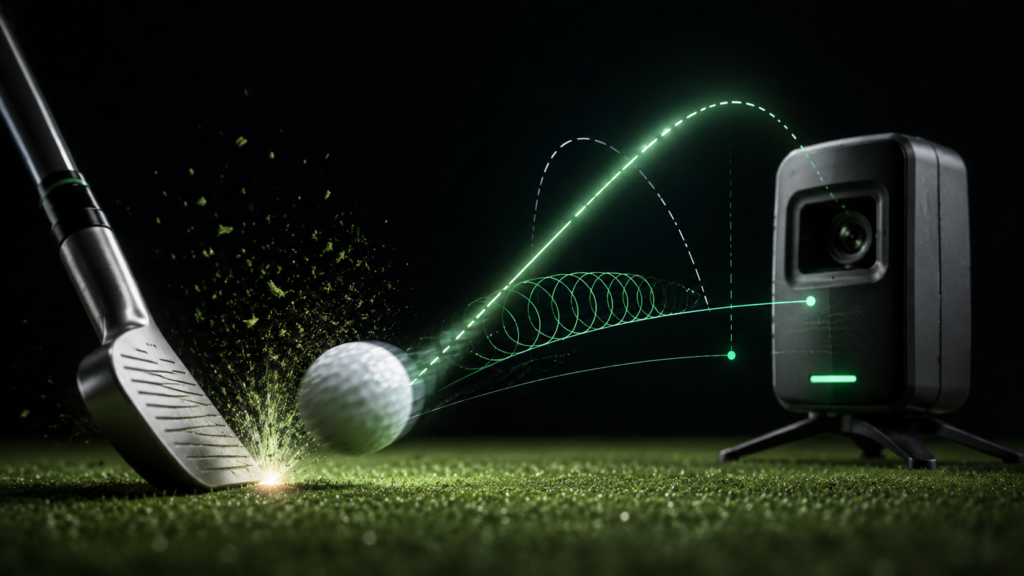
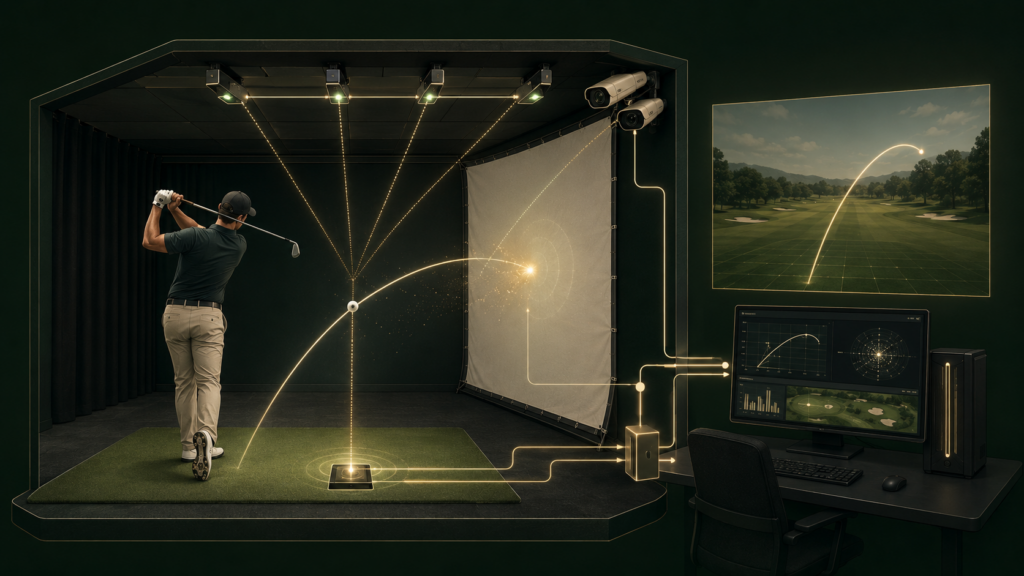
The clearest answer to how accurate are golf simulators begins with the information collected at impact. A launch monitor observes the golf ball during the first moments after contact and may also track the club before and through impact. Important values include ball speed, launch angle, launch direction, and spin. Software then uses those readings to calculate carry distance, curve, peak height, and landing angle.
Accuracy should not be judged from one impressive shot. A dependable simulator produces repeatable numbers when similar shots are struck. For example, several solid 7-irons should create a logical group of carry distances rather than unexplained jumps of 15 or 20 yards. The displayed shot shape should also match the strike. A ball that starts right and continues curving right should not appear as a straight shot.
Some figures are measured directly, while others are calculated from available data. That difference matters because calculated results depend on the quality of the original measurements and the software model. Reliable ball speed and launch readings usually support realistic distance, but incorrect spin can change height, curve, and carry. Consistency across a full practice session is therefore a better sign of accuracy than one number matching an outdoor shot.
Launch Monitor Technology Makes The Biggest Difference
The launch monitor is the main reason one simulator feels trustworthy while another feels unpredictable. Camera-based systems capture images of the ball immediately after impact. They work well indoors because they can collect detailed launch information within a relatively small hitting area. Radar systems usually sit behind the golfer and observe movement down the target line. They can perform well, although indoor models need enough space between the device, ball, and screen.
Higher-quality camera systems can record the ball at extremely high speed, allowing them to identify small changes in launch and spin. The Bushnell Launch Pro used by Roaming Scores combines three high-speed, high-resolution cameras with infrared technology and automatic calibration. Bushnell states that it captures thousands of frames per second to measure launch conditions and calculate ball flight. Its Launch Pro technology overview explains how the camera system gathers shot data indoors and outdoors.
When players ask how accurate are golf simulators, they should identify the tracking device before judging the enclosure or graphics. A sharp projector can make the experience look impressive, but it does not measure the shot. The launch monitor determines whether the displayed drive, iron shot, or wedge reflects what happened at impact.
Ball Speed, Spin, And Carry Distance Results
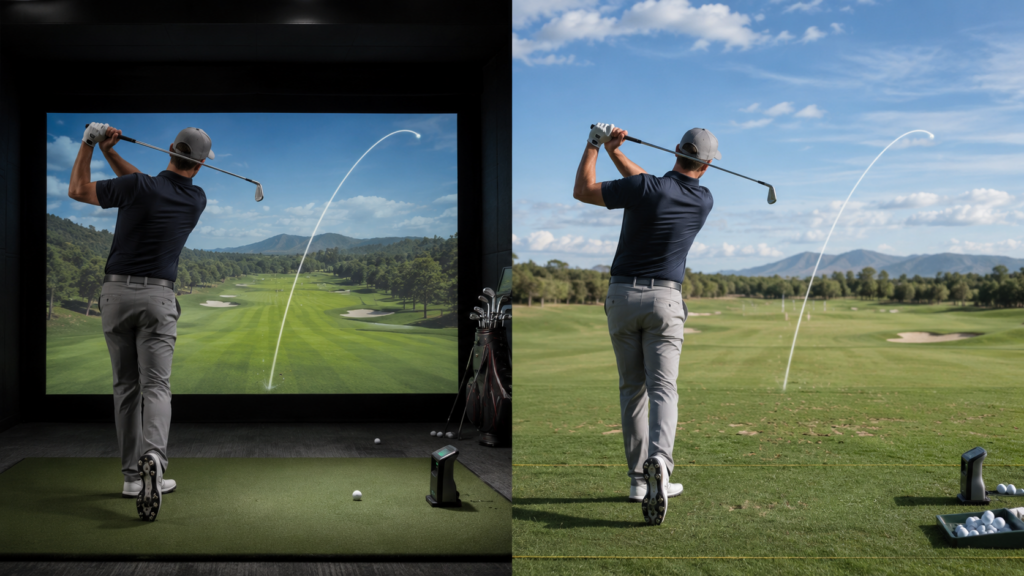
Ball speed is usually one of the most dependable measurements because it is captured immediately after contact. When that reading is reliable, carry distance becomes easier to calculate. However, distance still depends on launch angle and spin, so one correct number cannot guarantee that the complete flight will be perfect. Spin is harder to capture because the ball rotates rapidly and the system has only a brief viewing period indoors. Premium camera systems use detailed images to recognize that rotation. Some radar units need more visible ball flight or specially marked balls to improve spin readings in a short room. If spin is misread, a normal shot can appear to balloon, fall quickly, or curve more than expected.
Carry distance is calculated from launch conditions and the software’s flight model. It can differ from an outdoor number because wind, temperature, elevation, and fairway firmness are controlled inside the software. Golfers should compare carry rather than total distance when checking club gaps because rollout varies between course conditions. This is why how accurate are golf simulators cannot be answered with one percentage. A system may be excellent at ball speed and launch angle while being less dependable with spin. The best test is whether repeated solid strikes create believable patterns across several clubs.
Why Indoor Setup Can Change The Readings
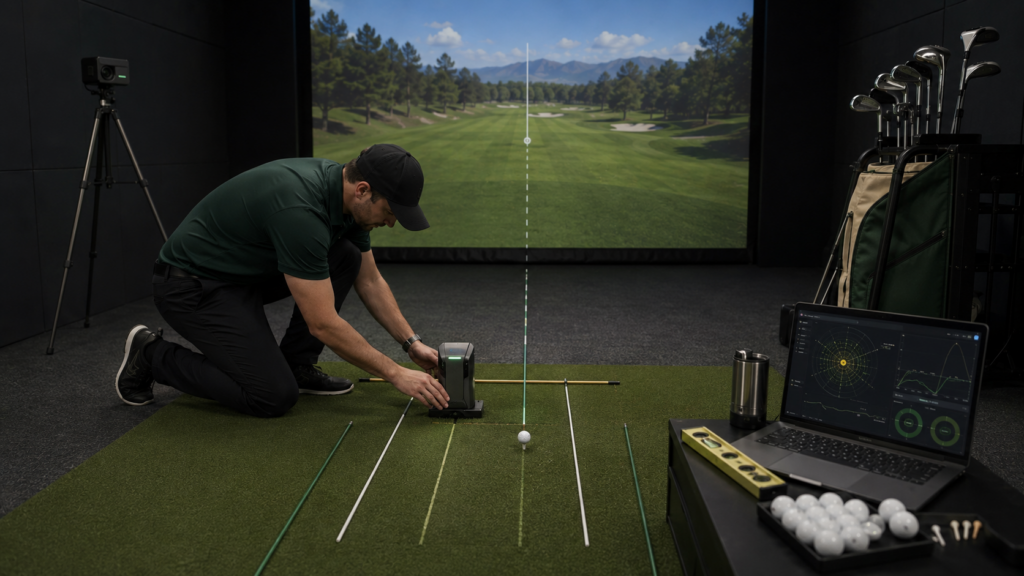
Even advanced equipment can provide poor results when the hitting area is not prepared correctly. Each launch monitor has placement requirements. A camera-based unit may need the ball positioned inside a defined hitting zone, while radar may need clear space behind and in front of the golfer. Moving the device slightly, aiming it away from the target line, or placing it on an uneven surface can affect the numbers. Lighting also matters for camera systems. Strong glare, deep shadows, flickering bulbs, or very dark conditions may interfere with the device’s ability to see the ball or club. Infrared-equipped models reduce some concerns, but users should still follow the manufacturer’s instructions.
The golf ball matters more than some players expect. Worn, dirty, cracked, or heavily marked balls can produce inconsistent data. A quality ball that matches what the golfer normally plays gives a better comparison. The mat should remain level because a stance area above or below the hitting strip changes posture and impact. When judging how accurate are golf simulators, first check alignment, lighting, hitting position, ball quality, and software settings. Many apparent accuracy problems come from the environment rather than a fault in the launch monitor. Recheck these details before every session.
How Accurate Simulator Golf Feels On The Course
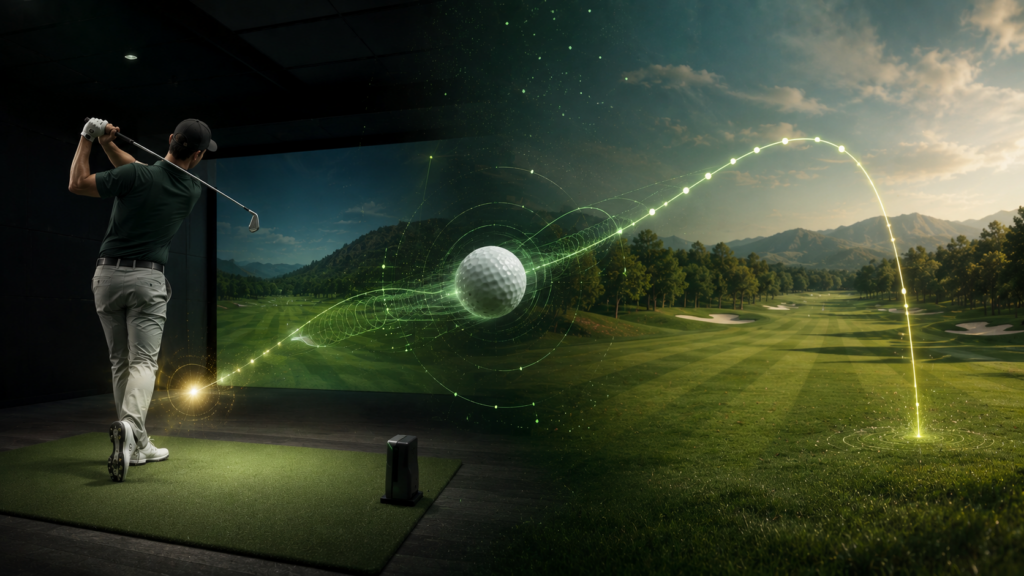
Accurate measurements do not make every virtual round feel identical to outdoor golf. Full swings with drivers, irons, and wedges are usually the most convincing part because the simulator can measure launch and create a realistic flight. A well-struck fade should move from left to right, while a heavy iron should lose speed and carry. These reactions help golfers trust what appears on the screen.
Course software adds another layer. It applies elevation, wind, turf firmness, rough penalties, hazards, and green speed to the measured shot. Two programs can receive the same launch data and produce different results because their physics and settings are not identical. That does not always mean the monitor was wrong. It may reflect how the software models the ball after landing. Simulator play also removes outdoor variables. Golfers usually receive a level stance, while deep rough, uneven lies, tree interference, and wet turf are represented through software rather than physical contact.
For social competitions, consistent measurement matters more than recreating every outdoor condition. Longest-drive and closest-to-the-pin challenges remain fair when the same system tracks every participant. That consistency is one reason simulator-based golf nights can work for experienced golfers and beginners alike.
Putting And Short-Game Accuracy
Putting is usually the most difficult part of simulator golf to reproduce. A full shot gives the launch monitor clear speed, angle, and spin information, but a putt travels slowly across a short section of mat before the software takes over. Small differences in alignment, mat grain, hitting zone, or sensor sensitivity can change the result. The virtual green then determines how the ball breaks and slows.
This does not make simulator putting useless. A quality system can create an enjoyable and consistent experience when the mat is level and the ball starts on the intended line. However, it cannot fully recreate reading natural grass, walking around a slope, or adjusting to moisture and grain. Many players use automatic putting, generous gimme distances, or simplified settings during casual rounds. Chipping and short pitches can also challenge some systems because the ball launches at lower speed and produces less visible flight before reaching the screen. Premium monitors generally handle these shots better, but correct ball placement remains important.
Therefore, how accurate are golf simulators depends partly on the shot being tested. Full swings are usually the strongest area, followed by normal pitches and chips. Putting can still be fair and entertaining, but it should not be expected to feel exactly like a natural green.
Ways To Get More Reliable Simulator Data
Players can improve simulator accuracy without replacing the entire system. Begin by following the launch monitor’s distance, height, and alignment instructions. Mark the correct device and ball positions on the floor so the setup remains consistent. Portable systems should be checked each time they are moved because a small change in direction can alter the target line.
Use clean golf balls in good condition, along with any required marking pattern. Keep camera lenses and sensor areas free from dust. Lighting should remain steady, with bright glare kept away from the unit. Software updates can also resolve reading problems. Compare several shots rather than reacting to one strange result. Use a familiar club and strike at least five solid balls. Remove obvious mishits, then review average ball speed, launch, spin, and carry. If the pattern makes sense but one number appears unusual, that shot may have been captured poorly.
Weather and altitude settings should match the intended comparison. A simulator configured for high elevation or strong wind will not match calm sea-level carry distances. A sensible answer to how accurate are golf simulators considers both technology and setup. Quality equipment provides the foundation, but careful positioning, good balls, correct settings, and repeatable testing help it deliver dependable information.
Conclusion
Golf simulators can be highly accurate for ball speed, launch angle, spin, carry distance, and shot direction when they use a quality launch monitor and are set up correctly. Full swings normally provide the most dependable results, while putting and unusual short-game shots can feel less like outdoor golf. Lighting, room size, alignment, ball condition, and software settings also affect each reading.
Roaming Scores uses the Bushnell Launch Pro with GSPro course software to bring realistic shot tracking and virtual course play to events across Northeast Ohio. The system measures key ball data inside a large mobile enclosure, allowing golfers and beginners to enjoy fair contests without visiting a course. Event hosts can book their date after selecting a location and confirming enough space for the setup.