
Clean golf clubs make it easier to produce consistent contact, protect the finish, and see whether dirt in the grooves is affecting the way the clubface meets the ball. The basic process is simple: use warm water, a small amount of mild dish soap, a soft brush, and clean towels while avoiding unnecessary soaking around shafts, ferrules, and adjustable components. Golfers asking how clean golf clubs properly should also treat irons, wedges, woods, putters, shafts, and grips differently because their materials and construction are not identical. A careful routine removes grass, soil, sand, and grime without scratching the finish or introducing moisture where it does not belong.
Why Clean Clubfaces And Grooves Matter
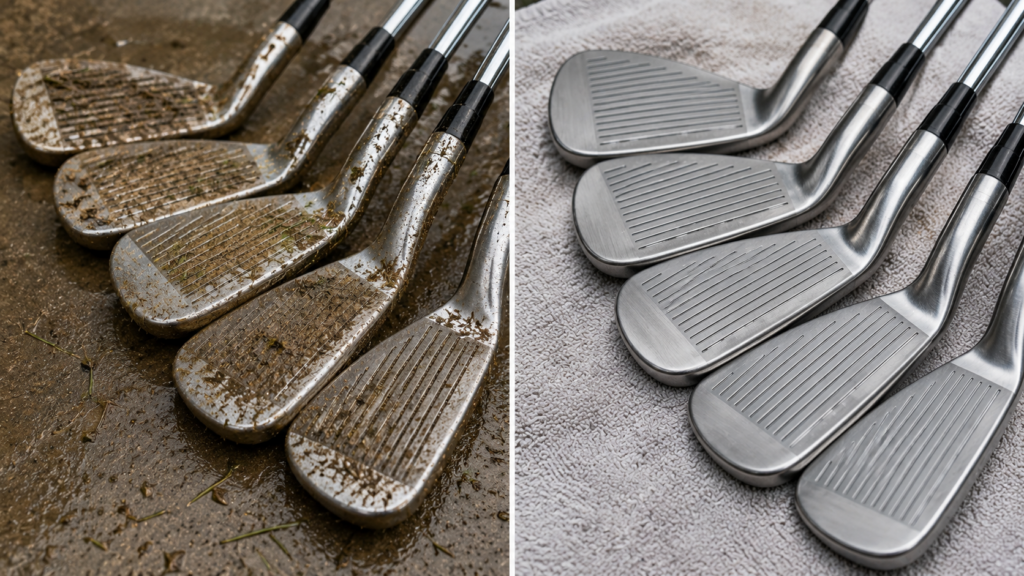
Dirt on a clubface is more than a cosmetic problem. Grass, dried mud, sand, and range debris can collect inside the grooves, particularly on irons and wedges that regularly contact the ground. Removing that material gives the golf ball direct contact with the face and keeps the grooves clear. It also makes it easier to inspect the club for wear or damage.
The USGA’s guidance for examining golf club grooves specifically instructs testers to make sure the clubface and grooves are clean before evaluating them. Its official groove inspection guidance reinforces the importance of keeping debris out of the hitting area when inspecting a clubface.
For golfers learning how clean golf clubs, the priority should be removing dirt rather than aggressively polishing the metal. Warm soapy water and a soft nylon brush can loosen most debris without excessive force. A wooden tee can help lift stubborn material from a groove, but sharp metal objects should be avoided because they may scratch or alter the face.
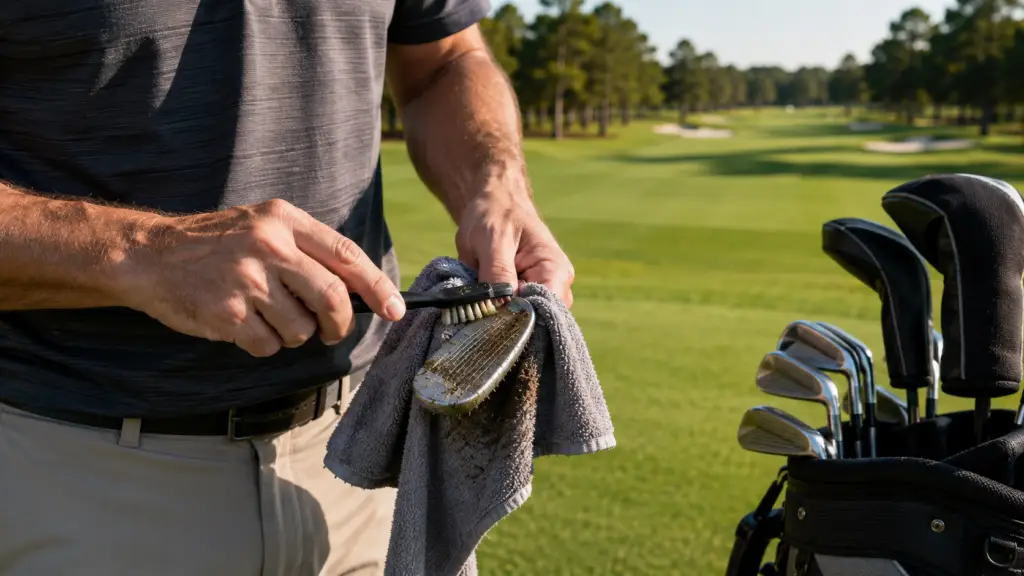
Another useful habit for how clean golf clubs is wiping irons and wedges during the round. Dirt is easier to remove while it is still fresh than after it has dried inside the grooves for several hours.
What You Need Before Cleaning Your Clubs
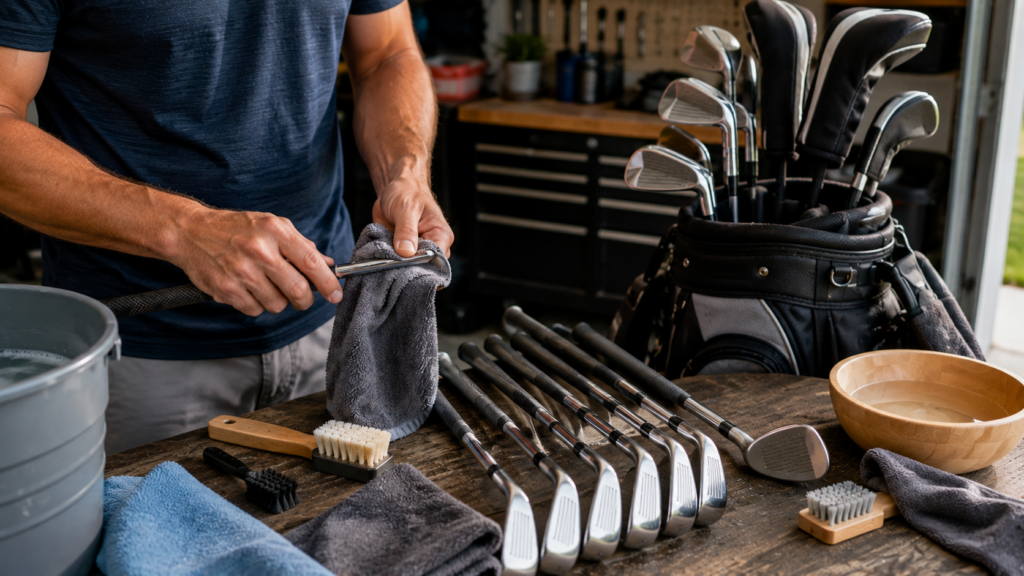
A golf club cleaning kit does not need to be complicated. Warm water, mild dish soap, a soft nylon brush, a small container, and two microfiber towels will handle most routine cleaning. One towel can be used for washing and wiping, while the second should remain dry so moisture can be removed immediately after each club is finished.
Anyone researching how clean golf clubs should avoid assuming that stronger cleaning chemicals produce better results. Bleach, abrasive household cleaners, rough scouring pads, and harsh solvents can damage painted areas, plated finishes, badges, inserts, or other cosmetic surfaces. Very hot water is unnecessary as well. Warm water combined with gentle brushing is normally enough to soften dirt.
The brush should also suit the club. A soft or medium nylon brush is a safe starting point for most irons, wedges, woods, and putters. Aggressive wire brushes may scratch softer finishes or create unwanted marks. When the material is uncertain, use the least abrasive method first.
Before beginning, inspect each club for loose ferrules, damaged shafts, rust, cracked inserts, or chipped finishes. One advantage of learning how clean golf clubs correctly is that the process gives you regular opportunities to inspect the entire set. A clean surface makes small problems easier to notice before they become more serious.
How Clean Golf Clubs With Irons And Wedges
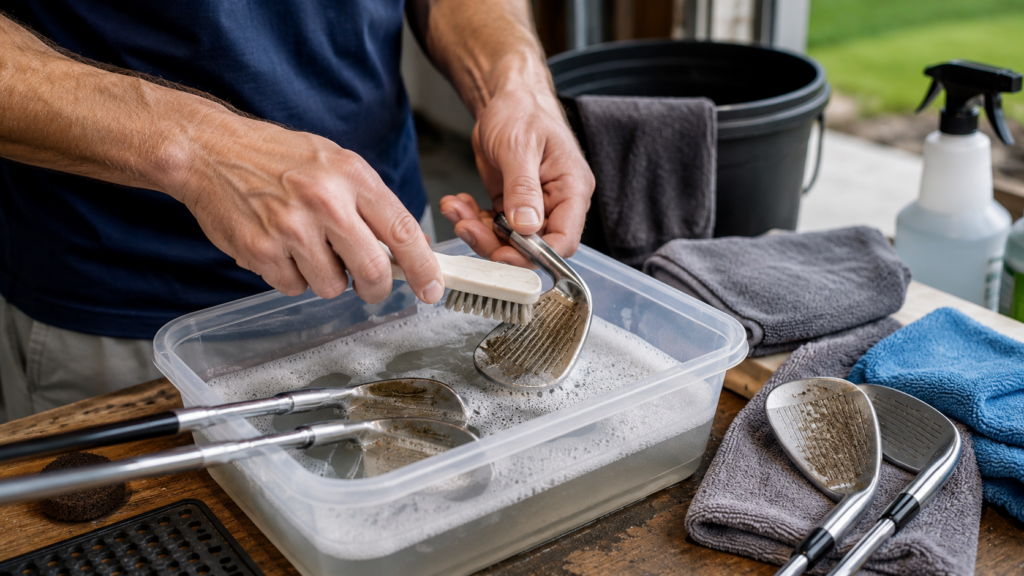
Irons and wedges usually need the most thorough cleaning because their soles and faces repeatedly contact turf, sand, and soil. Fill a shallow container with warm water and add a small amount of mild dish soap. Place only the metal clubheads into the water. Keep the ferrules and shafts above the waterline instead of dropping the entire lower section of the club into the container.
For how clean golf clubs made from iron or wedge materials, work one club at a time. Allow the head to sit briefly if dirt has dried onto the face, then remove it and scrub gently with a nylon brush. Work across the grooves and around the sole until the visible dirt has been removed. A wooden tee can help with a stubborn piece of soil without introducing a sharp metal edge. Wedges deserve particular attention because they frequently encounter sand, rough, and soft soil. Keeping the grooves visible also makes normal wear easier to monitor.
Once the head is clean, remove soap with a damp cloth or quick rinse and dry it immediately. Wipe the shaft and ferrule as well before returning the club to the bag. A reliable routine for how clean golf clubs is to avoid leaving cleaned irons wet while working on the rest of the set. Dry each club completely as you go so moisture is not trapped around the head, shaft, or inside the golf bag.
Cleaning Drivers, Fairway Woods, And Hybrids
Drivers, fairway woods, and hybrids should usually be cleaned with less water than irons. Modern clubheads can contain painted crowns, carbon-composite sections, adjustable hosels, weight ports, and decorative finishes. Submerging these heads provides little benefit and may introduce moisture around adjustable or joined components.
When deciding how clean golf clubs with modern wood-style heads, use a damp microfiber cloth instead. Dip the cloth in warm soapy water, wring it out well, and wipe the face, sole, crown, and edges. A soft nylon brush can remove dirt from face markings or grooves. Follow with a clean damp towel and then dry the head thoroughly.
Take extra care around adjustable hosels and weight screws. There is no need to force water into small gaps. If dried mud has collected on the sole, hold a damp cloth against the spot briefly to soften it before wiping. This reduces the temptation to scrub aggressively.
Painted crowns should also be handled gently because particles trapped in a dirty towel can create fine scratches. Use a clean microfiber cloth rather than the same brush or towel that was covered in sand from the irons. The best approach to how clean golf clubs is to match the amount of water and brushing to the individual club. A driver rarely needs the same treatment as a mud-covered wedge.
How To Clean Putters Without Damaging Them
Putters may not collect as much soil as wedges, but they still encounter grass, sand, moisture, fertilizer residue, and dirt from the putting surface. Their construction varies considerably as well. Some use milled metal faces, while others feature polymer inserts, painted finishes, raw steel, or several materials in one head.
Golfers considering how clean golf clubs should treat putters with extra care because soaking is usually unnecessary. Begin with a damp microfiber towel and wipe the face, sole, topline, cavity, and alignment features. A soft toothbrush or nylon brush can remove dirt from face milling, grooves, or narrow corners.
If a small amount of material remains inside a groove or cavity, use a wooden tee rather than a knife, pin, or other metal object. Face inserts should receive only gentle cleaning because they may be made from softer materials than the surrounding head. Dry the putter completely as soon as cleaning is finished. This is especially important for raw or carbon-steel finishes that may be more susceptible to surface rust. The headcover should also be dry before it is placed back on the club. Covering a wet putter can trap moisture against the surface.
For most players, how clean golf clubs applies to the putter through regular light maintenance rather than occasional aggressive cleaning. A quick wipe after each round can prevent dirt from building up and reduce the need for deeper cleaning later.
Do Not Forget The Grips And Shafts
Clubheads receive most of the attention, but grips collect sweat, sunscreen, dust, skin oils, and dirt every time they are used. Over time, that buildup can make a grip feel slick even when the material still has useful life remaining. Cleaning may restore some of the original texture and make it easier to hold the club without adding unnecessary grip pressure.
A complete routine for how clean golf clubs should therefore include the grip. Mix a small amount of mild soap with warm water, lightly wet a cloth or soft brush, and work around the grip. Avoid pouring large amounts of water directly over the end of the grip. Wipe away the soap with a clean damp towel and allow the grip to air-dry completely. Leather grips and specialty materials may require different care, so follow the manufacturer’s instructions when the material is not standard rubber or synthetic construction.
Shafts are simpler to maintain. Wipe steel and graphite shafts with a damp microfiber cloth and dry them immediately. While cleaning, inspect steel shafts for rust, dents, or unusual bends. Graphite shafts should be checked for chips, splintering, or damaged areas near the hosel and where the shaft repeatedly contacts the golf bag.
Clean equipment can also make practice conditions more consistent. Whether practicing outdoors or attending organized golf nights, starting with clean faces and grips removes one avoidable variable from each swing.
How Often Should Golf Clubs Be Cleaned
There is no single cleaning schedule that works for every golfer. Someone who plays on wet courses or practices from natural grass several times each week will need to clean clubs more often than a golfer who mostly hits from dry mats. The easiest approach is to perform light cleaning during every round and deeper cleaning whenever visible material starts collecting in the grooves or on the soles.
For players learning how clean golf clubs as an ongoing habit, keeping a damp golf towel attached to the bag is one of the simplest improvements. Wipe an iron or wedge immediately after a shot before the soil has time to dry. A small club brush can remove material from the grooves between holes. At home, inspect the full set every few rounds. Clean the grips when they begin feeling dirty or slick, and remove any visible buildup from the heads. If the clubs were used in rain, dry them before storing the bag.
Storage is part of how clean golf clubs properly as well. Wet towels should not remain packed against the equipment, and headcovers should not be placed over damp clubheads for extended periods. Leaving wet equipment inside a vehicle, garage, basement, or closed bag can expose it to unnecessary moisture.
The easiest cleaning session is the one that never becomes a major restoration project. A few minutes after a round can prevent dried mud, sand, and grime from accumulating across an entire set.
Conclusion
The best approach to how clean golf clubs is simple: use warm water, mild soap, a soft brush, and clean towels while adjusting the method for each type of club. Irons and wedges can receive more detailed groove cleaning, while drivers, woods, hybrids, and putters should generally be exposed to less water. Grips and shafts also deserve regular attention.
Clean equipment gives golfers a better starting point for practice, rounds, and simulator play. Roaming Scores brings interactive golf experiences to parties, weddings, fundraisers, corporate gatherings, and other events across Northeast Ohio. Hosts can book their date and enjoy measured shots, virtual courses, and golf challenges through a complete mobile simulator setup.