
Ceiling height is one of the first things to check before installing a golf simulator because even excellent equipment will not help if you cannot swing comfortably. If you are asking how high ceiling for golf simulator setups should be, a practical target is around 10 feet. Many golfers can use a simulator with a 9-foot ceiling, but the correct height depends on your height, swing plane, club length, hitting position, and any equipment mounted overhead. Taller golfers or players with upright swings may need more clearance.
The safest approach is to test full driver swings in the exact hitting location before buying an enclosure or installing a projector. You also need to consider ceiling lights, garage-door tracks, beams, fans, pipes, and launch monitors. A simulator room should allow you to swing naturally without subconsciously shortening your motion. Enough clearance improves safety, comfort, and the overall realism of the setup.
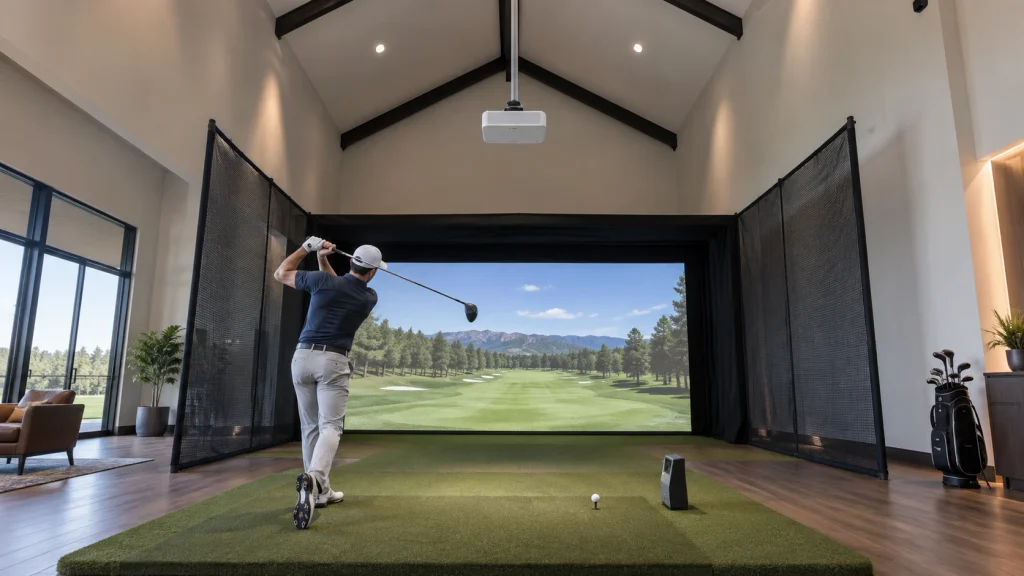
How High Ceiling For Golf Simulator Setups Should Be?
For most home installations, 10 feet is an excellent target when deciding how high ceiling for golf simulator use should be. SKYTRAK says a 10-foot ceiling typically provides ample clearance for most golfers, although many players report that 9 feet is enough. Its standard simulator studios generally call for at least 9 feet of room height, depending on the enclosure and the golfer’s swing.
There is no single ceiling height that guarantees clearance for every player. A shorter golfer with a flatter swing may be comfortable below 9 feet, while a tall golfer using a driver could need significantly more room. The best measurement is not simply the distance from floor to ceiling. You need to confirm that the highest point of the club during the backswing and follow-through remains safely below every obstruction. That is why practice swings are essential before finalizing the room.
Is A 9-Foot Ceiling High Enough?
A 9-foot ceiling can work for many golfers, and several simulator manufacturers use 9 feet as a common minimum guideline. SKYTRAK recommends at least 9 feet for many of its studio configurations and notes that lower ceilings may still work depending on the golfer’s height and swing style. However, a room that technically allows a swing may still feel restrictive if the club passes very close to the ceiling.
When evaluating how high ceiling for golf simulator installations needs to be, comfort matters almost as much as physical clearance. If you are worried about hitting the ceiling, you may unconsciously flatten your swing, shorten your follow-through, or avoid using the driver. That defeats part of the purpose of having a simulator. Test several full-speed swings with your longest club while standing on the actual hitting mat, because the mat itself may raise your feet slightly above the floor.
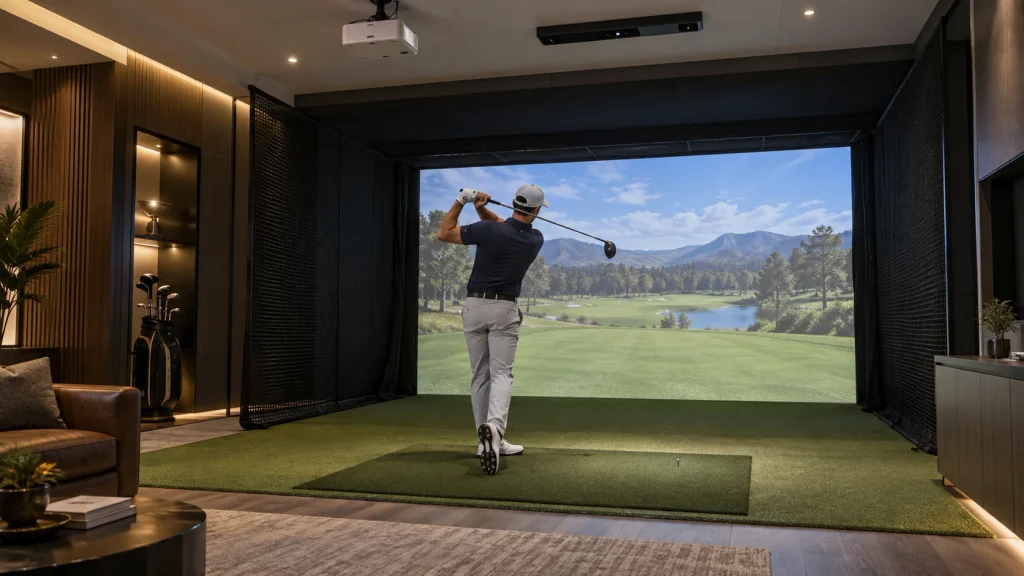
Why Is A 10-Foot Ceiling Often Recommended?
A 10-foot ceiling gives most golfers a more comfortable margin of safety. It allows room for longer clubs, higher hands, more upright swings, and players of different heights. It also gives you more flexibility when positioning projectors, launch monitors, lighting, and enclosure components. For a household or event setup used by multiple golfers, that extra clearance can be especially useful because you cannot design the space around only one swing.
Ceiling height also affects whether overhead launch monitors and projectors can be installed safely without interfering with the swing. Foresight Sports recommends roughly 9.5 to 10.5 feet of ceiling height for certain overhead simulator setups, which gives many golfers enough room for a full swing while still allowing space for mounted equipment. You can review the installation guidance on the Foresight Sports website. This is why a 10-foot ceiling is often treated as a practical target when planning how high ceiling for golf simulator use should be.
How Does Golfer Height Affect Ceiling Clearance?
Taller golfers generally require more vertical clearance because their hands and club travel higher during the swing. However, golfer height alone does not determine the answer. Two players of the same height can have very different swing planes. One may swing the club relatively flat around the body, while another takes the club much higher above the shoulders. The second golfer may need substantially more ceiling clearance even though both players are equally tall.
This is why estimating how high ceiling for golf simulator rooms should be using a height chart can only provide a starting point. A better method is to stand in the proposed hitting position with your driver and make several full swings. Wear normal golf shoes and stand on the hitting mat if possible. Ask another person to watch the top of the swing or record it from the side. Make sure there is visible clearance rather than relying on a swing that barely misses the ceiling.
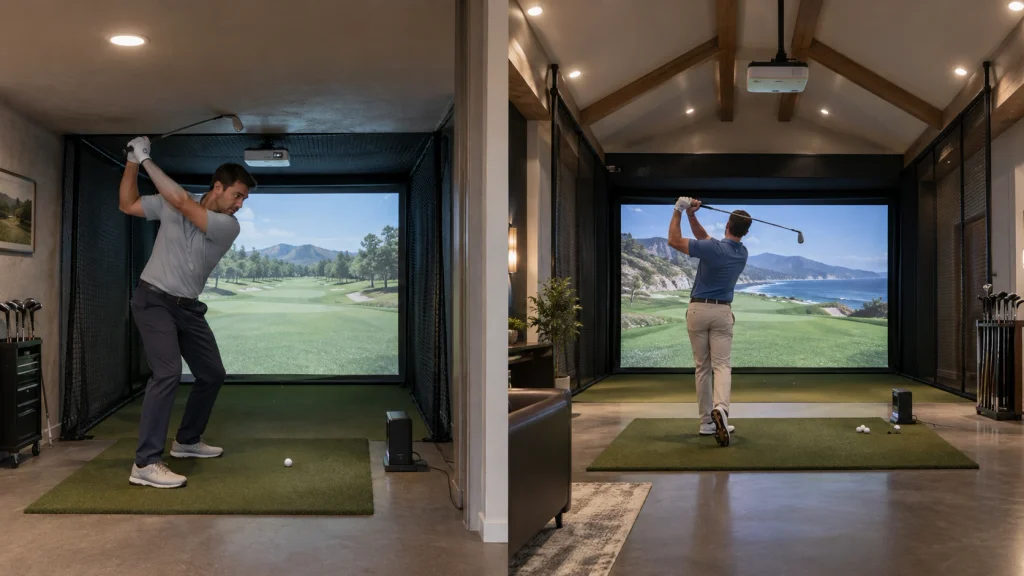
What Ceiling Obstructions Should You Check?
A room can have a 10-foot ceiling and still be unsuitable if equipment hangs into the swing area. Garage-door tracks, openers, ceiling fans, lights, beams, pipes, ductwork, and storage racks can reduce usable height considerably. Projectors and overhead launch monitors can create the same problem if they are placed directly where the club travels. Always evaluate the lowest obstruction near the golfer rather than measuring only the main ceiling surface.
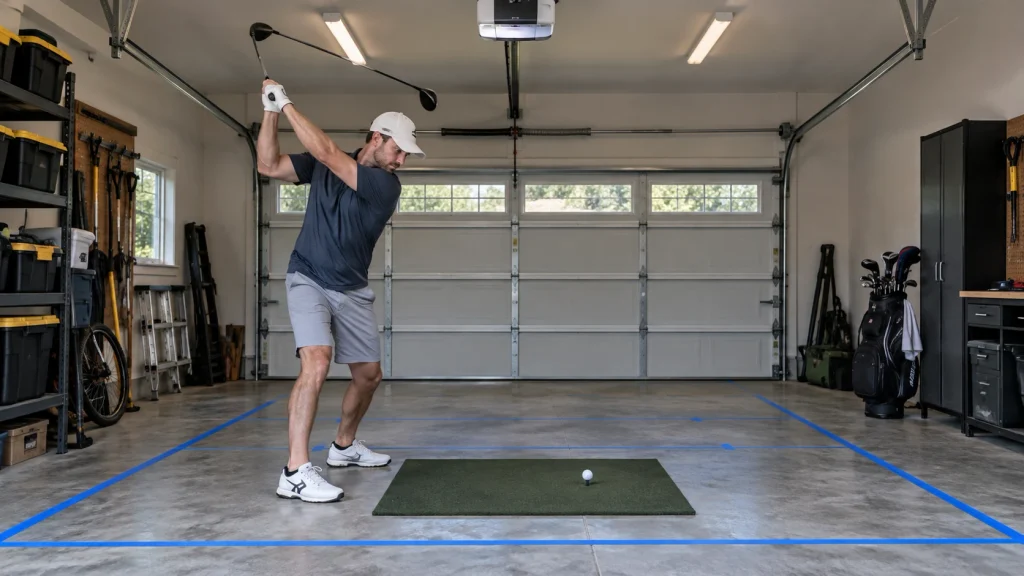
Garage installations require particular attention because door tracks frequently run through the area where a golfer wants to swing. When planning how high ceiling for golf simulator use needs to be, perform full driver swings with the garage door both open and closed if you expect to use the simulator in either condition. Also consider where the golfer will stand relative to the screen. Moving the hitting position a small distance forward, backward, or sideways can sometimes provide significantly better clearance.
Does The Hitting Mat Change The Required Height?
The hitting mat may only add an inch or two, but that difference matters when ceiling clearance is already tight. Your effective ceiling height is measured from the surface you stand on, not from the bare floor. A room with a 9-foot ceiling can effectively become slightly shorter once a raised platform, hitting strip, turf layer, or padded flooring is installed. That is especially important in basement and garage conversions where every inch matters.
When measuring how high ceiling for golf simulator construction needs to be, plan the finished floor before deciding whether the space works. If you intend to build a platform that holds the hitting mat and putting turf, subtract the platform height from your available clearance. It is much easier to make this calculation before construction than to discover afterward that the driver comes dangerously close to the ceiling. Always test the swing from the final hitting surface whenever possible.
How Much Space Does A Complete Golf Simulator Need?
Ceiling height is only one part of simulator planning. You also need enough width for the golfer’s backswing and enough depth between the golfer, screen, and rear wall. SKYTRAK suggests around 12 feet of width for a more spacious setup, while some installations can work in narrower rooms. Its common simulator studios generally recommend around 16 to 20 feet of room depth depending on the specific enclosure.
A well-planned golf simulator setup should provide comfortable clearance in every direction. Right-handed and left-handed golfers may need additional width because the hitting position should allow unrestricted swings from both sides. When considering how high ceiling for golf simulator use should be, think about the entire swing volume rather than a single vertical measurement. A room that is tall enough but too narrow or shallow can still create safety problems and an uncomfortable experience.
Conclusion
So, how high ceiling for golf simulator use should you plan for? Around 10 feet is an excellent target for most golfers, while 9 feet can work in many rooms if the golfer’s height, swing, and equipment allow sufficient clearance. Taller players, upright swings, overhead launch monitors, and large enclosures may require more room.
Always test full driver swings from the exact hitting position and account for mats, lights, beams, garage tracks, projectors, and other overhead equipment before installing anything. A comfortable setup should allow golfers to swing naturally without worrying about the ceiling. Roaming Scores uses professionally planned mobile simulator setups that give players the space needed to enjoy realistic golf entertainment at events without building a permanent simulator room.