
Launch angle describes the initial vertical angle at which the golf ball leaves the clubface after impact. It is one of the main measurements used to understand why a shot flies high, low, far, or short. Golfers asking what is launch angle in golf should know that there is no single perfect number for every club or player. A driver normally launches much lower than a wedge, and two golfers with similar swing speeds may produce different results because of club loft, attack angle, strike location, and ball speed. Learning to read launch angle can help golfers understand their ball flight without becoming obsessed with chasing one ideal number.
What Launch Angle Actually Measures
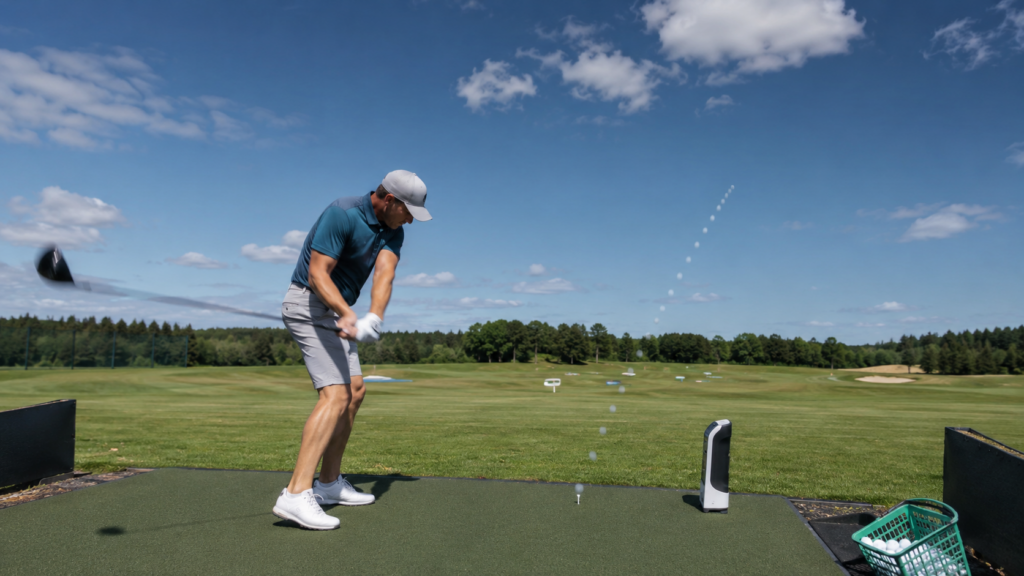
Launch angle measures how steeply the ball begins traveling upward immediately after it leaves the clubface. It is expressed in degrees relative to the ground. A shot that begins on a relatively flat trajectory has a lower launch angle, while a ball that climbs more steeply starts with a higher one. This measurement describes the beginning of the flight rather than the highest point the ball eventually reaches.
That distinction is important. Launch angle is not the same as peak height, and it is not the same as the loft printed on the bottom of the club. A 7-iron may have considerably more static loft than the actual angle at which the ball launches because the golfer changes the effective loft of the club during the swing. Hand position, shaft movement, attack angle, and impact location all contribute to the launch conditions.
For golfers learning what is launch angle in golf, it is useful to think of the number as one piece of the complete ball-flight picture. Ball speed and spin also matter. Two shots can leave at an identical angle but travel different distances because one has greater speed or a different spin rate. Launch angle becomes most useful when it is considered alongside these other measurements rather than evaluated by itself.
Why Launch Angle Matters For Distance
The angle at which a golf ball begins its flight influences how effectively its speed is converted into carry distance. A shot launched extremely low may have plenty of forward speed but spend too little time in the air to maximize carry. A ball launched excessively high can climb rapidly while losing forward momentum, especially when spin is also high.
The relationship is more complicated than the simple projectile motion often taught in basic physics because a golf ball experiences aerodynamic lift and drag. Still, the basic principle remains that launch direction affects the balance between upward and forward movement. NASA’s discussion of ballistic flight equations explains how the angle of a launched object separates its initial velocity into vertical and horizontal components. NASA also notes that real balls experience aerodynamic drag, making actual flight more complex than an ideal projectile.
This is why what is launch angle in golf is closely connected with distance optimization. The goal is not simply to hit the ball higher. A useful trajectory combines launch, speed, and spin in a way that suits the golfer’s club and swing. A player who already launches the driver high may gain little from adding more height, while someone producing very low drives may benefit from changing setup, strike location, or equipment.
Driver Launch Is Different From Iron Launch
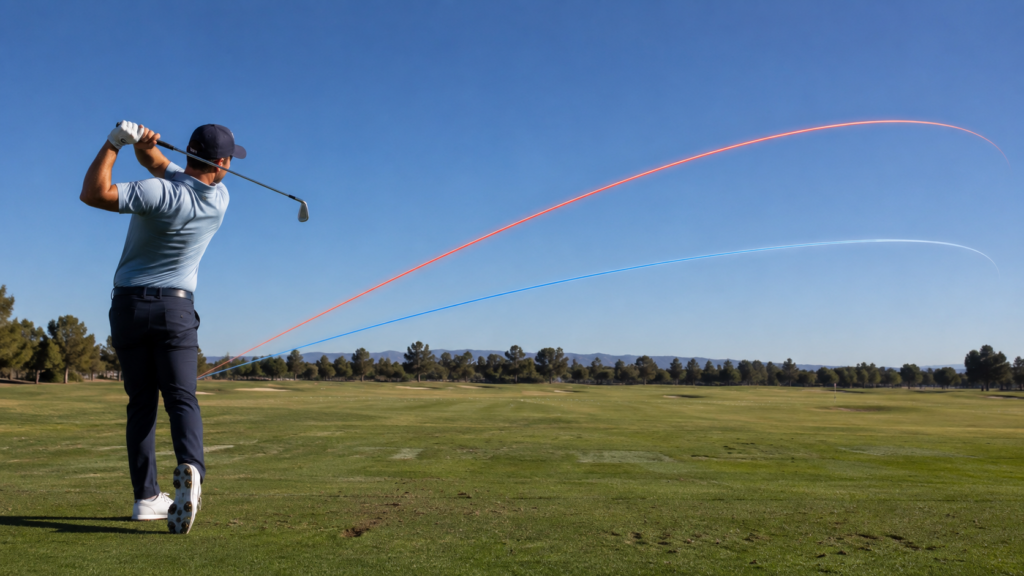
A driver and an iron are designed to produce very different launch conditions. Drivers have relatively low loft and are commonly hit from a tee, allowing golfers to position the ball forward and potentially strike it while the clubhead is moving upward. This combination helps create a strong launch without requiring excessive backspin.
Irons work differently. The ball is normally played from the ground, and the golfer generally strikes it before the club reaches the lowest point of the swing. The club may therefore be traveling downward at impact even though the ball launches upward. The loft on the clubface supplies the upward direction while the golfer compresses the ball against the face.
The USGA has studied launch conditions across thousands of driver and iron shots from players of different skill levels. Its research found substantial differences in launch measurements depending on club, speed, gender, and individual golfer. It also found no simple relationship showing that lower-handicap golfers always produce one particular launch angle, although more skilled golfers tended to show greater consistency in launch-related variables.
That research reinforces an important point about what is launch angle in golf: the correct number changes with the shot being played. Comparing a driver reading to a 6-iron reading is not useful. Golfers should compare the same club under similar conditions and look for a repeatable flight that produces the required carry and control.
Club Loft And Attack Angle Affect The Result
Static loft is the loft built into the club, but the clubface may present a different amount of loft when it reaches the ball. The effective loft at impact is influenced by the golfer’s hand position, shaft lean, release pattern, and body movement. This is one reason two players using the same 9-degree driver can produce noticeably different launch angles.
Attack angle describes whether the clubhead is moving upward or downward as it reaches the ball. With a driver, an upward attack can help create a higher launch while controlling spin when the rest of the strike is efficient. A golfer hitting sharply downward may produce a different combination of launch and spin even with identical equipment.
Iron swings typically involve a downward attack. That does not mean the ball should launch downward. The face still has enough loft to send the ball upward, while the descending strike allows the club to contact the ball before the turf. The resulting launch depends on both the delivered loft and the movement of the club.
This interaction is essential when studying what is launch angle in golf because changing only one number can create unintended results. Adding driver loft may increase launch, but it may also affect spin. Moving the ball forward may change attack angle but can influence contact. Improvements should therefore focus on the complete strike instead of manipulating launch angle in isolation.

Strike Location Can Change Launch Angle
Where the golf ball meets the clubface can influence launch as much as the swing itself. Driver faces are large, and contact can occur high, low, toward the heel, or toward the toe. A golfer may make two swings that feel almost identical yet produce different trajectories because the impact positions were different.
Contact higher on the driver face can often produce a different launch-and-spin combination than contact low on the face. A low strike may create a flight that appears weak or overly spinny, while centered contact generally provides a better opportunity to transfer speed efficiently. Heel and toe strikes can also change direction and curvature.
Iron contact introduces additional variables. A thin shot catches the ball low on the clubface and may launch differently from a centered strike. Heavy contact occurs when the club reaches the ground too early, reducing the quality of energy transfer before the ball is struck. These shots should not be used as the basis for determining whether a player’s normal launch is appropriate.
Anyone evaluating what is launch angle in golf should therefore look at several well-struck shots rather than reacting to one reading. A launch monitor becomes more useful when the golfer creates a group of reasonably centered strikes. Consistent contact makes it easier to determine whether the trajectory itself needs attention or whether poor impact is causing the unusual numbers.
How Launch Monitors Help Measure The Shot
A launch monitor allows golfers to see the launch angle immediately after each swing. Depending on the system, cameras, radar, or other sensors observe the ball as it leaves the clubface and calculate or directly measure several launch conditions. Common data can include ball speed, launch direction, spin, carry distance, and launch angle.
These numbers become particularly useful when golfers compare changes. Suppose a player adjusts the tee height and notices that centered driver strikes begin launching slightly higher while maintaining good ball speed. That pattern provides more useful information than simply judging the appearance of the shot. A golfer can also compare clubs to identify unusual gaps or flights.
The USGA uses launch angle as one of the measured conditions in its golf ball research and conformance testing, alongside speed and spin. Its current Overall Distance Standard testing uses defined launch conditions, while revised conditions scheduled for the 2028 testing cycle include a launch angle of 11 degrees for the high-speed mechanical-golfer test. That number represents a specific testing condition for extremely high-speed shots, not a universal target for everyday golfers. The Roaming Scores simulator setup uses launch-monitor technology that allows players to see shot information during simulator play.
Do Not Chase One Perfect Launch Number
Golfers often want a chart that provides one perfect launch angle for every club. Those charts can provide reference points, but they should not become absolute targets. Ball speed, spin, equipment, swing delivery, playing conditions, and desired shot shape all influence whether a particular launch is effective.
USGA research illustrates why this matters. An analysis containing thousands of driver and iron shots found that launch angle varied among golfers and did not follow a simple pattern where better players always launched the ball at one specific angle. The study did find that more skilled golfers tended to be more consistent in their launch and club-delivery outcomes.
Consistency can therefore be more valuable than forcing a particular number. A golfer who repeatedly launches a 7-iron at a similar angle and produces dependable carry distances has useful control, even if that angle differs from another player’s. The same applies to the driver. The useful question is whether the flight produces suitable carry, total distance, dispersion, and control.
When considering what is launch angle in golf, use the measurement as a diagnostic tool rather than a score. Look for patterns across several centered strikes. If the flight is consistently too low, too high, or inefficient, then investigate the cause. The solution might involve setup, strike quality, club delivery, equipment, or a combination of those factors.

Conclusion
Launch angle is the initial vertical angle at which the ball leaves the clubface, and it plays an important role in trajectory and carry distance. The answer to what is launch angle in golf also depends on the club being used, ball speed, spin, attack angle, delivered loft, and strike location. There is no single ideal number that applies to every golfer, so consistent results matter more than chasing a universal target.
Roaming Scores brings launch-monitor feedback and virtual golf to parties, corporate gatherings, fundraisers, weddings, and other events across Northeast Ohio. Players can see how their real shots translate into measurable ball flight while competing on virtual courses and challenges. Hosts can book their date to bring the mobile simulator experience to their event.